Numbers on a screen don’t always mean much. Someone tells you a phone case is “1 inch thick” or a drill bit is “1 inch wide,” and your brain just… blanks.
That’s the real problem with how long is 1 inch as a question. You know the number. You don’t know the feel. This guide fixes that, using things you already touch every day.
How Long Is 1 Inch? (Quick Conversion & Visual Idea)
Let’s start with the hard numbers, because they matter and they’re fixed.
1 inch equals 2.54 centimeters. It’s also 25.4 millimeters, or 0.083 feet. This isn’t a rounded estimate — it’s an exact, legally defined figure. In 1959, the U.S. joined the United Kingdom, Canada, Australia, and other nations in the International Yard and Pound Agreement, which fixed the inch at precisely 25.4 mm. Before that, the U.S. and U.K. versions of an inch were off by a tiny fraction — small, but enough to cause friction in engineering and trade. Today, the National Institute of Standards and Technology (NIST) upholds that exact standard.
| Unit | Value |
|---|---|
| Centimeters | 2.54 cm |
| Millimeters | 25.4 mm |
| Feet | 0.083 ft |
| Meters | 0.0254 m |
So, what does 1 inch look like, on its own, without a ruler in the picture? Picture a short, stubby line — about the length of the last knuckle segment on your thumb. Not the whole thumb. Just that final joint, tip to bend. It’s small. Almost pocket-sized small. That mental snapshot is your anchor for everything below.
Must visit: 15 Common Things That Weigh Between 10 and 20 Pounds (With Pictures)
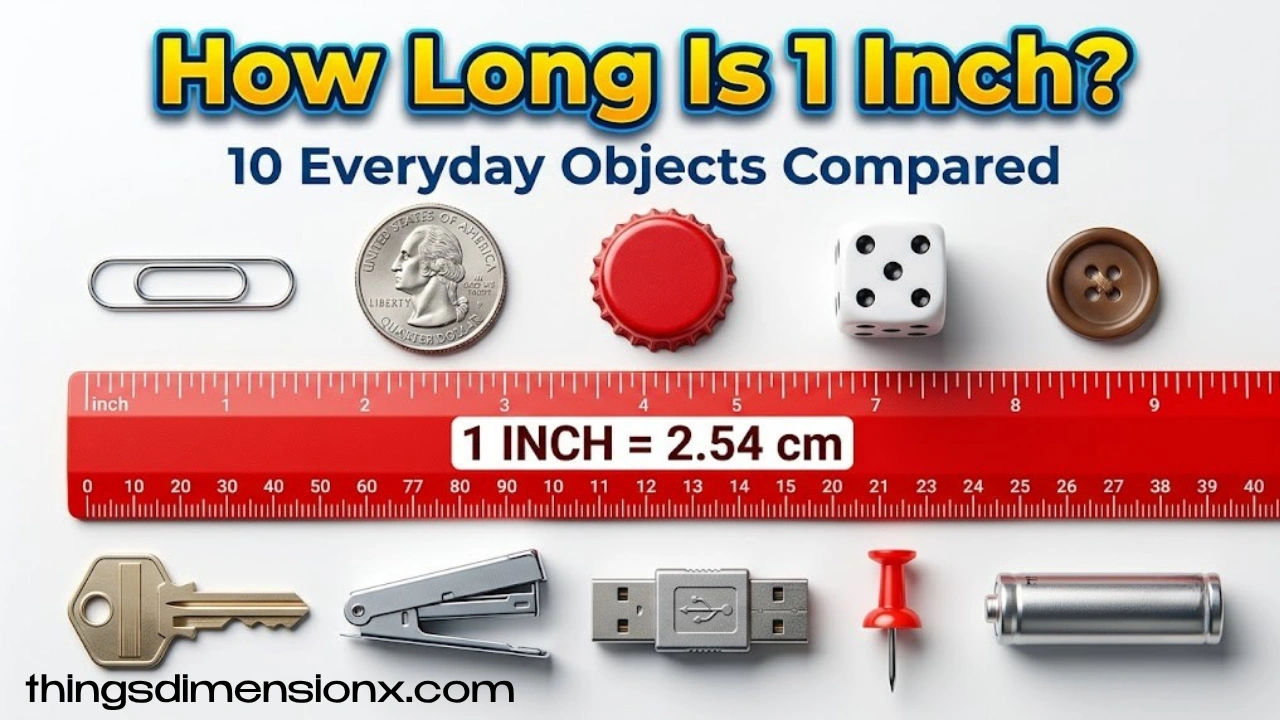
10 Everyday Objects That Are About 1 Inch Long
Here’s the fastest way to lock in a measurement: stop thinking in numbers and start thinking in objects. Below are ten things most Americans already own or handle regularly, each one landing close to that 1-inch mark.
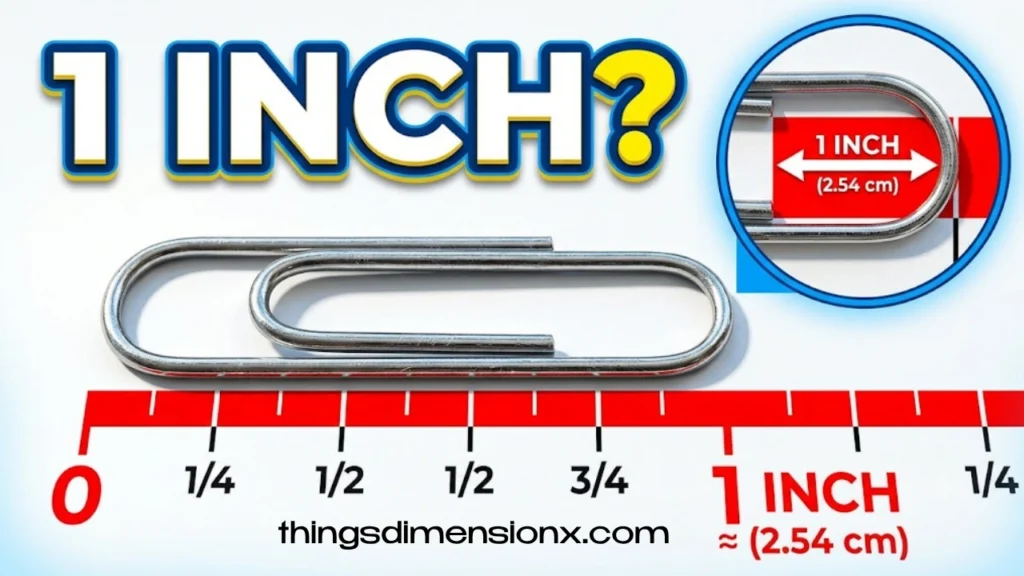
A standard paperclip. Measured along its short side, a regular metal paperclip lands right around 1 inch. Since these show up in nearly every drawer, backpack, and office supply bin in the country, it’s one of the most reliable, low-effort references out there.
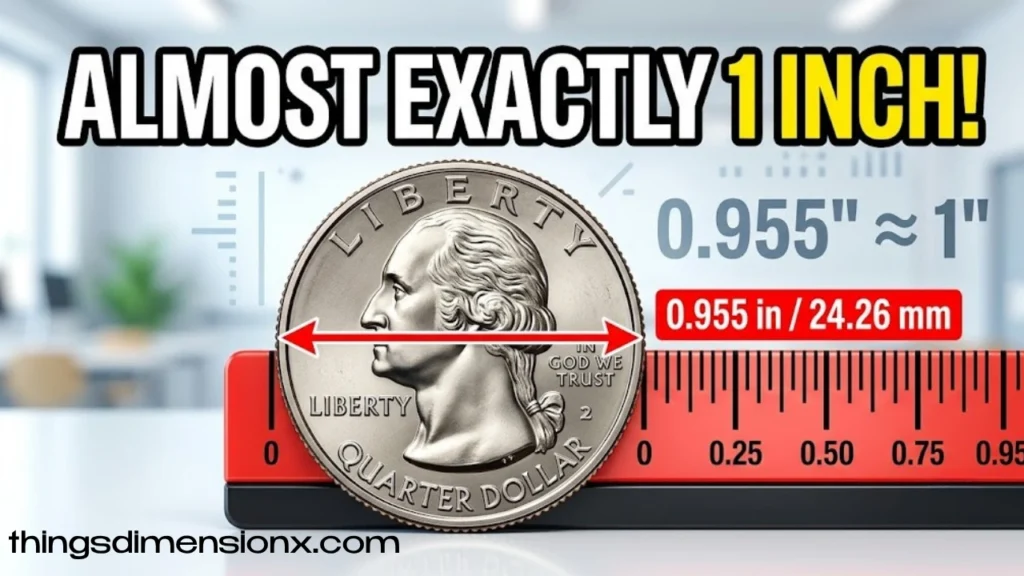
A U.S. quarter. This one’s a favorite among collectors and casual measurers alike. The U.S. Mint’s official specification puts a quarter’s diameter at 0.955 inches — just a hair under a full inch, but close enough to use in a pinch. Vending machines and coin sorters are built around this exact tolerance, which tells you how consistent that sizing really is.
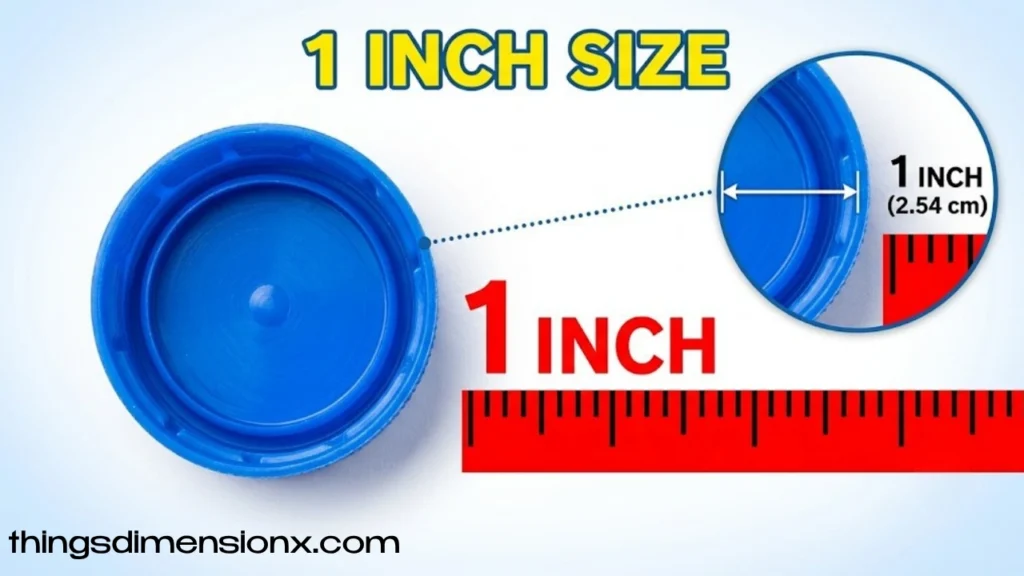
A bottle cap. Flip over a plastic soda or water bottle cap and measure across the top. Most land close to 1 inch in diameter. It’s a shape and size you’ve probably held today without thinking twice about it.
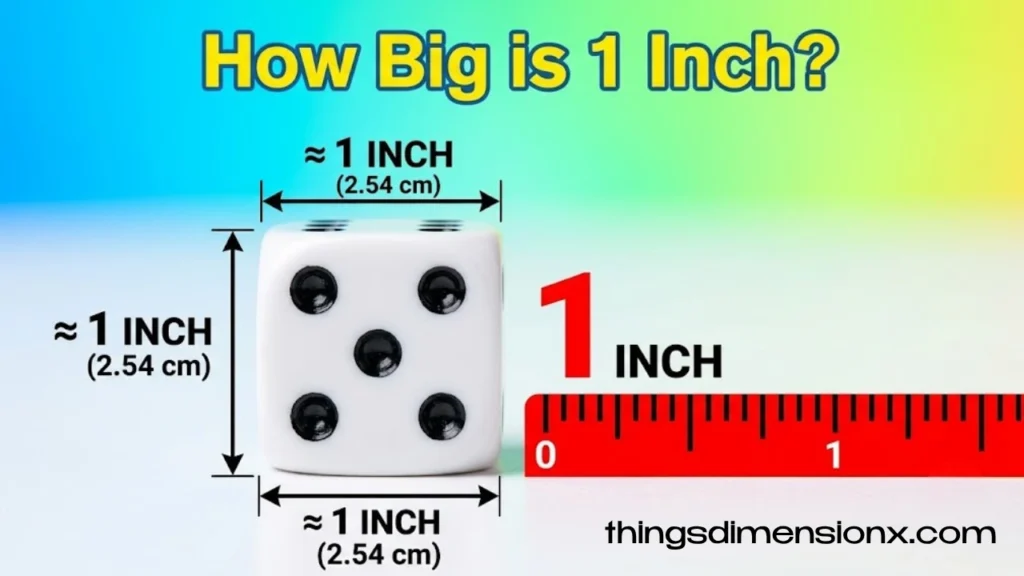
A standard die. The kind used in board games and Yahtzee. One side of a typical six-sided die runs close to 1 inch, sometimes just under, depending on the manufacturer.
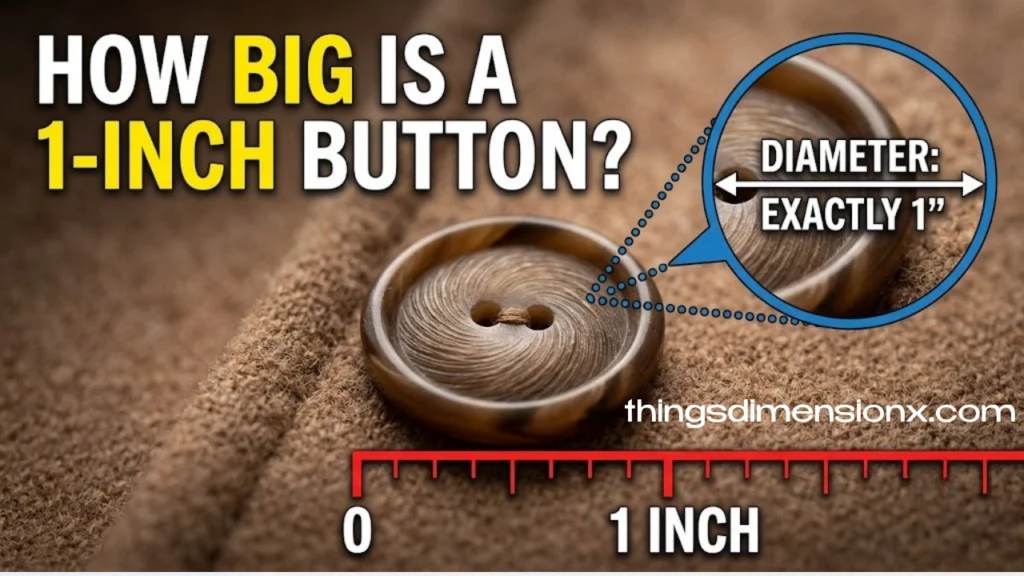
A shirt button. Larger buttons, the kind on jackets and coats, often sit right around 1 inch across. It’s a detail most people never measure, but it’s been engineered that way for a reason — anything much bigger looks bulky against fabric.
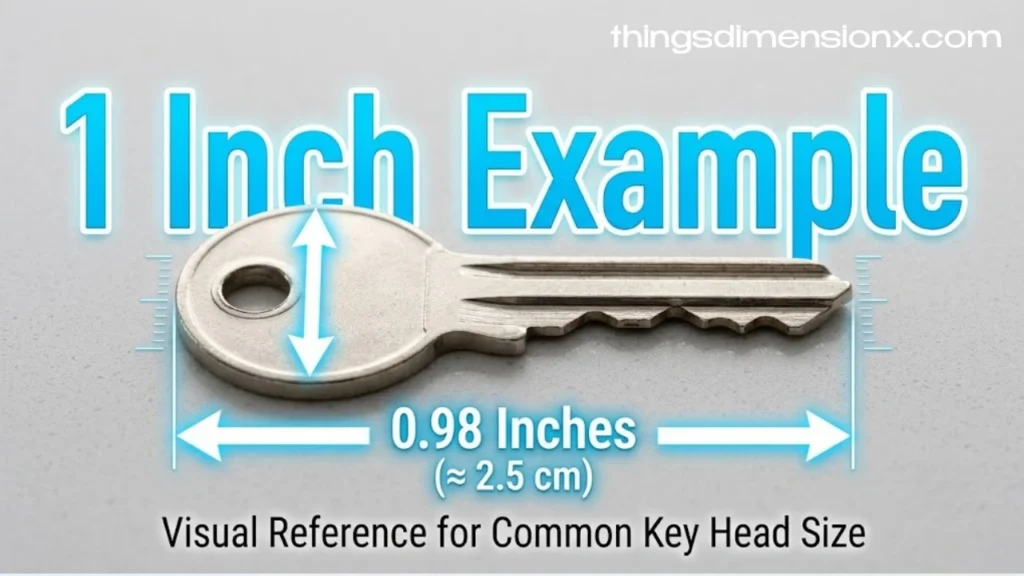
The width of a house key. The wide, flat head of a typical door key measures close to 1 inch. You’re carrying this reference around in your pocket most days without realizing it.
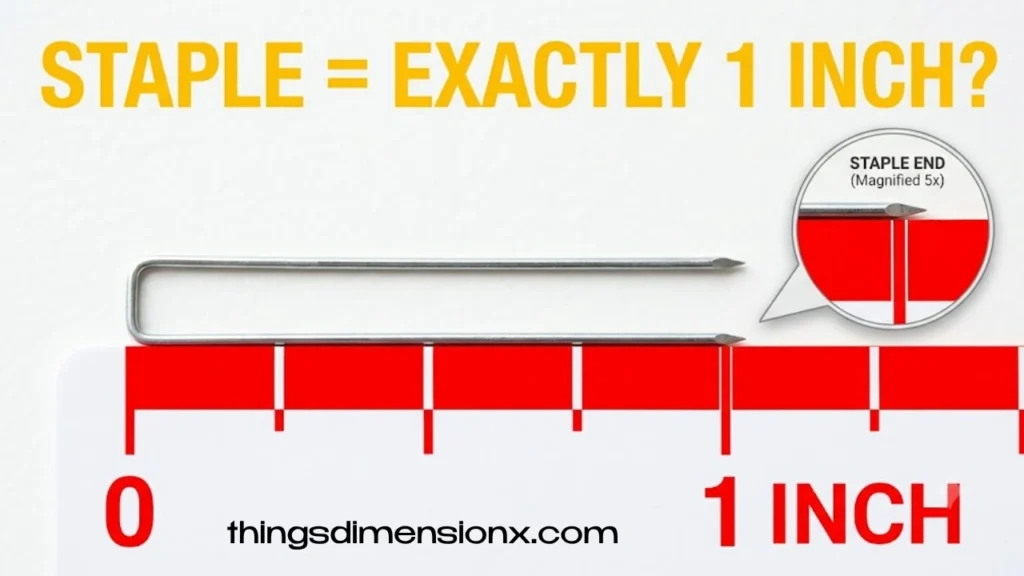
An opened office staple. Pop a staple out of a stapler and straighten it flat. End to end, it stretches close to 1 inch.
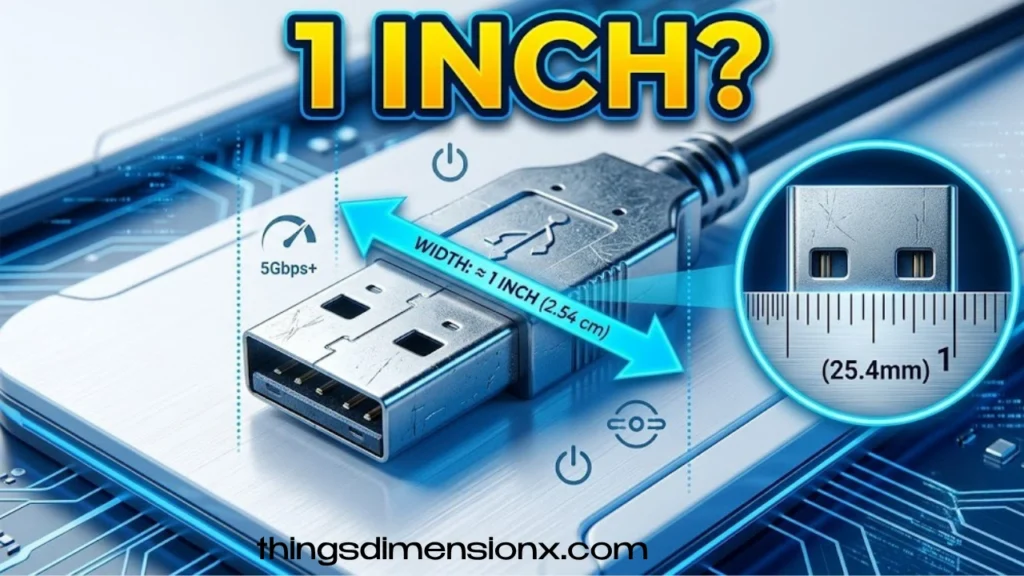
A USB-A connector. The metal tip of a standard USB flash drive — the part that slides into the port — measures close to 1 inch wide. Because USB hardware is manufactured to strict, standardized tolerances, this one’s surprisingly accurate as a modern-day reference.
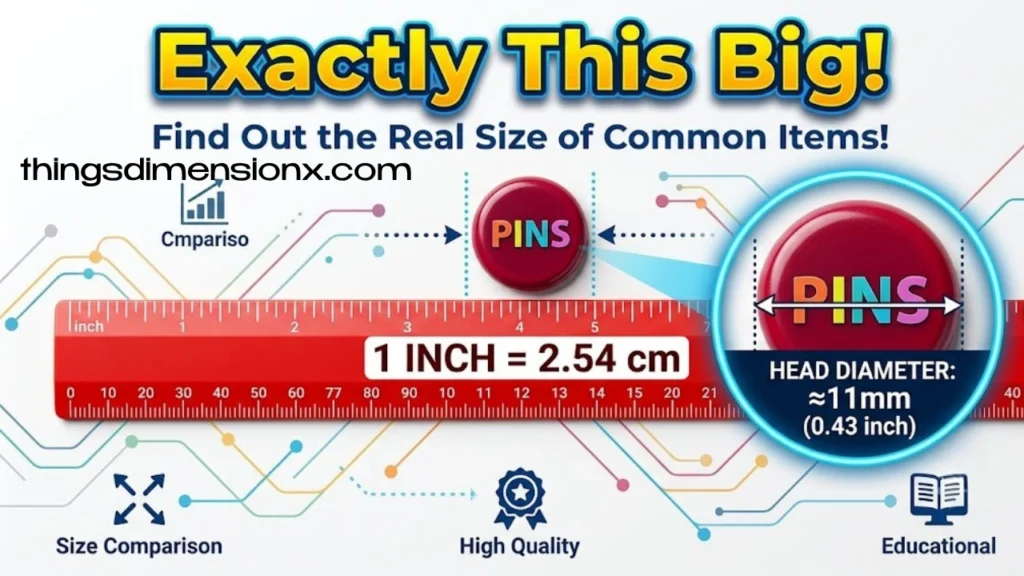
A pushpin. The flat, circular head of a standard corkboard pushpin usually measures close to 1 inch across. It’s a small item, but a genuinely useful one for gauging tiny gaps or hardware sizes.
A AA battery (diameter). Not the length — the width. Stand a AA battery on its end and look at the circular face. That diameter runs close to 1 inch, making it a handy stand-in when you’re eyeballing round objects like grommets or small washers.
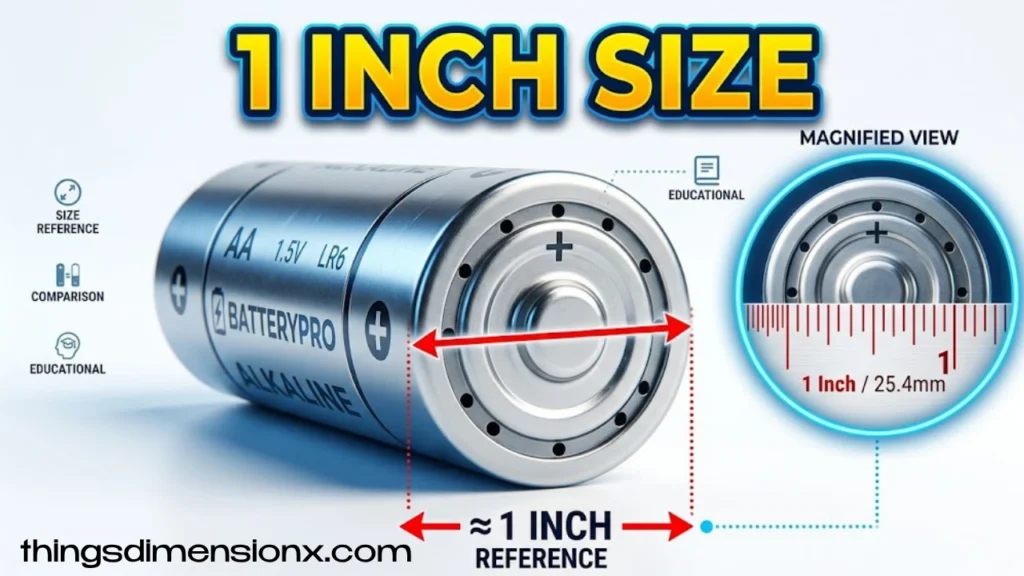
Line a few of these up side by side sometime. You’ll notice how consistent that 1-inch gap actually looks once you’ve seen it a handful of times.
How to Measure 1 Inch Without a Ruler (Finger & Body Reference Method)
Objects are useful, but your own hands are faster. No searching through a drawer required.
How long is an inch on my finger? For most adults, the top joint of the thumb — from the tip down to the first knuckle crease — measures close to 1 inch. This isn’t folklore. Tailors, carpenters, and traders relied on exactly this trick for centuries before rulers were common in every household.
Which finger is 1 inch long? The thumb is the most accurate one to use, specifically that top segment. The index finger can work too, but it tends to run slightly longer or shorter depending on the person, so the thumb joint stays the more dependable go-to.
Don’t have a thumb handy to check against a ruler once? Try a backup method: fold a standard U.S. dollar bill in half, then in half again. A dollar bill runs 6.14 inches long, so a few careful folds gets you into the ballpark of 1 inch without any tools at all.
FAQs
How does 1 inch look like?
It’s a short, compact length — close to the size of a bottle cap or the width of a AA battery standing on end. Think small and stubby, not long and thin.
How long is an inch on my finger?
On most adult hands, the top joint of the thumb — from the fingertip to the first knuckle — measures close to 1 inch. It’s one of the oldest, most practical body-based measuring tricks around.
Which finger is 1 inch long?
The thumb is the go-to. Its top joint consistently lands closest to 1 inch across most adult hand sizes, making it more reliable than the index finger for quick estimates.
What is an example of a 1 inch object?
A U.S. quarter is one of the most common examples, measuring 0.955 inches across. A standard paperclip and a typical bottle cap are two more everyday items that land right around that same mark.
Conclusion
1 inch equals 2.54 centimeters — that part’s fixed and official. But the number only becomes useful once you connect it to something real: a quarter in your pocket, a paperclip on your desk, or the top joint of your own thumb.
Next time you need a quick size check and there’s no ruler in sight, you’ve already got a handful of 1-inch references within arm’s reach.