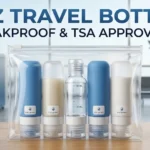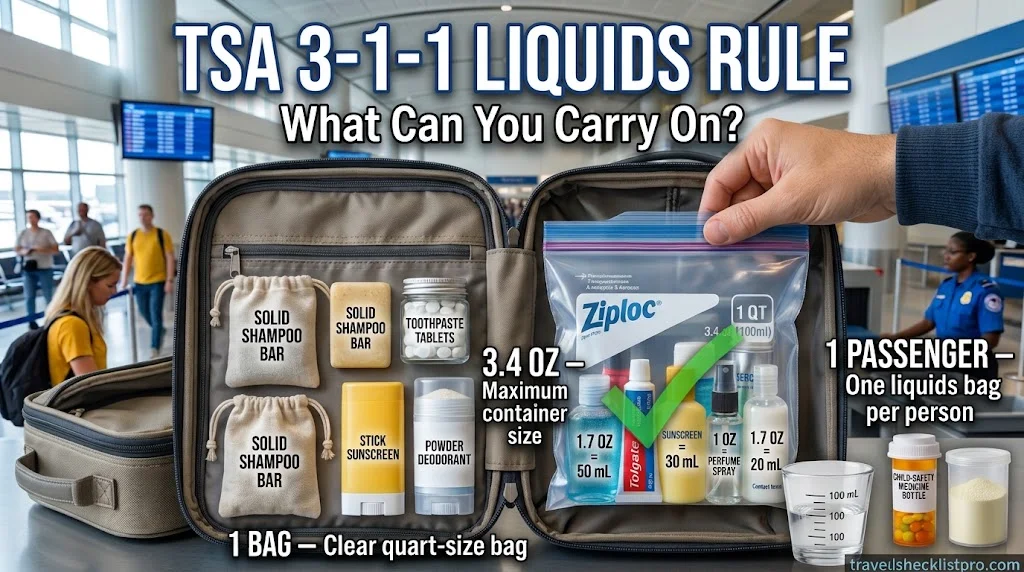
Many travelers search for the 3 ounce liquids rule. The real TSA liquids rule is a little different. The limit is 3.4 ounces (100 mL) per container.
This guide clears up the mix-up. You’ll get the exact conversions, a list of what is allowed, and simple packing tips for your next flight.
Table of Contents
What Is the TSA 3 Ounce Liquids Rule (3-1-1)?
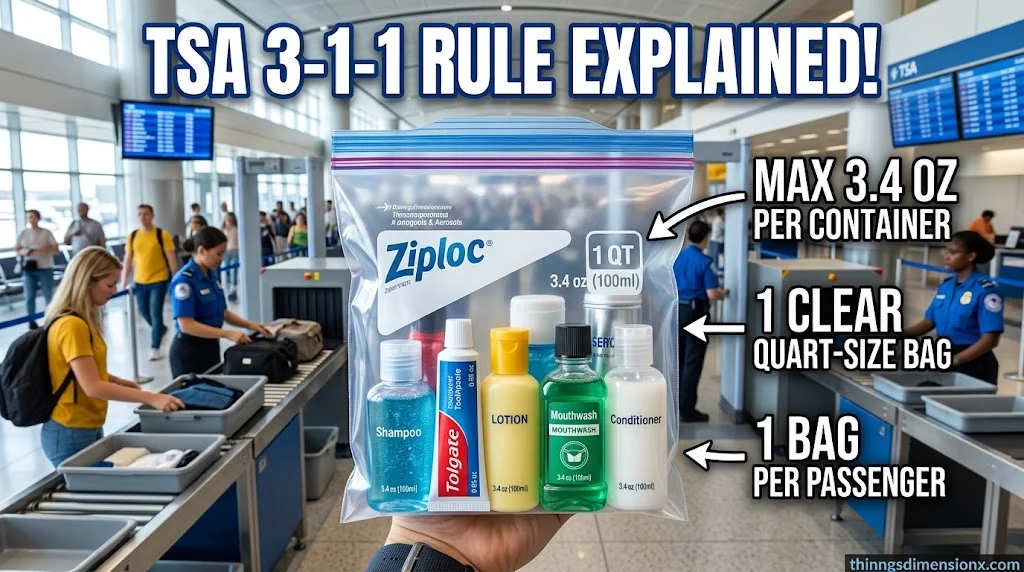
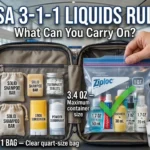
The TSA 3-1-1 rule limits liquids, gels, aerosols, creams and pastes in your carry-on bag. Each passenger may carry them in containers of 3.4 ounces or 100 milliliters, and each passenger gets one quart-size bag (TSA).
Here is what the numbers mean:
- 3 means 3.4 ounces per container.
- 1 means one clear, quart-size, zip-top bag.
- 1 means one bag per passenger.
Common items that count include shampoo, toothpaste, lotion, mouthwash and hair gel. Jam, sauces and creamy dips count too.
One detail trips up many travelers. Officers check the labeled container size, not what is left inside. A six-ounce bottle holding two ounces of shampoo still goes in the bin (Airport Overview).
The rule is old, but it still stands. It has been the federal standard at U.S. airports since 2006. You can read the official wording on the TSA 3-1-1 page.
Newer CT scanners may let you keep your liquids bag inside your carry-on at some airports. But the rule itself has not changed (Autopilot). The U.K. has started to roll back its liquids rules (The Points Guy), but U.S. checkpoints still enforce the limit. Always pack to 3-1-1.
3 Ounces vs 3.4 Ounces: Exact mL, Grams and Size Conversions
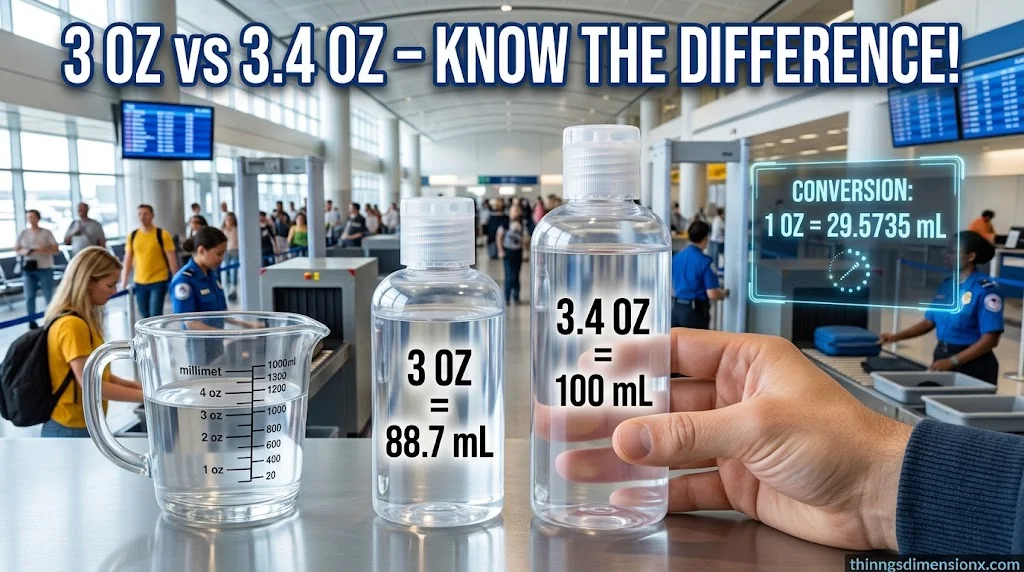
Here are the exact numbers.
3 fluid ounces equal about 88.7 mL. One US fluid ounce is 29.57 mL. So a 3 oz bottle fits under the limit.
100 mL equals about 3.38 fluid ounces. TSA rounds this up to 3.4 oz. A 3 oz bottle is not exactly 100 mL, but it is allowed.
When preparing for a long flight, understanding TSA liquid restrictions is just one part of packing efficiently. If you’re also curious about measuring larger travel-related spaces or objects, exploring everyday objects that are about 102 inches long can give you a helpful real-world perspective on this unusual measurement.
Fluid ounces and weight ounces are not the same thing. Fluid ounces measure space. Weight ounces measure mass. 3 ounces in grams is about 85 g, so 3 oz is not 100 g. 100 g is about 3.5 oz.
| Ounces (fl oz) | Milliliters (mL) | TSA carry-on? |
|---|---|---|
| 1 oz | 29.6 mL | Yes |
| 2 oz | 59.1 mL | Yes |
| 3 oz | 88.7 mL | Yes |
| 3.4 oz | 100.5 mL | Yes (the limit) |
| 4 oz | 118.3 mL | No |
Watch the label on your bottle. Containers marked “4 oz” or larger do not pass, even if they are half empty. Larger containers must go in a checked bag (The Points Guy).
TSA-Approved 3 Ounce Liquids: What’s Allowed, What’s Banned and Exceptions
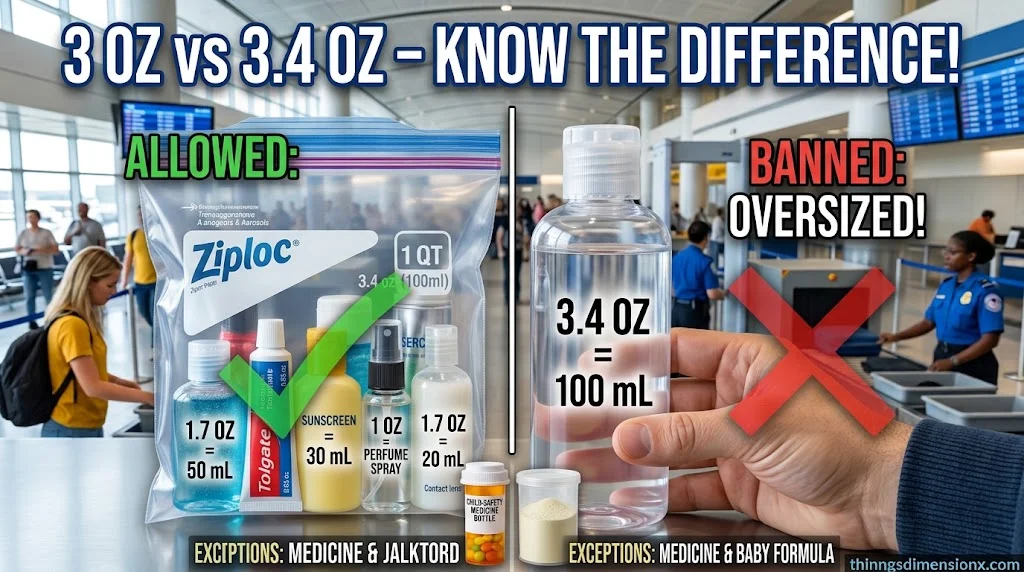
What can go in your carry-on? Any liquid in a container of 3.4 oz or less, as long as it fits in your quart bag. Good examples include:
- Travel-size shampoo and conditioner
- Sunscreen and face wash
- Liquid makeup and perfume
- Contact lens solution
- Small bottles of oil, honey or sauce
What stays out? Full-size bottles, large aerosol cans and drinks bought before security. Fill an empty water bottle after you pass the checkpoint.
Some items surprise travelers. Snow globes, gel-filled candles and canned soups can all count as liquids (Tangieco). Pack them in your checked bag.
Are there exceptions? Yes. Medications and infant or child nourishment can exceed 3.4 ounces (MilePro). Tell the officer at the start of screening. Baby formula, breast milk and medical liquids may get extra checks, which is normal.
Flying abroad? Most countries use the same 100 mL limit. Duty-free liquids must stay in a sealed, tamper-evident bag.
How to Pack 3 Ounce Liquids for Carry-On Without Delays
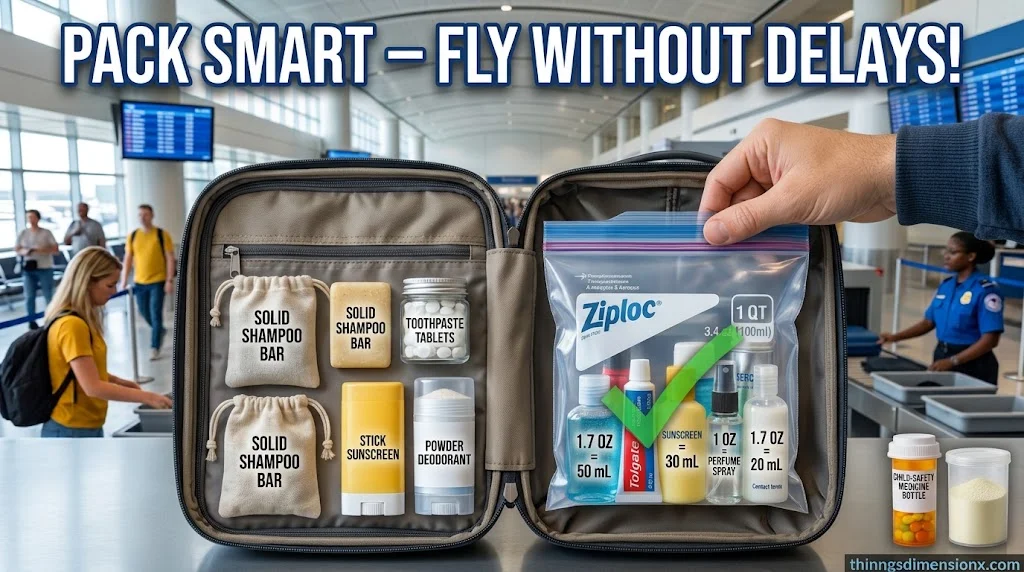
Good packing saves time at the checkpoint. Follow these steps:
- Pick bottles marked 3.4 oz or less. A 3 oz bottle is a safe choice.
- Use a clear, zip-top, quart-size bag. Close it fully.
- Put the bag on top of your carry-on, so you can grab it fast.
- Squeeze out extra air and tape the caps to stop leaks.
- Use a second zip bag as backup.
Try these smart swaps to save space:
- Solid shampoo bars
- Toothpaste tablets
- Stick sunscreen
- Powder deodorant
Solid items do not count as liquids. This leaves more room in your bag for the things that do.
Avoid these common mistakes:
- Packing a bag that will not close
- Bringing a second liquids bag
- Forgetting a drink or a dip in your backpack
FAQs
Is 3 ounces 100 mL?
No. 3 fluid ounces equal about 88.7 mL. The TSA limit is 3.4 oz, which is roughly 100 mL. So a 3 oz container is under the limit and allowed in your carry-on.
What does 3 ounces look like?
It is about 6 tablespoons, or 0.375 cup. It also equals two standard shot glasses. A soda can holds 12 oz, so 3 oz is about one quarter of a can.
Is 3 ounces 100g?
No. 3 ounces in grams is about 85 g. A weight of 100 g is closer to 3.5 oz. For a visual, 3 oz of cooked meat is about the size of a deck of cards.
What is 3 oz in mL?
3 oz in mL is about 88.7 mL for fluid ounces. Multiply the ounces by 29.57 to get milliliters.
Conclusion
The TSA 3 ounce liquids rule is simple once you know the numbers. Keep each bottle at 3.4 oz (100 mL) or less, use one quart-size bag, and carry one bag per person. A 3 oz bottle is safe, and rules for medicine and baby items are more flexible. Check TSA.gov before you fly, since rules can change.