You need to measure 10 grams and there’s no scale in sight. It happens more than you’d think — in the kitchen, at the mailbox, or just out of curiosity.
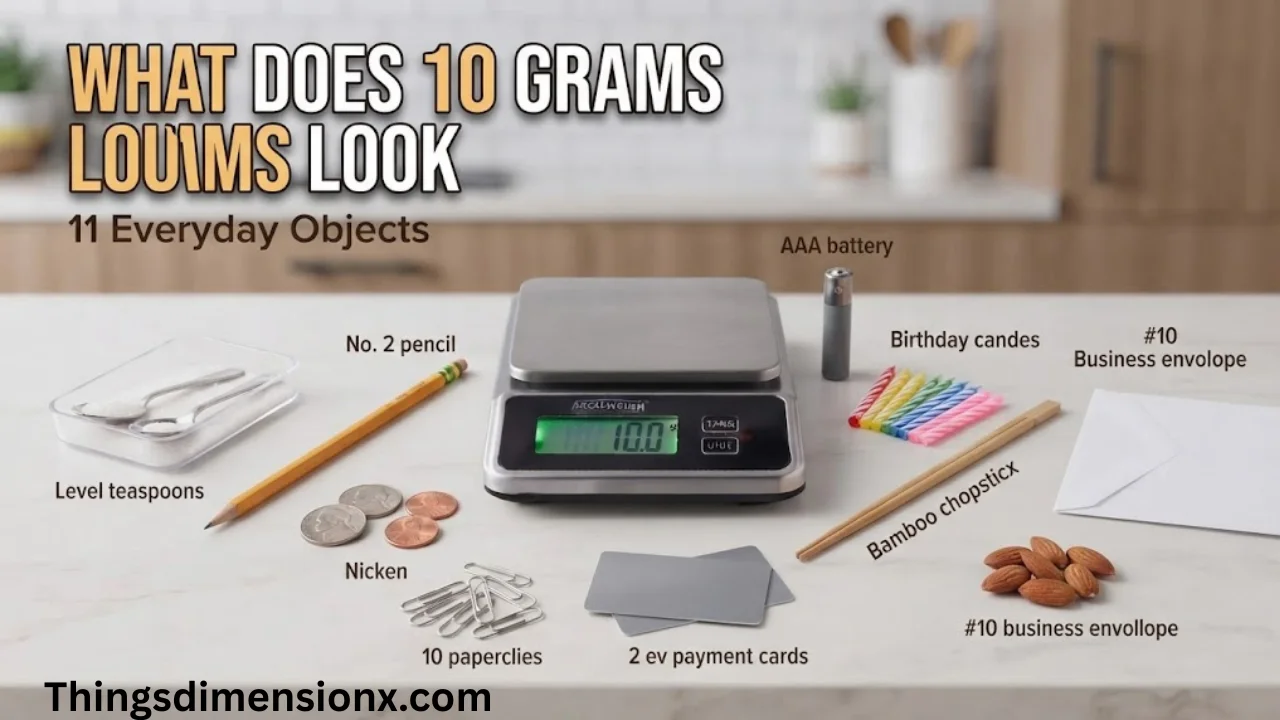
This guide fixes that fast. Below, you’ll find the exact weight of 10 grams heavy in units you already know, plus 11 objects that match it closely, no scale required.
Table of Contents
What Is 10 Grams in Weight? (Quick Answer)
10 grams equals 0.35 ounces, 0.022 pounds, or 0.01 kilograms. This comes straight from the definition of the gram: it’s exactly one-thousandth of a kilogram, the base mass unit in the International System of Units (SI). This standard is why a nutrition label, a postage scale, and a jeweler’s balance all agree on what “10 grams” means.
Here’s the quick breakdown:
| Unit | Equivalent |
|---|---|
| Kilograms | 0.01 kg |
| Ounces | 0.35 oz |
| Pounds | 0.022 lbs |
| Milligrams | 10,000 mg |
| Carats | 50 ct |
Is 10 grams heavy? Not really. It’s light enough to barely register in your palm — closer to a couple of coins than anything you’d call substantial.
11 Everyday Objects That Weigh About 10 Grams
Here are real, familiar items you can check against right now.
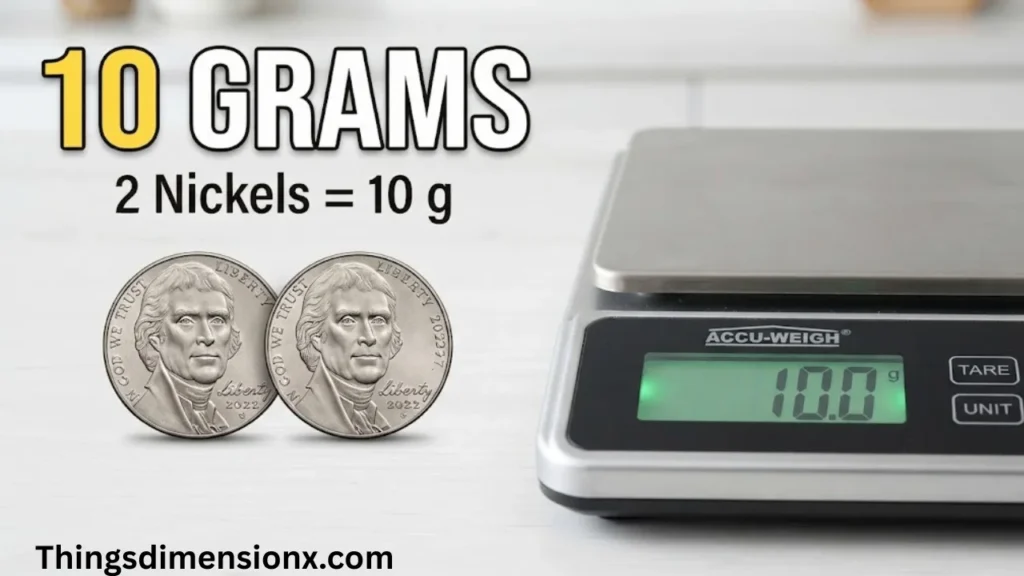
Two US nickels. Each nickel is struck to a precise 5-gram standard by the US Mint, made from a 75% copper, 25% nickel alloy. Two together land exactly on 10 grams — the most reliable no-scale reference around.
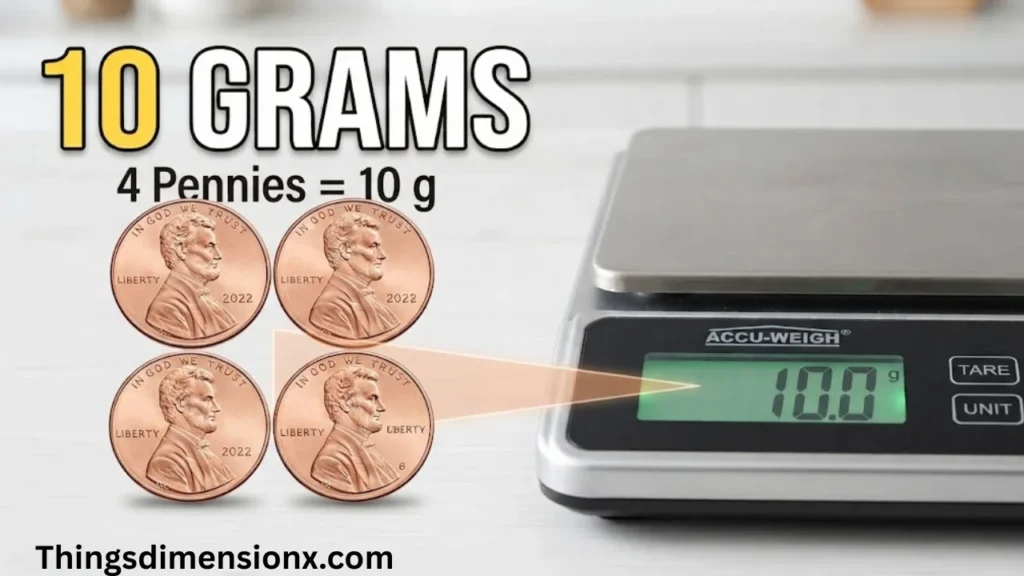
Four US pennies. Since 1982, pennies are copper-plated zinc, each weighing 2.5 grams. Four of them add up to precisely 10 grams, making spare change a surprisingly accurate measuring tool.
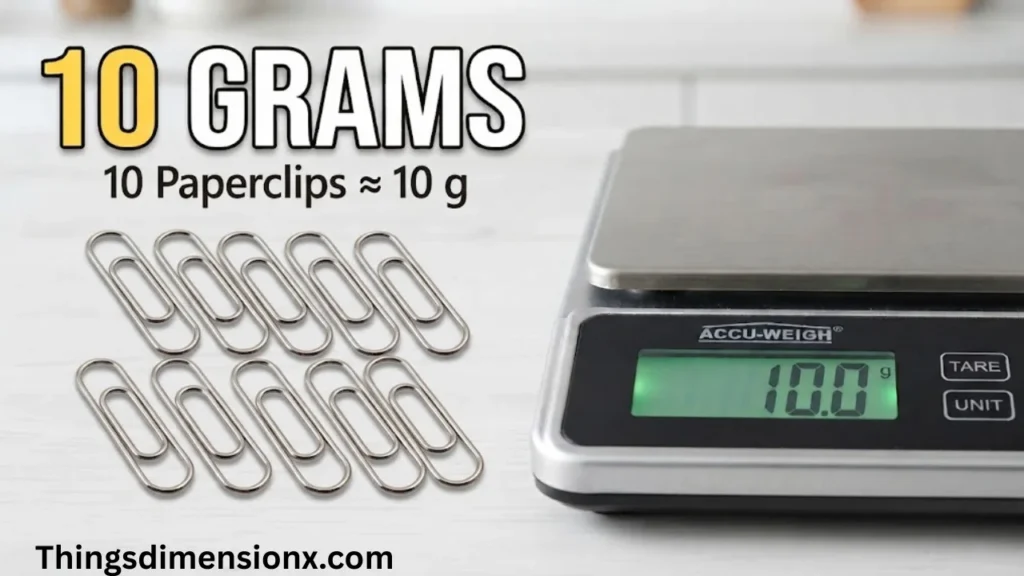
Ten standard paperclips. A regular metal paperclip weighs close to 1 gram. Grab ten from a desk drawer, and you’re holding a near-exact 10-gram reference with zero setup.
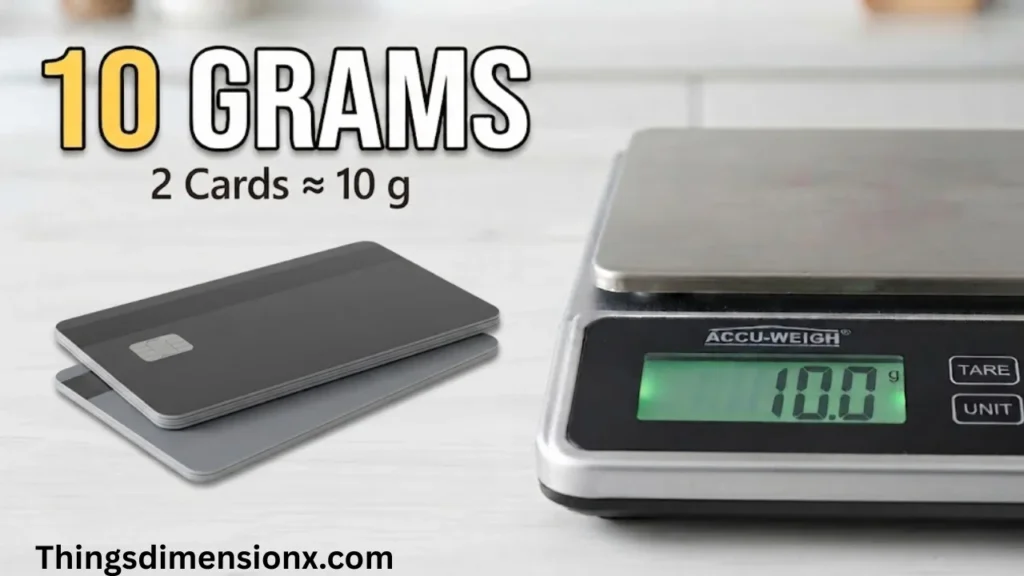
Two credit or debit cards. Payment cards follow the ISO/IEC 7810 international standard, which keeps every card’s weight consistent at roughly 5 grams each. Stack two, and you’re at 10 grams.
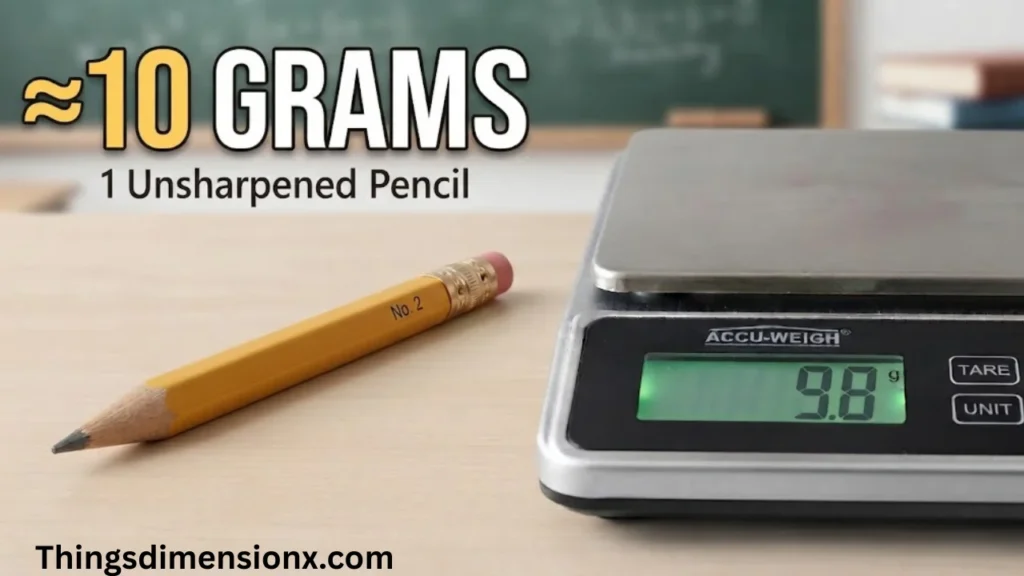
One unsharpened pencil. A standard wooden No. 2 pencil, before sharpening, weighs between 8 and 10 grams. The cedar barrel, graphite core, and eraser combine to land right in this range.
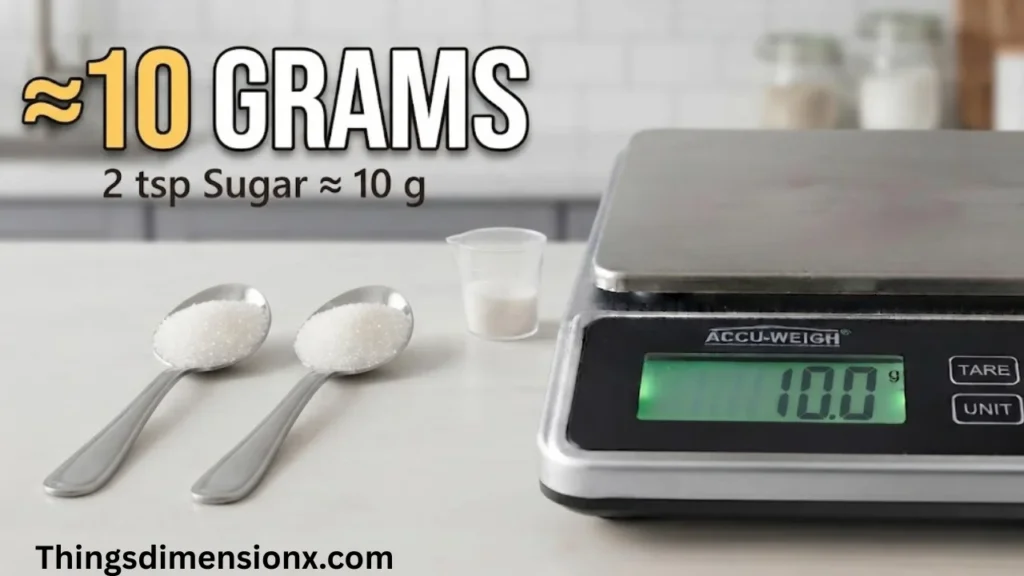
Two teaspoons of granulated sugar. Each level teaspoon holds close to 5 grams of white sugar, so two teaspoons total roughly 10 grams. This is one of the most useful kitchen references for bakers without a scale.
Must visit: 3 Inches Long: 11 Everyday Objects That Are About 3 Inches Long
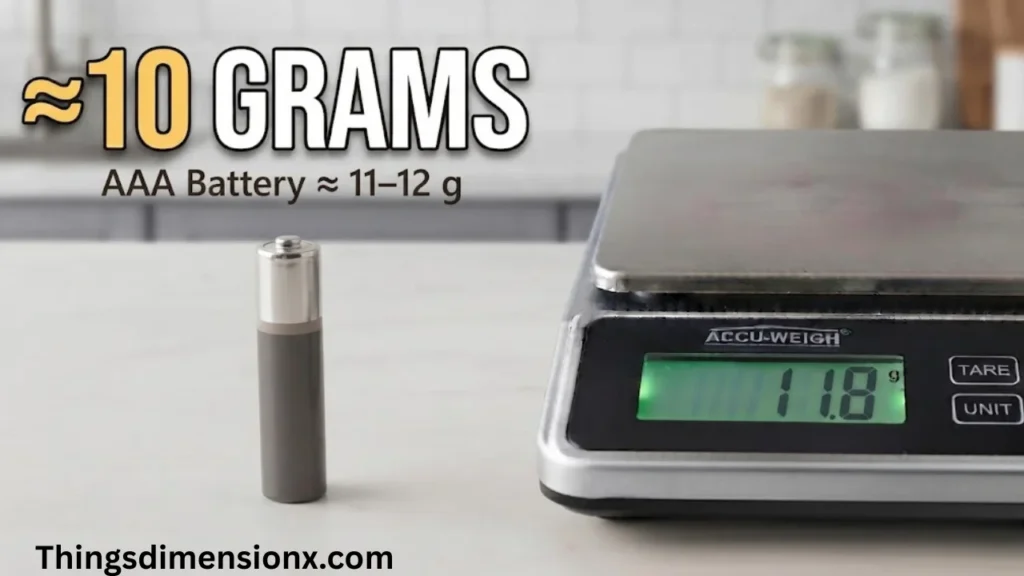
A AAA battery. A single alkaline AAA battery weighs close to 11 to 12 grams — slightly over, but close enough for a fast visual estimate.
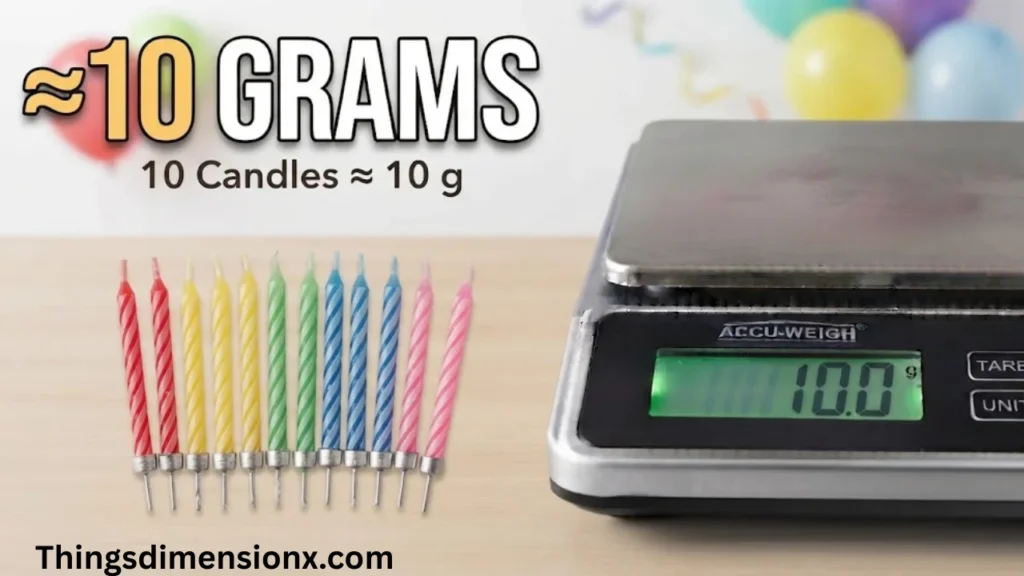
Ten birthday candles. Standard unlit birthday candles weigh close to 1 gram each. Ten of them together approximate 10 grams, and most households have a box tucked away.
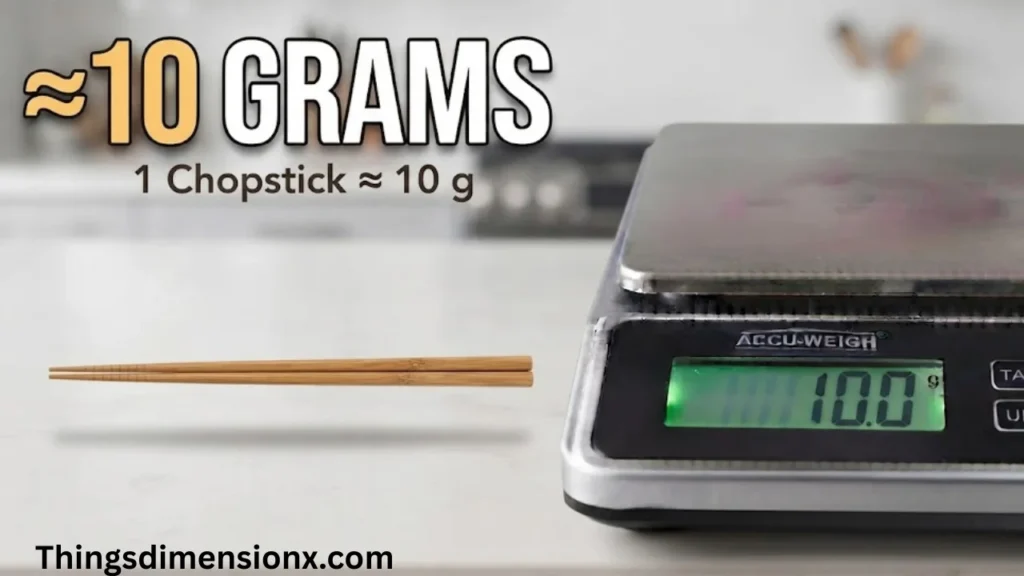
One wooden chopstick. A single bamboo chopstick weighs approximately 10 grams, thanks to bamboo’s naturally consistent, lightweight cellular structure.
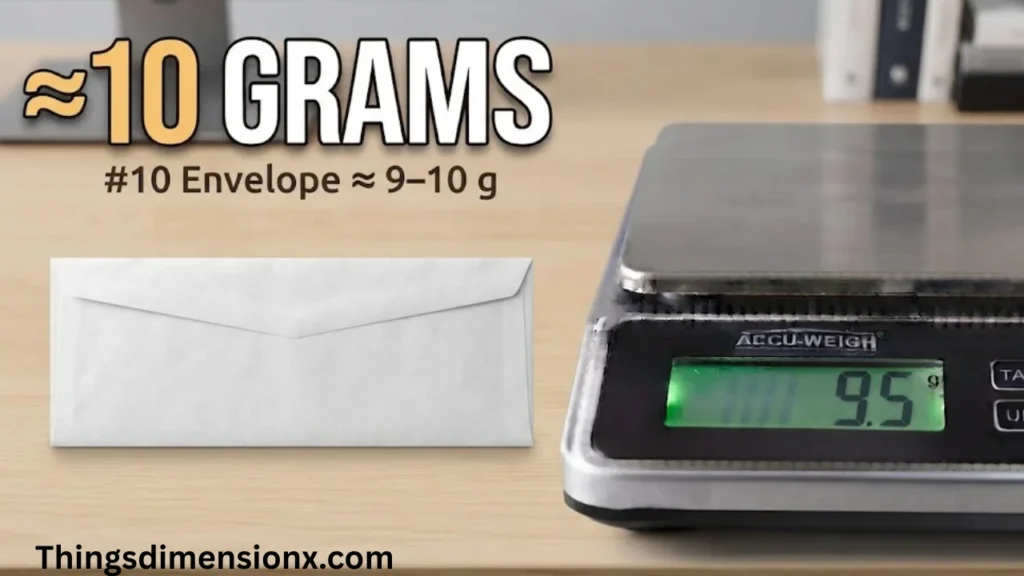
A #10 business envelope. An empty standard envelope, the kind used for billing and mail across the US, weighs close to 9 to 10 grams.
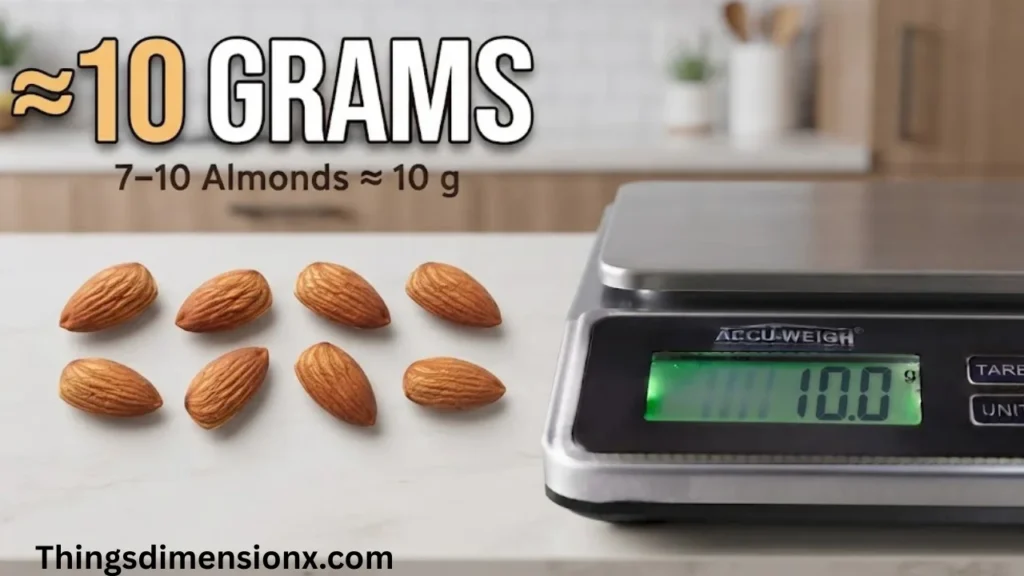
A small handful of almonds. Roughly 7 to 10 whole almonds weigh about 10 grams, since each nut averages 1 to 1.5 grams — a quick, edible reference for portion tracking.
How to Weigh 10g at Home Without a Scale
No kitchen scale nearby? These methods get you close.
Reach for coins. Two US nickels equal 10 grams exactly, since the US Mint holds each coin to a strict 5-gram tolerance. This is the single most precise scale-free method available.
Use measuring spoons. For dry ingredients like sugar or salt, two level teaspoons land close to 10 grams. Always level the top with a straight edge — a heaping spoon throws off the estimate.
Build a simple balance. Rest a ruler across a pencil to create a makeshift fulcrum. Place your known 10-gram reference — like two nickels — on one side, and the item you’re weighing on the other. When they balance, you’ve confirmed 10 grams.
How Big Is a 10 Gram? (Size vs. Weight Explained)
How big is a 10 gram? This is where things get interesting — because 10 grams describes weight, not physical size. The same weight can look completely different depending on density.
Ten grams of lead fits in a space smaller than a coin, since lead is extremely dense. Ten grams of cotton balls, by contrast, could fill your whole palm and spill over, because cotton is mostly air by volume. This is why a gram is a unit of mass, while “big” or “small” describes volume — two separate properties that don’t always move together.
That’s also why coins make such reliable references: their density and shape stay fixed, so their weight-to-size ratio never changes.
10 Grams Compared to Other Weights
Seeing 10 grams next to nearby weights builds a faster mental sense of scale.
| Weight | Real-World Anchor |
|---|---|
| 5 grams | One US nickel |
| 10 grams | Two nickels or ten paperclips |
| 20 grams | Four nickels or a small AA battery pair |
| 50 grams | One medium egg |
FAQs
How big is a 10 gram?
“Big” depends on density, not just weight. Ten grams of a dense material like a coin is tiny, while the same weight in something light like cotton can fill your whole hand.
What is 10 grams in weight?
10 grams equals 0.35 ounces, 0.022 pounds, or 0.01 kilograms.
How to weigh 10g at home?
Use two US nickels for an exact 10-gram reference, or measure two level teaspoons of granulated sugar with a standard kitchen spoon.
How much does 10 grams look like?
It looks like two stacked nickels, ten paperclips, or a single unsharpened pencil — small enough to rest easily on one fingertip.
Conclusion
10 grams stops feeling abstract once you connect it to things already in your pocket or desk drawer — a couple of coins, a handful of paperclips, a pencil. Next time you need a quick weight check with no scale around, you already have everything you need.