You’re following a recipe, and it calls for 100 grams heavy of something. No kitchen scale in sight. What now?
This guide clears it up fast. Below, you’ll find the exact weight of 100 grams in units you already use, plus 11 real objects that match it closely — no scale required.
Table of Contents
How Much Is 100 Grams? (Quick Answer)
100 grams equals 3.53 ounces, 0.22 pounds, or 0.1 kilograms. This comes from the definition of the gram itself: it’s exactly one-thousandth of a kilogram, the base unit of mass in the International System of Units (SI). That standard governs weight measurement worldwide, including on every US nutrition label.
Here’s the breakdown in one glance:
| Unit | Equivalent |
|---|---|
| Kilograms | 0.1 kg |
| Ounces | 3.53 oz |
| Pounds | 0.22 lbs |
| Milligrams | 100,000 mg |
How heavy is 100 grams, really? Picture a medium apple, or roughly a fifth of a pound. It’s light enough to hold one-handed, but heavy enough to notice.
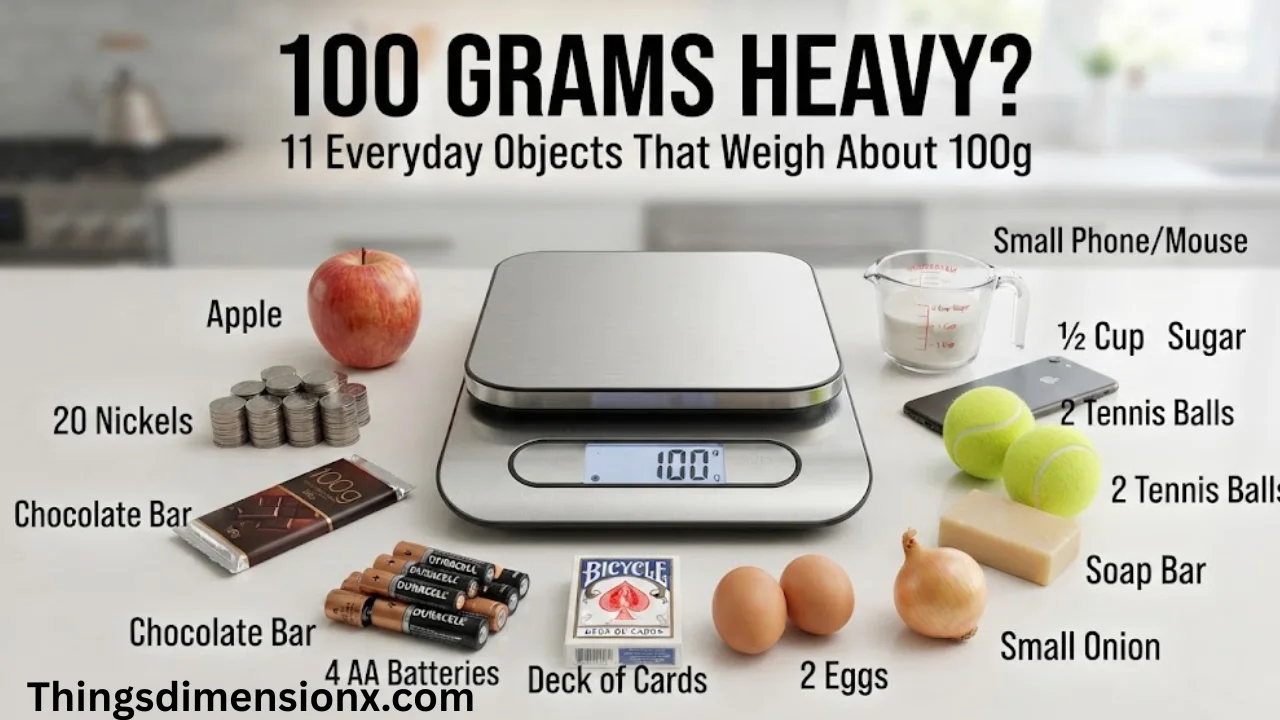
11 Everyday Objects That Weigh About 100 Grams
These are common items you can check against right now — no lab equipment needed.
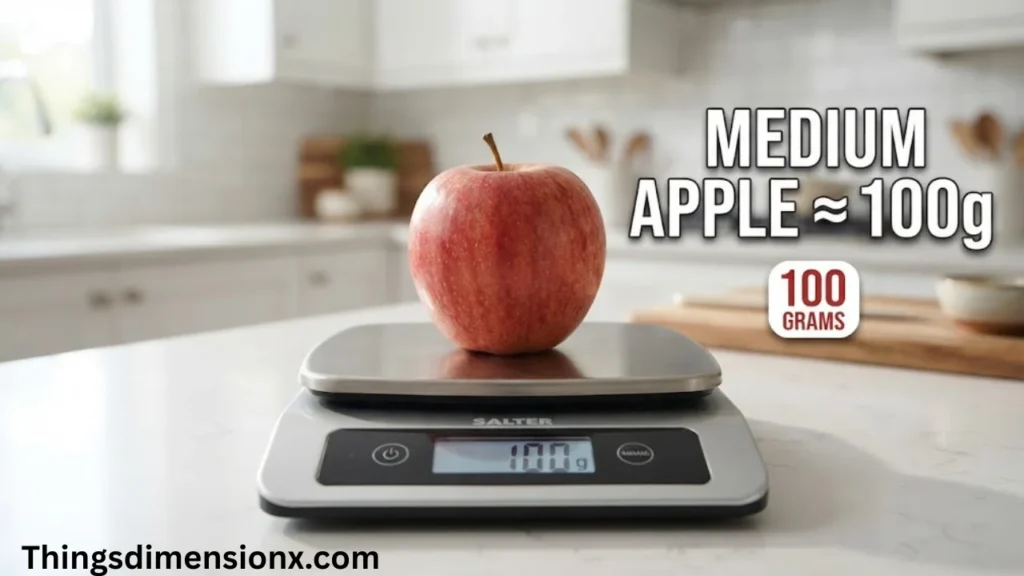
A medium apple. Most grocery-store apples land between 100 and 200 grams, with the smaller end sitting right at 100g. Weight varies by variety — a Honeycrisp runs heavier than a Gala.
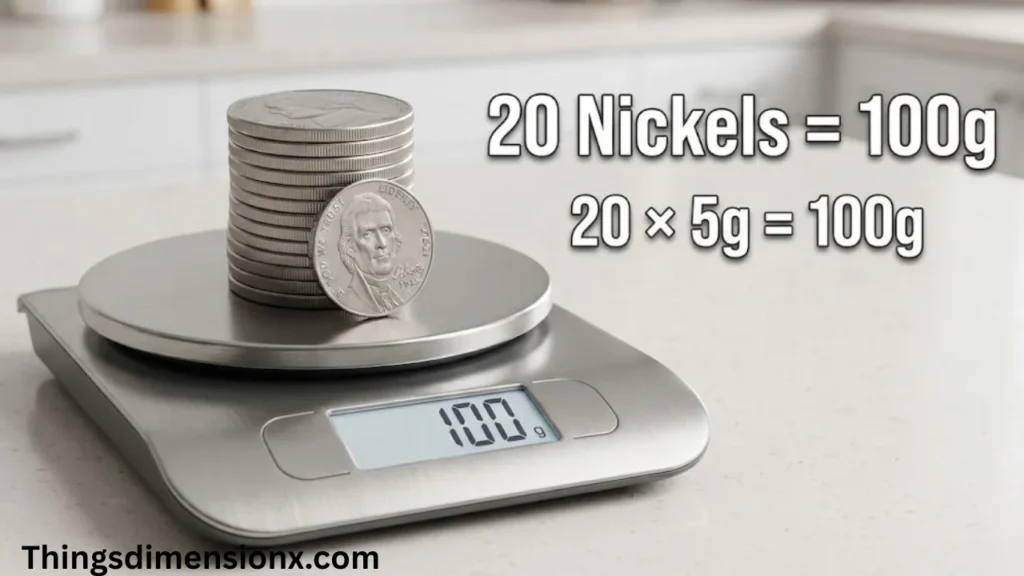
Twenty US nickels. Each nickel weighs exactly 5 grams, a standard the US Mint has held since 1866. Twenty of them, stacked or bagged, hit 100 grams precisely — a handy trick for calibrating a cheap digital scale.
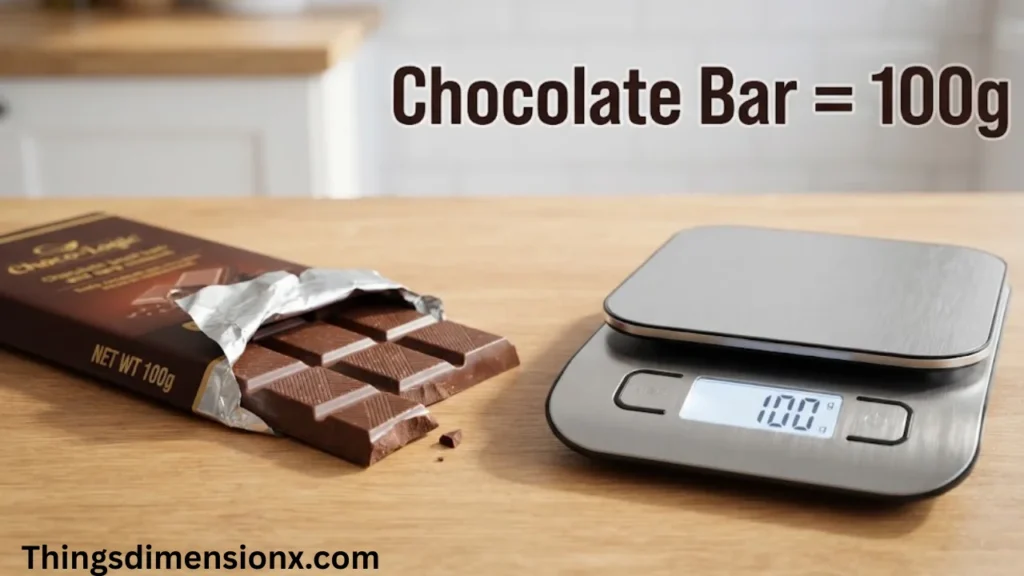
A standard chocolate bar. Many bars are packaged at exactly 100 grams, since that’s treated as a single retail serving size in much of the world. Check the wrapper — the number is usually printed right on it.
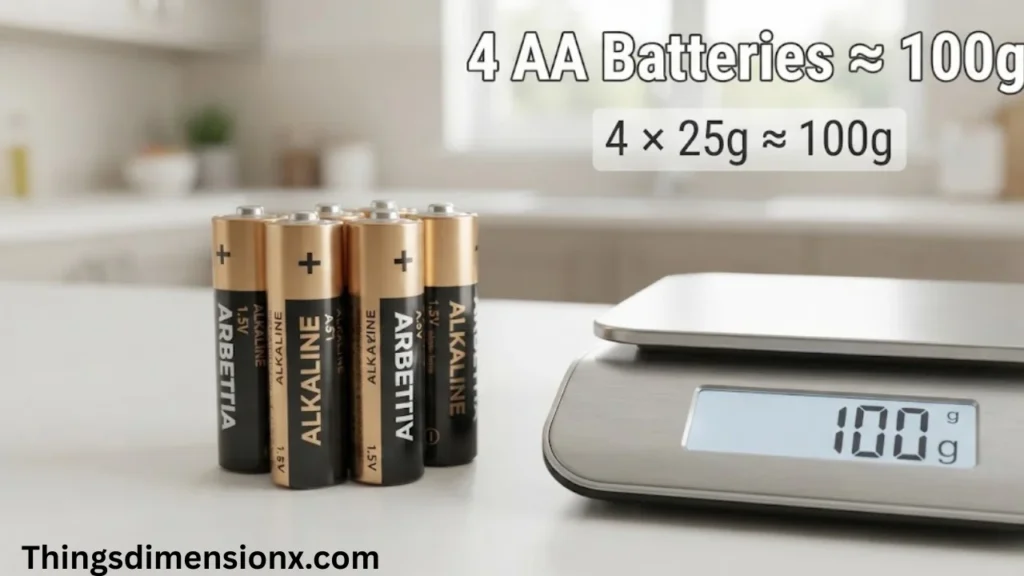
Four AA batteries. A single alkaline AA battery weighs close to 25 grams. Four of them together land almost exactly on 100 grams, and most households have a spare set in a drawer.
Must visit: 10 Grams Heavy? 11 Everyday Objects That Weigh About 10 Grams
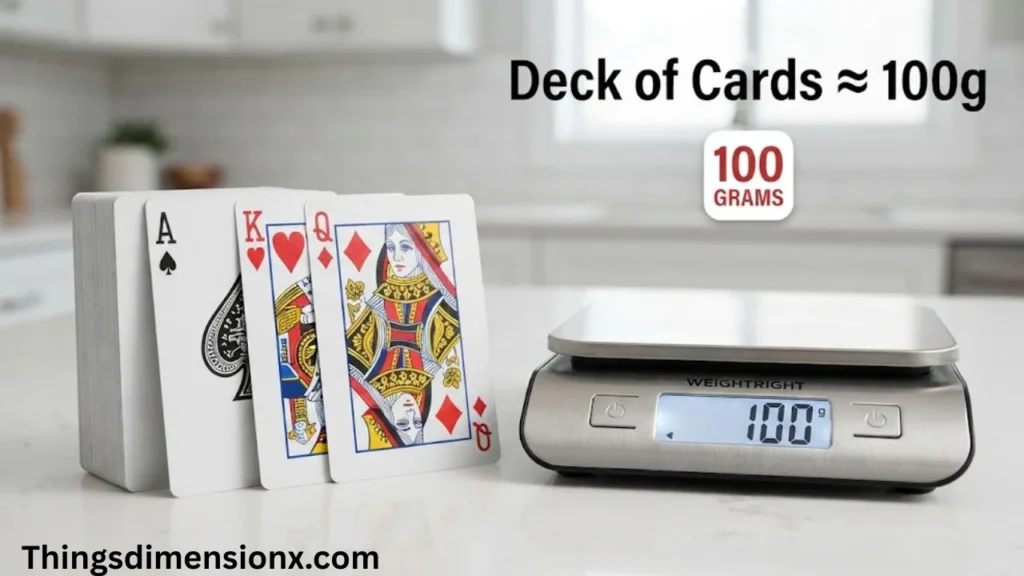
A deck of playing cards. A full 52-card deck, jokers included, weighs about 100 grams. Dietitians often use this comparison to describe a protein portion — a cooked piece of meat roughly the size and thickness of a card deck is close to a 100-gram serving.
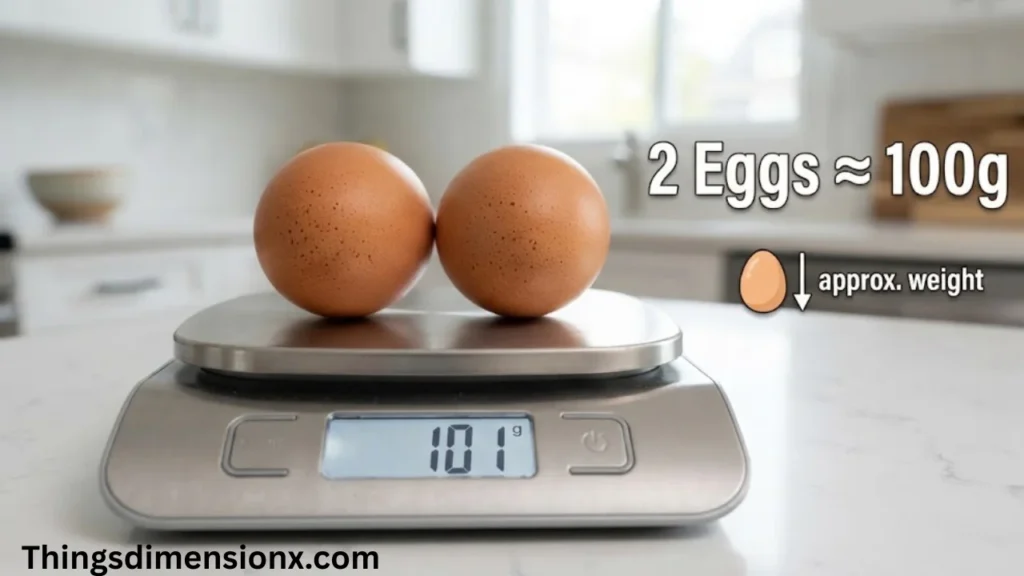
Two medium eggs. One medium egg weighs close to 50 grams, so two together land near 100 grams. This holds true whether the eggs are raw or boiled.
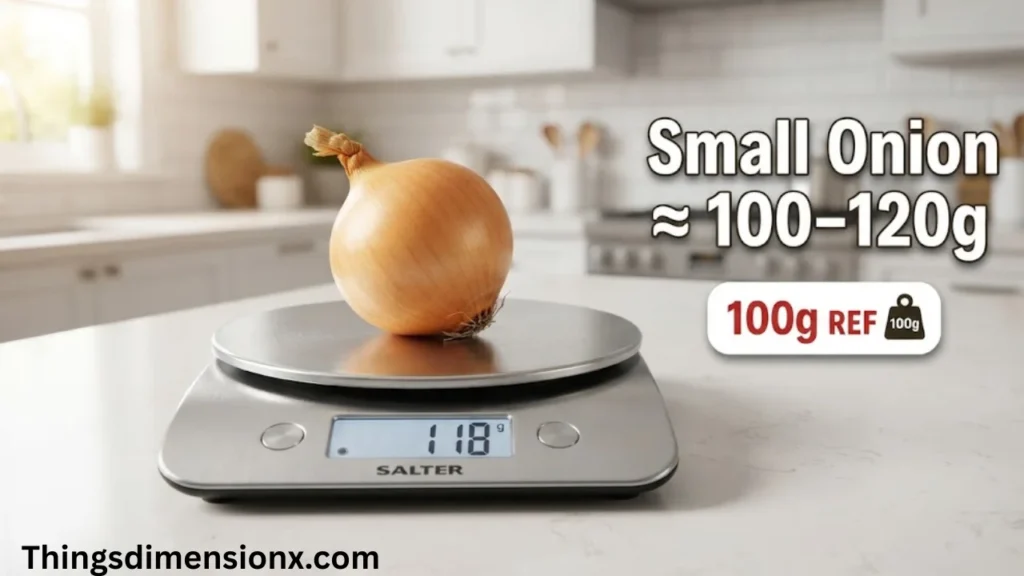
A small onion. A small yellow onion, peeled, typically weighs 100 to 120 grams — a common baseline in recipe measurements.
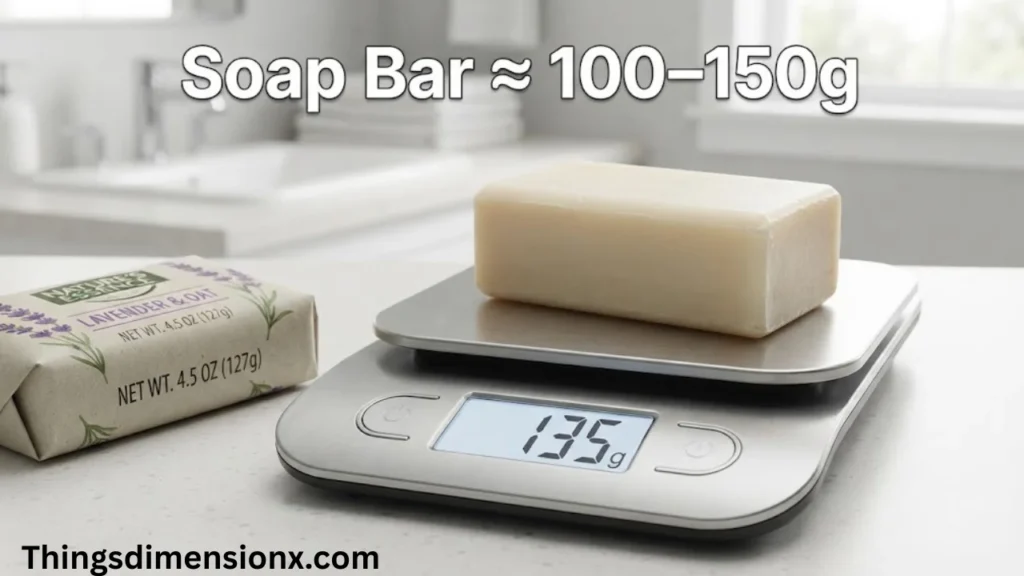
A bar of soap. Standard bath soap bars run 100 to 150 grams, with many brands sitting right at the lower end.
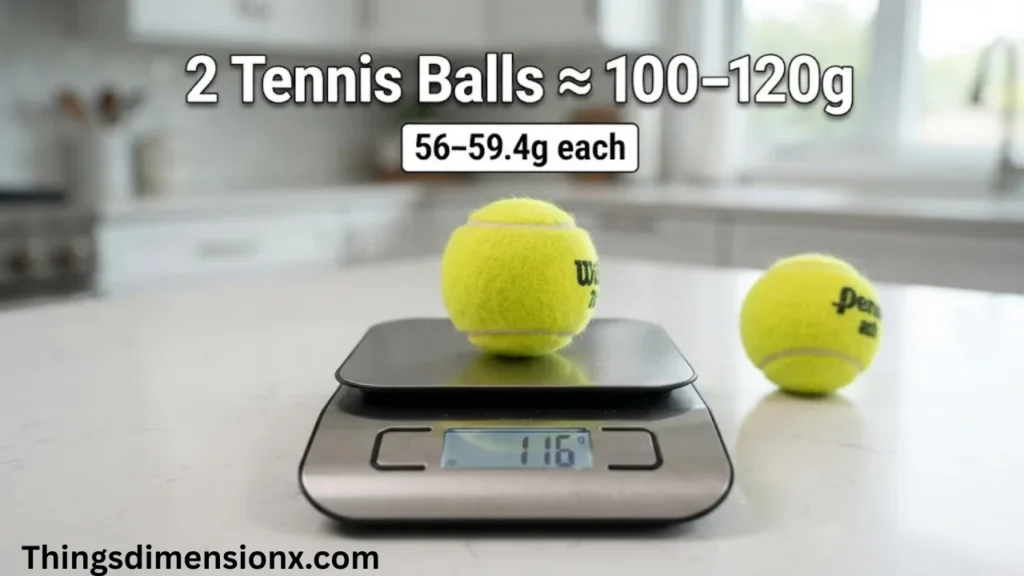
A tennis ball. Regulation tennis balls weigh 56 to 59.4 grams under International Tennis Federation rules — so two balls together land close to 100 to 120 grams.
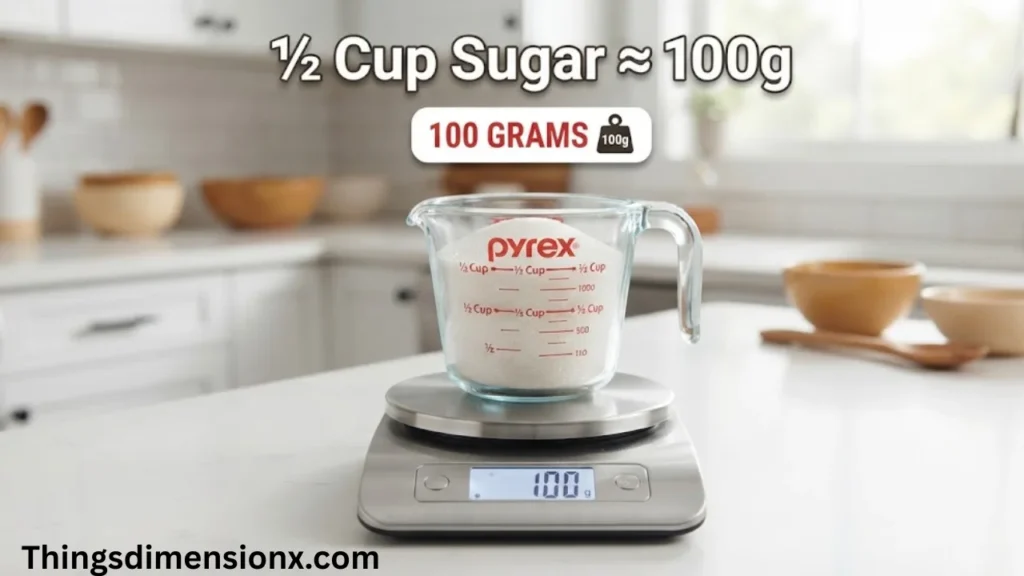
Half a cup of granulated sugar. Because sugar is denser than flour, roughly half a cup of it weighs close to 100 grams — useful for bakers without a scale nearby.
A small smartphone or computer mouse. Compact phones and many wireless mice cluster around 100 grams, since manufacturers optimize for a lightweight, comfortable grip.
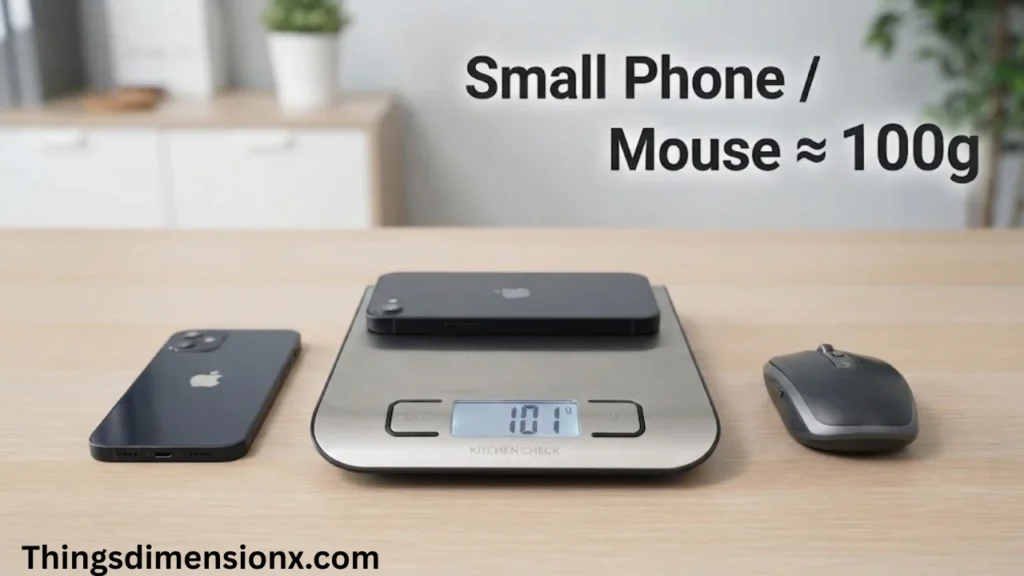
How to Measure 100 Grams Without a Scale
No scale on hand? These methods get you close.
Count out coins. Twenty US nickels equal 100 grams exactly, since each one is minted to a strict 5-gram standard. This is one of the most precise no-scale methods available.
Use a measuring cup. For dry ingredients, 100 grams of flour is roughly ¾ cup, while 100 grams of sugar is closer to ½ cup. The difference comes down to density — flour is lighter and more aerated than sugar.
Try the palm method. For meat and protein portions, a piece about the size of your palm — not including your fingers — usually lands close to 100 grams once cooked. It’s not exact, but it’s a fast, practical portion control habit.
Is 100 Grams Equal to 1 Kg or 1 Cup? (Common Mix-Ups Explained)
Is 100 grams equal to 1 kg? No — not even close. A kilogram is 1,000 grams, so 100 grams is only one-tenth of a kilogram. Mixing these up is one of the most common measurement errors in cooking and shipping, since both units end in “gram” and look similar on a label.
Is 100 grams equal to 1 cup? Not exactly, and there’s no single fixed answer. A “cup” measures volume, while a gram measures mass — and different ingredients pack differently into the same space. 100 grams of water fills close to 0.4 cups, while 100 grams of flour fills nearly a full ¾ cup, because flour is far less dense than water. This is exactly why professional bakers weigh ingredients instead of scooping them.
100 Grams Compared to Other Weights
Seeing 100 grams next to nearby weights makes the scale click faster.
| Weight | Real-World Anchor |
|---|---|
| 25 grams | About 5 US nickels |
| 50 grams | One medium egg |
| 100 grams | A medium apple or 20 nickels |
| 200 grams | Two medium apples |
| 500 grams | A standard bag of pasta (half) |
FAQs
Is 100 grams equal to 1 kg?
No. A kilogram equals 1,000 grams, so 100 grams is only one-tenth of a kilogram.
Is 100 grams equal to 1 cup?
Not exactly. A cup measures volume, not weight, so the gram equivalent changes by ingredient — roughly ¾ cup for flour, but closer to ½ cup for sugar.
How much does 100 grams look like?
It looks like a medium apple, a deck of playing cards, or 20 US nickels stacked together — small enough to hold in one hand.
How much is 100 grams?
100 grams equals 3.53 ounces, 0.22 pounds, or 0.1 kilograms.
Conclusion
100 grams stops being an abstract number once you connect it to things you already touch — an apple, a coin stack, a deck of cards. Next time a recipe or a package label lists this weight, you’ll know exactly what it feels like in your hand.