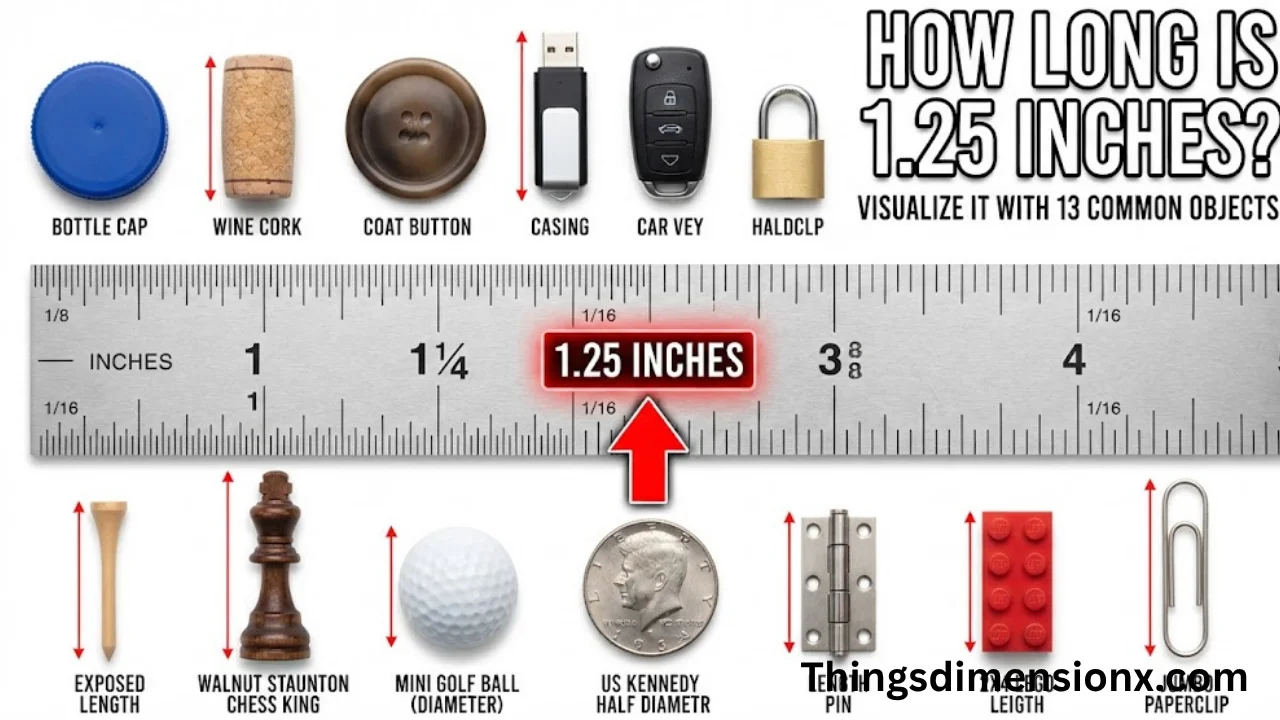
1.25 inches long equals 1 1/4 inches, or 31.75 mm in metric terms. That’s about the width of a bottle cap or a stacked pair of coins.
This guide breaks down exactly what 1.25 inches looks like, where it sits on a ruler, and lists 13 everyday objects you can use to picture this length without ever grabbing a measuring tool.
Table of Contents
How Big Is 1.25 Inches? (Quick Conversion)
1.25 inches is the same as 1 1/4 inches. In decimal form, it’s 1.25. In fraction form, it’s 1 1/4. Both describe the exact same length.
Here’s the full breakdown:
| Unit | Value |
|---|---|
| Inches | 1.25 in |
| Fraction | 1 1/4 in |
| Millimeters | 31.75 mm |
| Centimeters | 3.175 cm |
| Feet | 0.1042 ft |
An inch is a fixed unit of length equal to exactly 25.4 millimeters. Multiply 1.25 by 25.4, and you get 31.75 mm — the precise metric equivalent. This conversion stays constant no matter what you’re measuring, whether it’s a coin, a bolt, or a piece of fabric.
1.25 inches also equals 125% of a full inch. That’s a useful way to picture it: just a quarter more than one whole inch.
What Does 1.25 Inches Look Like on a Ruler?
A standard ruler splits every inch into 16 tiny marks, each representing 1/16 of an inch. To find 1.25 inches on a ruler, start at the 1-inch line and count forward 4 marks. That fourth mark lands exactly on the 1/4-inch point.
Here’s a shortcut worth remembering: 1.25 inches sits exactly halfway between the 1-inch mark and the 1.5-inch mark. If you can spot the halfway point between those two lines, you’ve found 1.25 inches without counting a single tick mark.
This trick comes in handy for quick DIY measurements, sewing projects, or anytime you need a fast visual check without pulling out a calculator.
Is 1.25 Inches the Same as 1 1/4 Inches? (Decimal vs. Fraction)
Yes. 1.25 inches and 1 1/4 inches are identical — just written two different ways. Decimals are common on digital tools like calipers and calculators. Fractions show up on tape measures, rulers, and most hardware packaging in the US.
Contractors, machinists, and hobbyists often think in fractions because tools and materials — screws, drill bits, pipe fittings — are labeled that way. Meanwhile, engineers and scientists lean toward decimals for precision math. Knowing both forms means you’ll never get tripped up switching between a ruler and a spec sheet.
1.25 Inches Long: 13 Real-World Objects to Visualize It
Numbers stick better when tied to something physical. Below are 13 common objects close to 1.25 inches in length or diameter.
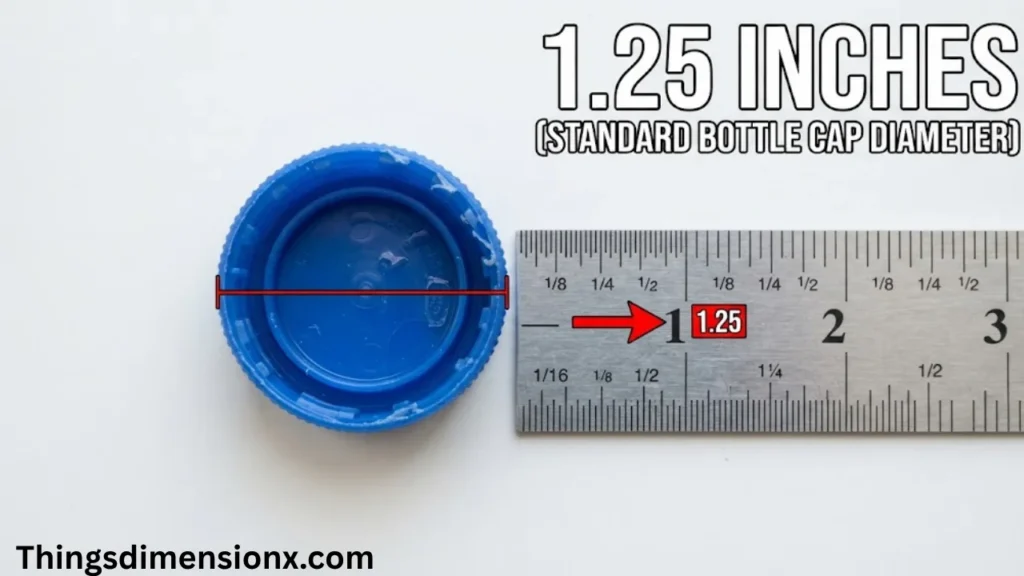
Standard bottle cap. The plastic cap on a Coke, Pepsi, or Aquafina bottle measures almost exactly 1.25 inches across. Beverage manufacturers keep this diameter consistent for compatibility with bottling equipment.
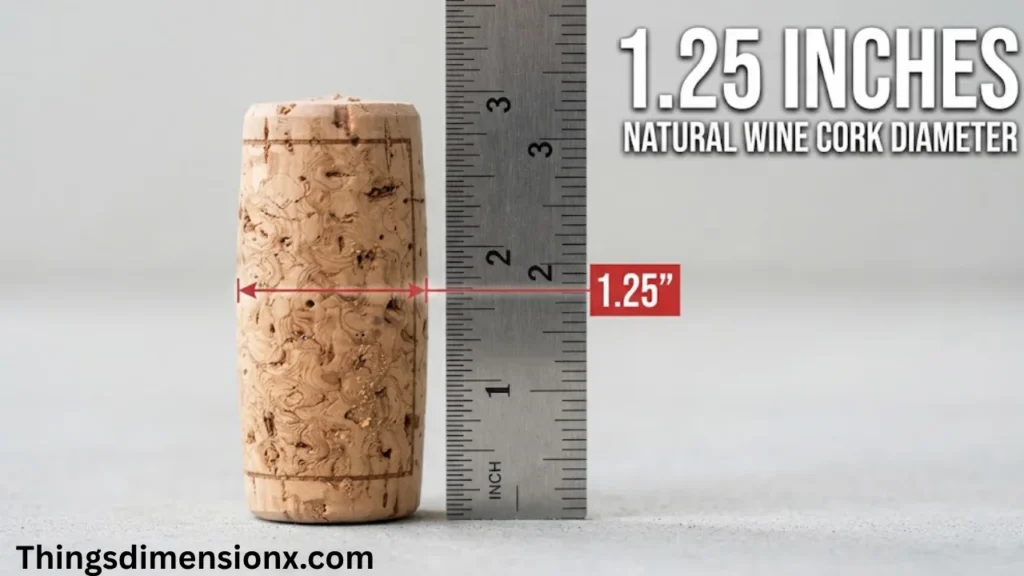
Wine cork. A natural wine cork measures about 1.25 inches in diameter before it’s compressed and pushed into the bottle neck.
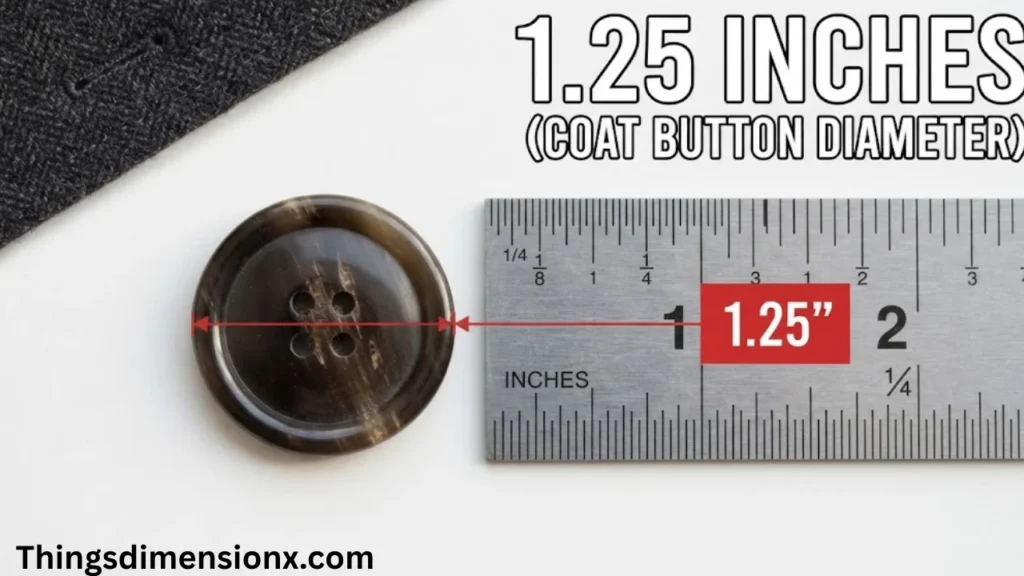
Large coat button. The oversized buttons found on peacoats and trench coats typically measure 1.25 inches across — a sizing standard used in outerwear for decades.
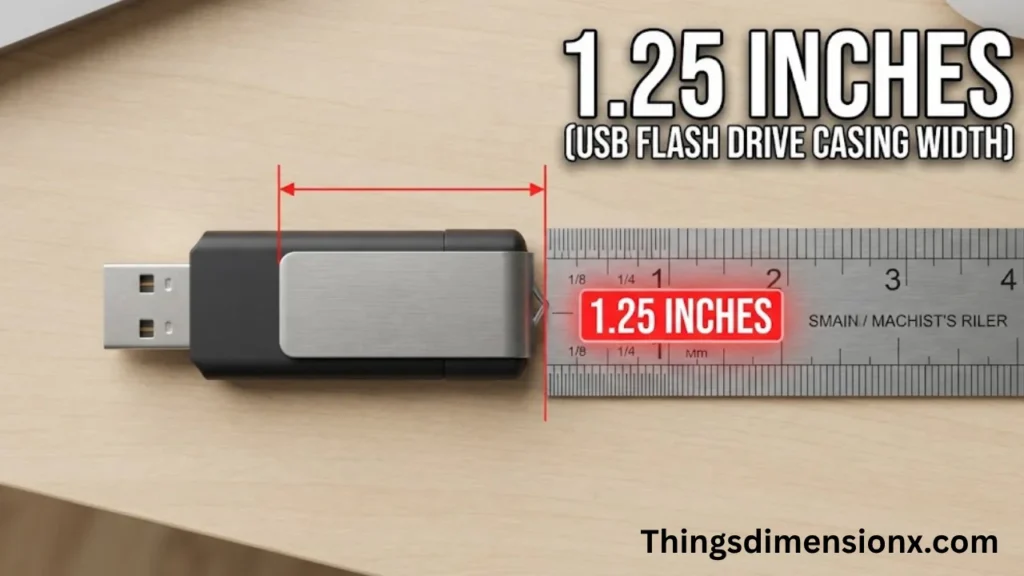
USB flash drive width. The plastic casing on a standard USB drive is about 1.25 inches wide, kept uniform across brands for universal port compatibility.
Must visit: 1.375 Inches Long: 10 Real-World Objects to Help You Visualize It
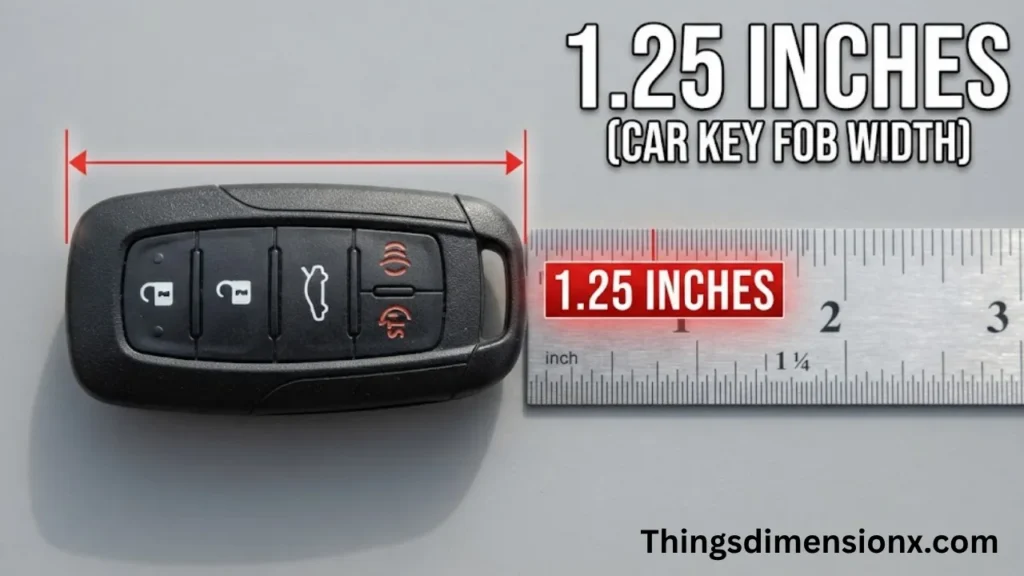
Car key fob. Many modern multi-button key fobs measure close to 1.25 inches in width or thickness, balancing pocket comfort with button space.
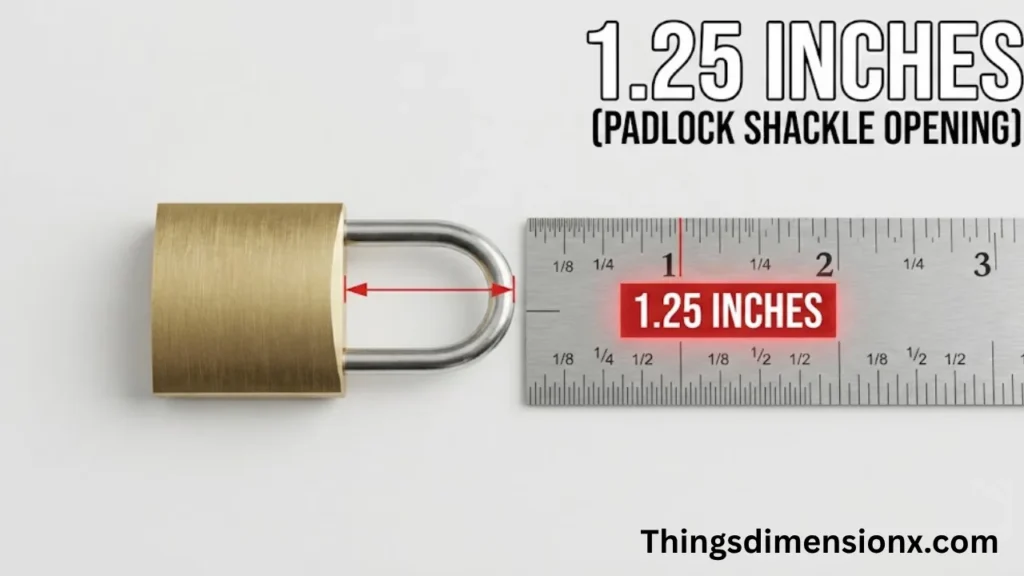
Small padlock shackle. The U-shaped metal loop on a small padlock — the kind used on lockers or gym bags — opens to about 1.25 inches wide.
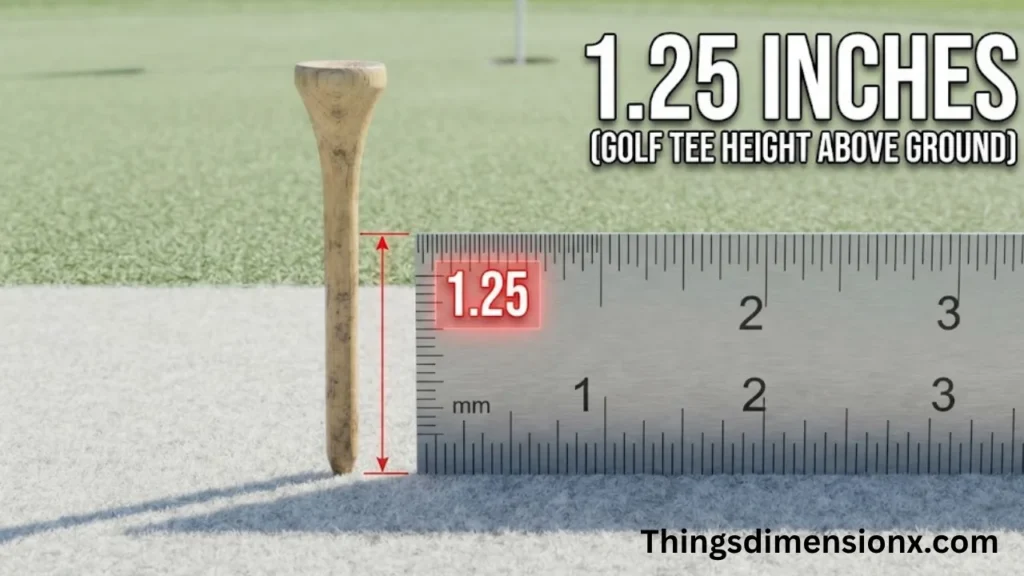
Golf tee. A standard wooden golf tee sits roughly 1.25 inches above the ground once placed for a drive.
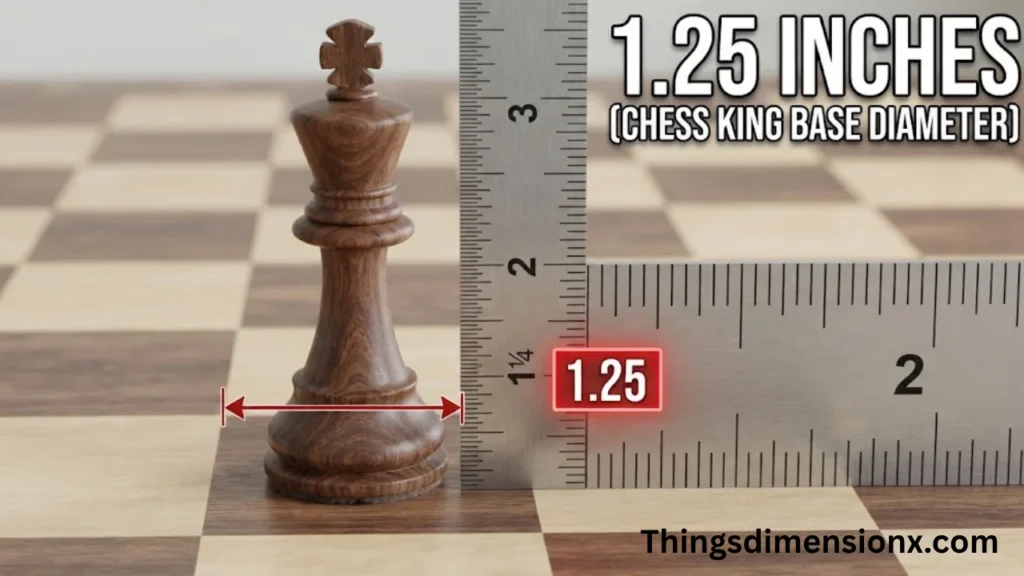
Chess king base. The base of a Staunton chess king measures about 1.25 inches across, giving the tallest piece on the board enough stability to stay upright.
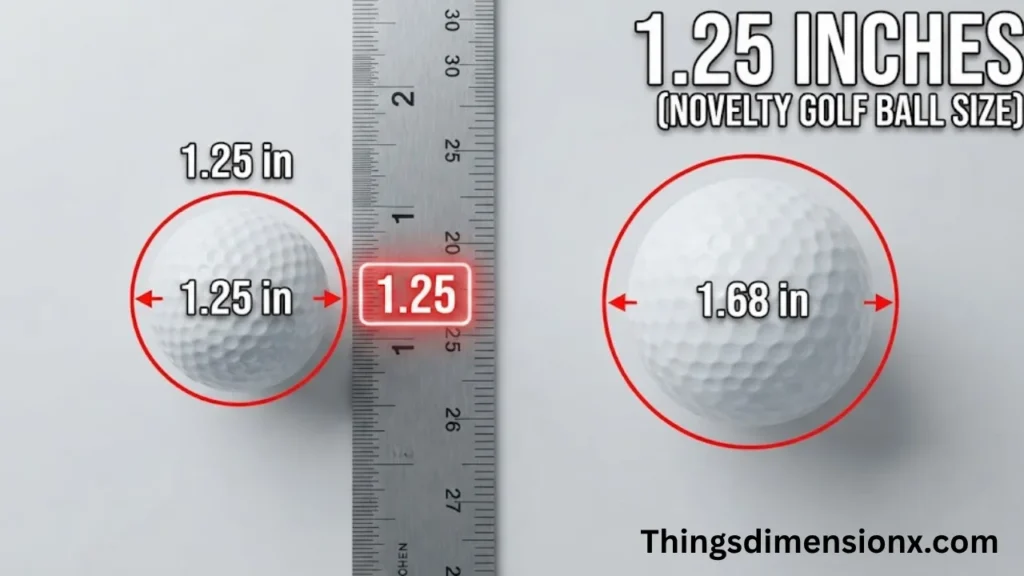
Mini golf ball. Practice or novelty golf balls made for kids or mini-golf courses often measure close to 1.25 inches, smaller than a regulation ball’s 1.68-inch diameter.
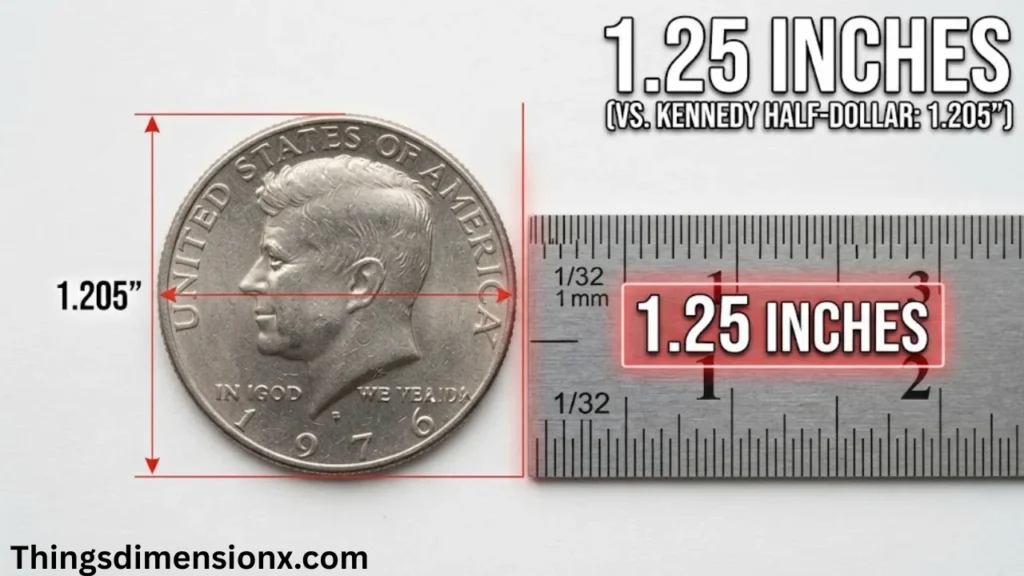
Kennedy Half Dollar coin. This US coin has an official diameter of 1.205 inches — just 0.045 inches shy of 1.25 inches, making it the closest coin match available.
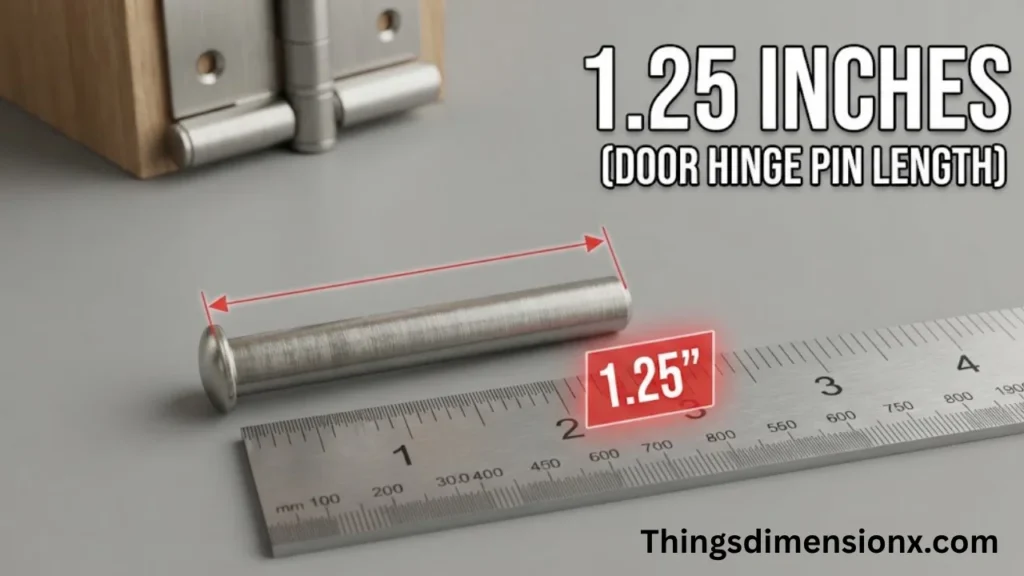
Standard door hinge pin. The removable metal rod inside a residential door hinge typically measures 1.25 inches long, a size used across American home construction.
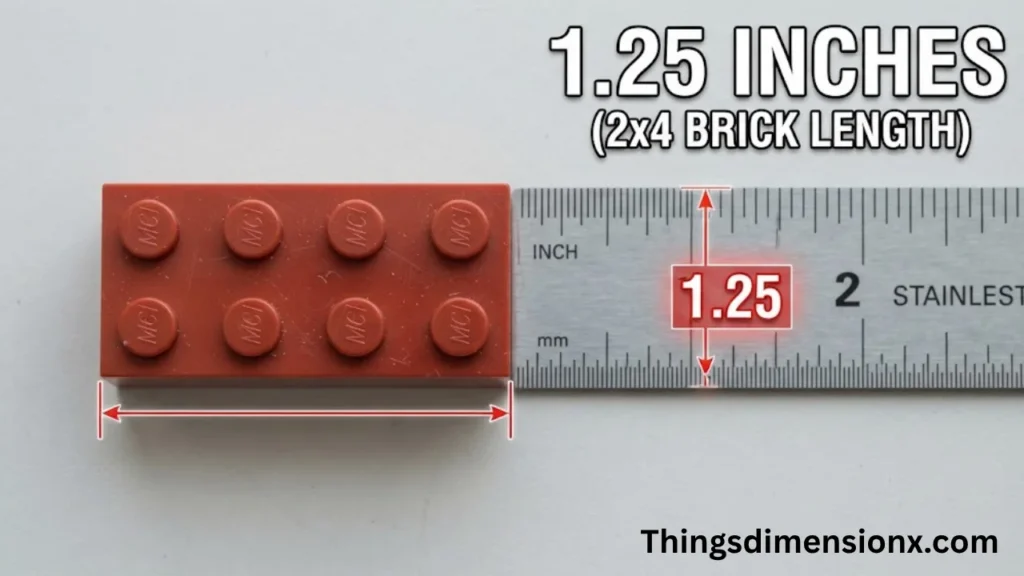
Classic Lego brick. The long side of a standard 2×4 Lego brick measures exactly 1.25 inches, a dimension unchanged since Lego standardized its brick system decades ago.
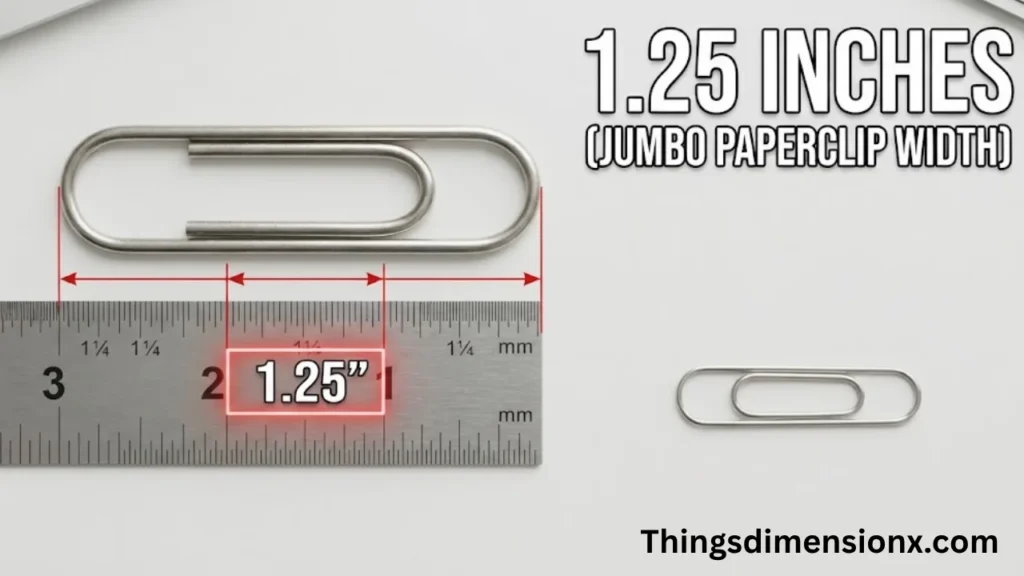
Large paperclip (width). A jumbo paperclip, wider than the standard office size, measures close to 1.25 inches across — a handy desk-drawer reference.
Grab any of these objects, hold it next to a ruler, and 1.25 inches becomes instantly clear.
Why Knowing 1.25 Inches Matters (Practical Everyday Uses)
This measurement shows up far more often than most people realize.
Hardware and DIY. Bolts, hinge pins, and pipe fittings are frequently sized in quarter-inch increments. Knowing what 1.25 inches looks like helps you sort hardware fast, without measuring every piece.
Sewing and crafting. Button sizes, bead spacing, and trim widths are often measured to the quarter-inch. A visual reference speeds up fittings and material cuts.
Everyday estimation. Not everyone carries a tape measure. Picturing 1.25 inches as “a bottle cap” or “a Lego brick’s long side” means you can estimate length accurately, anywhere, anytime.
FAQs
How big is 1.25 in inches?
1.25 in inches is exactly 1.25 inches, also written as 1 1/4 inches. In metric measurements, that’s 31.75 millimeters or 3.175 centimeters.
What does 1.25 inches look like on a ruler?
On a standard ruler, 1.25 inches falls exactly halfway between the 1-inch and 1.5-inch marks — specifically at the 4th small tick mark past the 1-inch line, where each inch is divided into 16 equal parts.
How much is 1.25 inch in cm?
1.25 inches equals 3.175 centimeters. This comes from multiplying 1.25 by 2.54, since one inch equals exactly 2.54 cm.
Is 1.25 inches 1 1/4?
Yes. 1.25 inches and 1 1/4 inches are the exact same length — one written as a decimal, the other as a fraction. Neither is more “correct”; they’re just different formats for the same measurement.
Conclusion
1.25 inches breaks down simply: 1 1/4 inches, 31.75 mm, and a spot exactly halfway between the 1-inch and 1.5-inch marks on a ruler. With everyday objects like a bottle cap, a Lego brick, or a golf tee as your reference, you’ll be able to picture this length instantly — no measuring tape required.