Numbers on a screen don’t always mean much. 1.375 inches long is one of those measurements that sounds simple but is hard to picture in your head. This guide fixes that. You’ll get the exact answer, see where 1.375 inches sits on a ruler, and compare it to everyday objects you already know.
Whether you’re doing a home project, a school assignment, or just curious, this breaks it down in plain terms.
Table of Contents
What Is 1.375 Inches? (Quick Answer)
1.375 inches equals 1 and 3/8 inches. That’s the simplest way to say it. In fraction form, 3/8 is the same as .375, so 1.375 and 1 3/8 are two ways of writing the exact same length.
Here’s the quick breakdown:
| Format | Value |
|---|---|
| Decimal | 1.375 inches |
| Fraction | 1 3/8 inches |
| Millimeters | 34.925 mm |
| Centimeters | 3.4925 cm |
| Percentage | 137.5% of one inch |
An inch is a standard unit of length used across the United States for everything from tools to fabric. Since 1 inch equals exactly 25.4 millimeters, multiplying 1.375 by 25.4 gives you 34.925 mm. That’s the metric equivalent, useful if you’re working with a tool or blueprint that uses the metric system.
Where Is 1.375 Inches on a Ruler?
A standard ruler splits every inch into 16 equal parts. Each small line is 1/16 of an inch, or 0.0625 in decimal form.
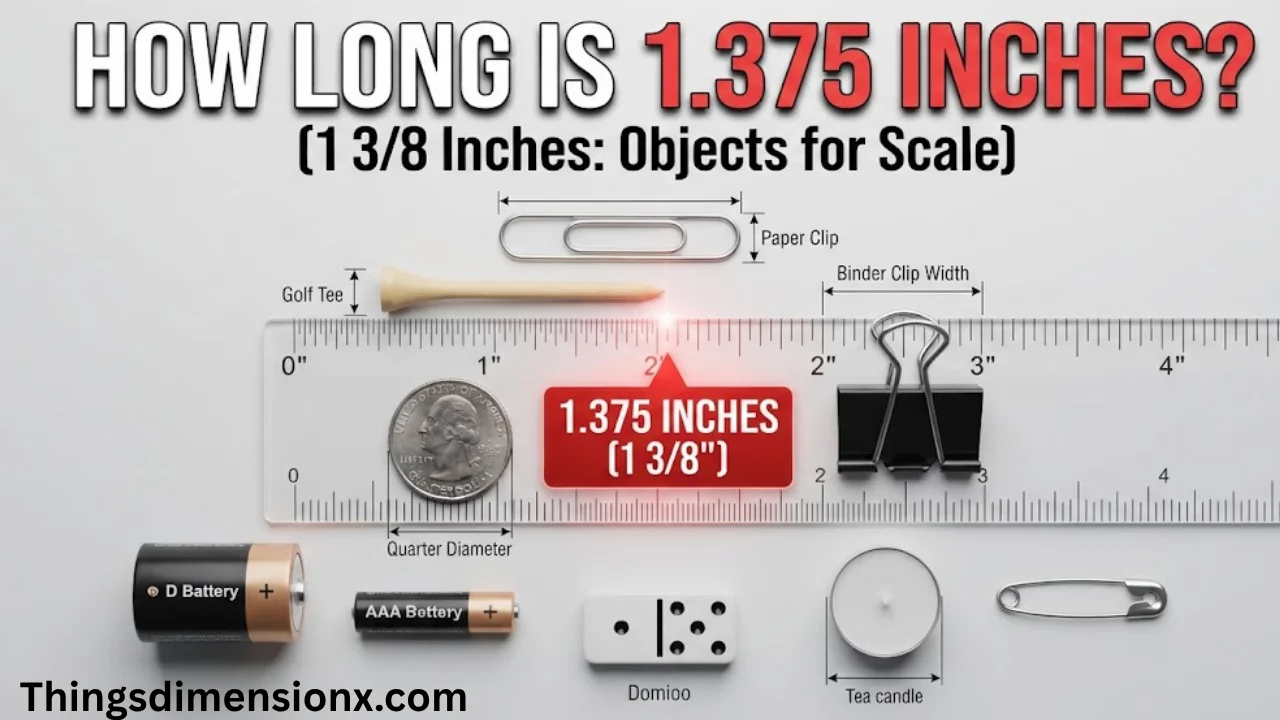
To find 1.375 inches on a ruler, start at the 1-inch mark. Then count forward 6 small lines. That 6th line lands exactly on .375, which is the same as 3/8. So 1.375 inches sits right between the 1-inch and 2-inch marks, at the point marked 1 3/8.
Here’s a fast trick: if you don’t have a calculator, remember that 3/8 is just short of halfway between 1 and 2 inches. It’s one notch past the quarter-inch mark and one notch before the halfway (1/2 inch) mark going the other direction. Visualizing it this way makes ruler reading much faster.
What Does .375 Inches Look Like? (Visualizing the Fraction Alone)
Take away the “1” and just look at .375 inches on its own. This is the same as 3/8 of an inch, or roughly the width of three stacked nickels. It’s a small but noticeable gap — about the thickness of a standard pencil laid on its side, or a bit less than the width of a AA battery.
Knowing .375 inches by itself helps because many tools, drill bits, and hardware fasteners are labeled in eighths of an inch. Once you can picture 3/8 inch on its own, adding a full inch to it (making 1.375) becomes second nature.
1.375 Inches Long: 10 Real-World Objects to Visualize It
Numbers stick better when you connect them to things you can touch. Here are 10 common objects close to 1.375 inches in length or width.
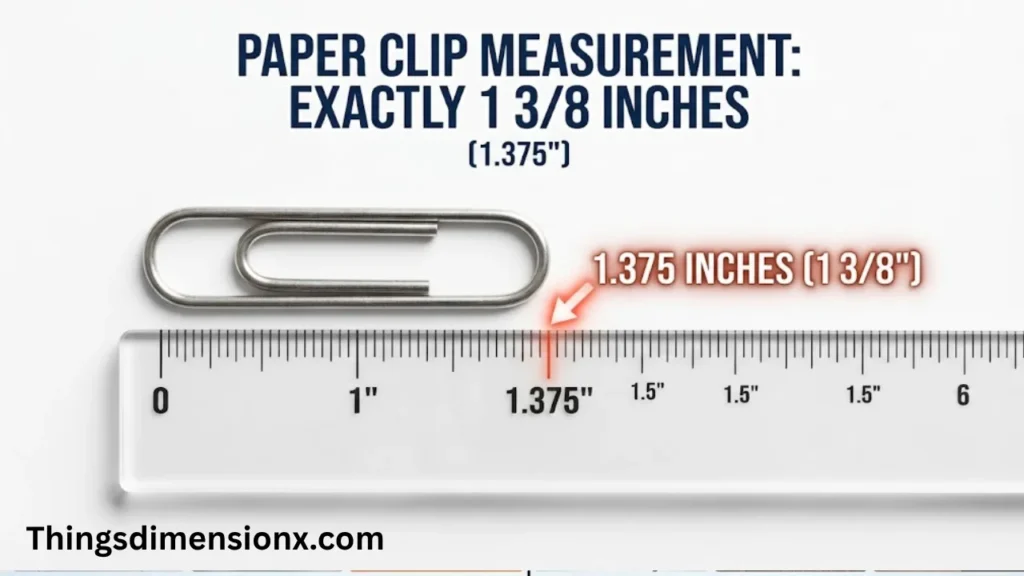
A standard paper clip. The small, everyday paper clip most offices use measures exactly 1 3/8 inches long. This is one of the most accurate everyday matches for 1.375 inches.
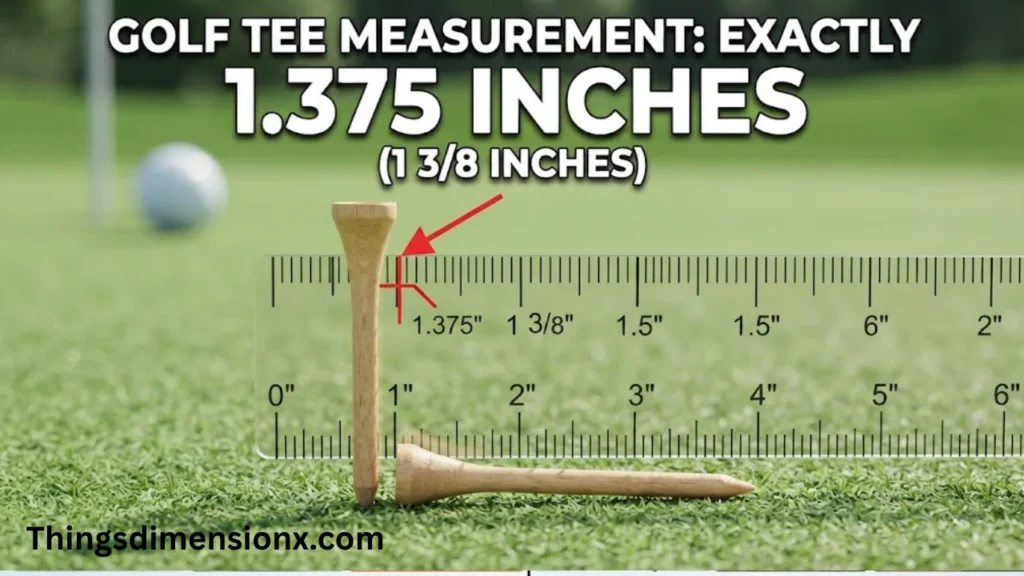
A short golf tee. Golf tees made for irons and fairway shots come in a standard 1 3/8-inch size. It’s a near-perfect stand-in if you golf or have tees lying around.
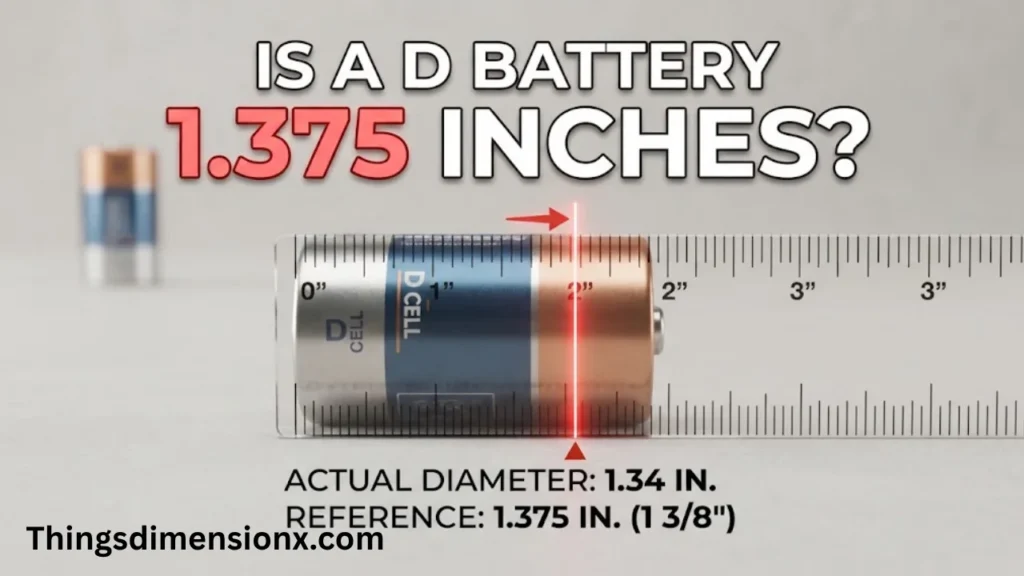
A D battery. The diameter of a D battery is about 1.34 inches — just slightly under 1.375. Hold one sideways, and you’re looking at almost exactly this length.
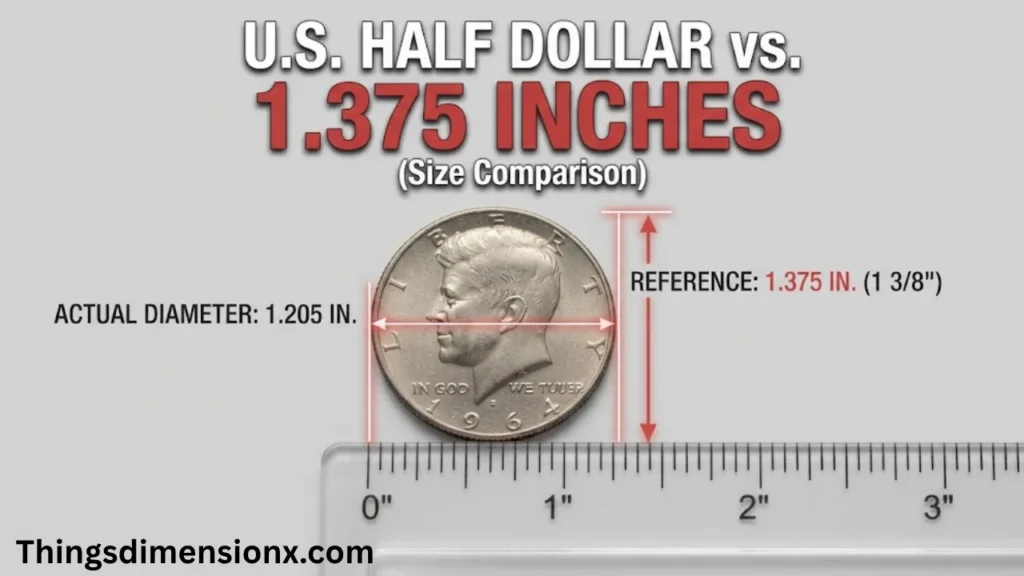
A half-dollar coin. This coin measures 1.205 inches across. It’s a bit smaller than 1.375 inches but close enough to compare side by side.
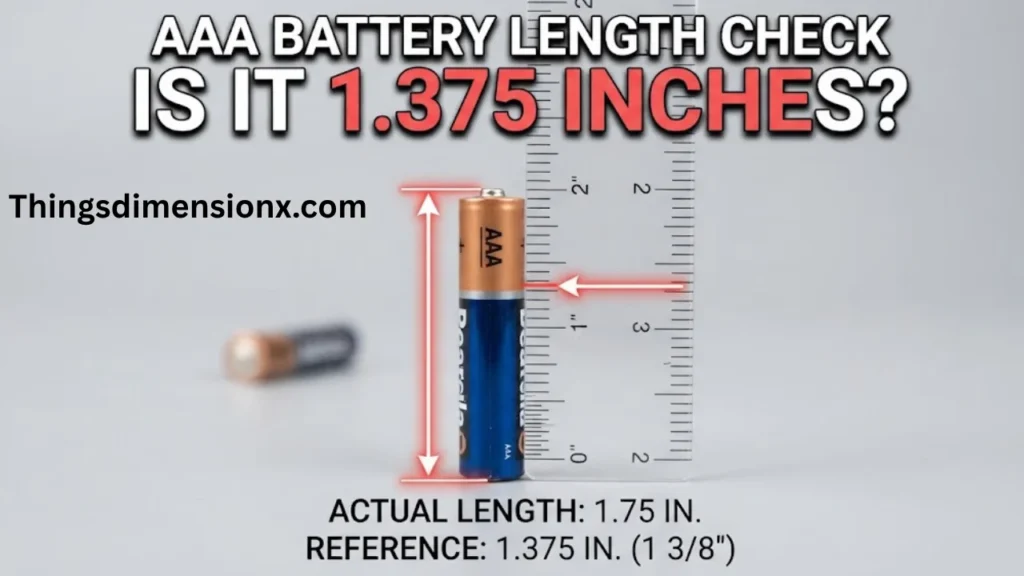
A AAA battery. At 1.75 inches long, a AAA battery is a little longer than 1.375 inches, giving you a useful upper-bound comparison.
Must visit: 5.7 Inches Long: 13 Real-World Objects to Help You Visualize It
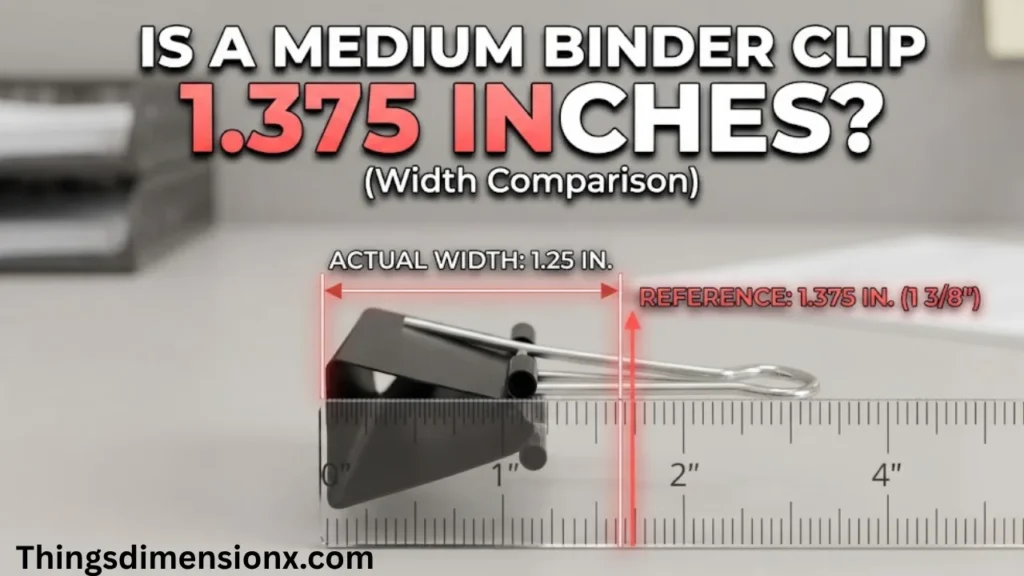
A medium binder clip. The clip width on a medium binder clip runs about 1.25 inches, just shy of 1.375.
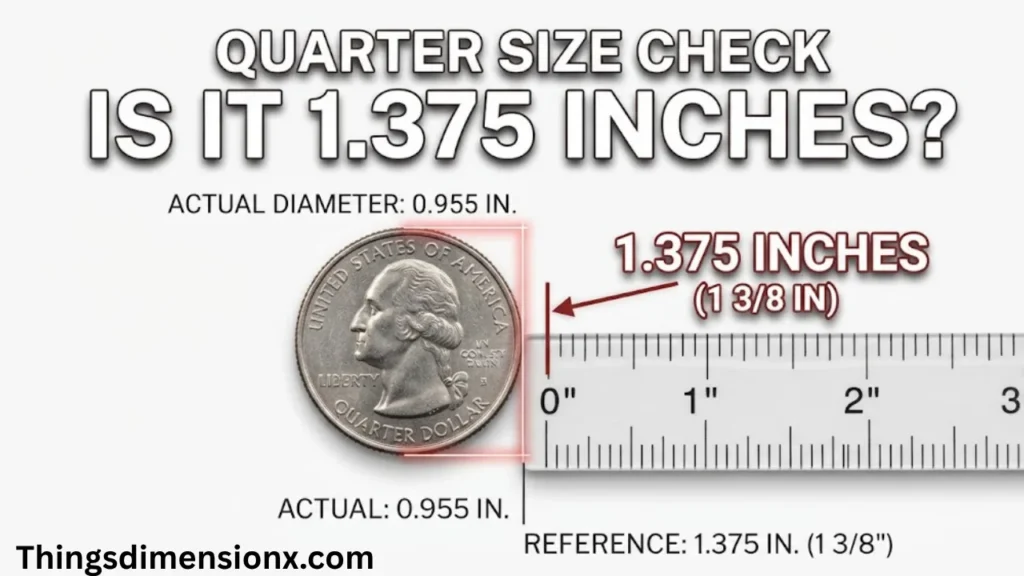
A U.S. quarter. A quarter’s diameter is 0.955 inches, noticeably smaller. Lining a quarter up next to a ruler shows the difference clearly.
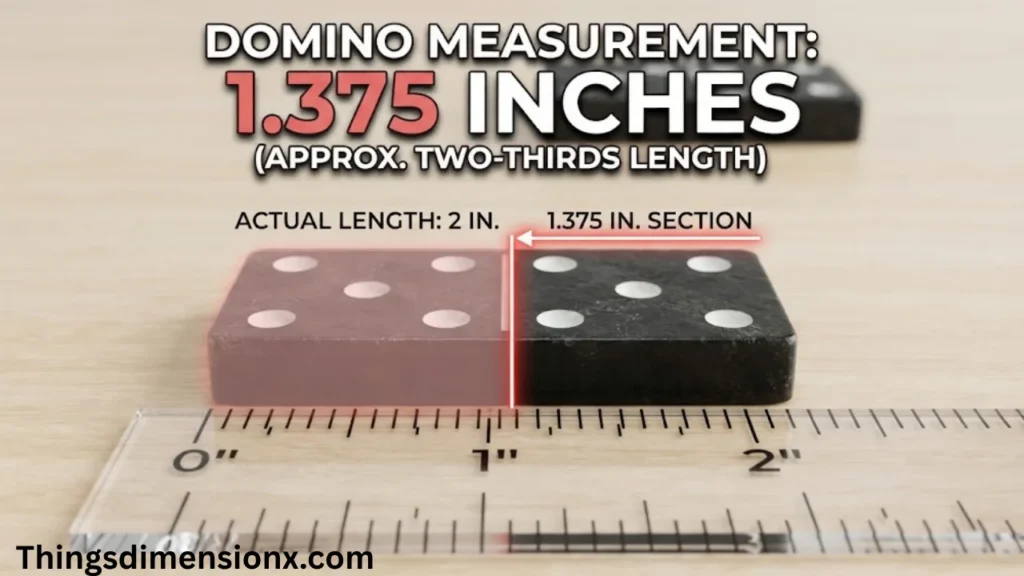
A domino tile. A standard domino measures 2 inches long, so 1.375 inches covers about two-thirds of its length.
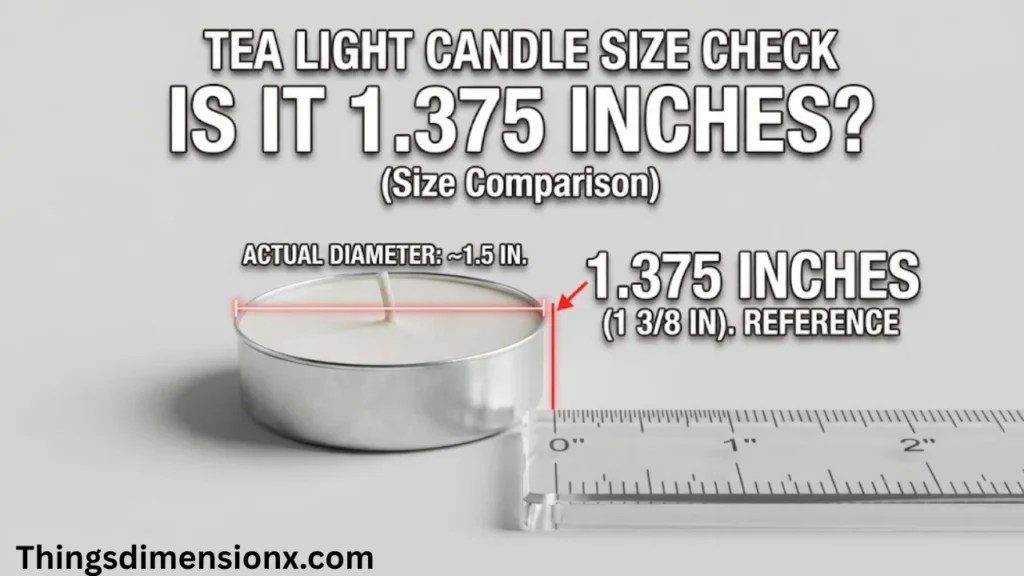
A tea light candle. Most tea lights measure close to 1.5 inches across, making them a near match with a small margin.
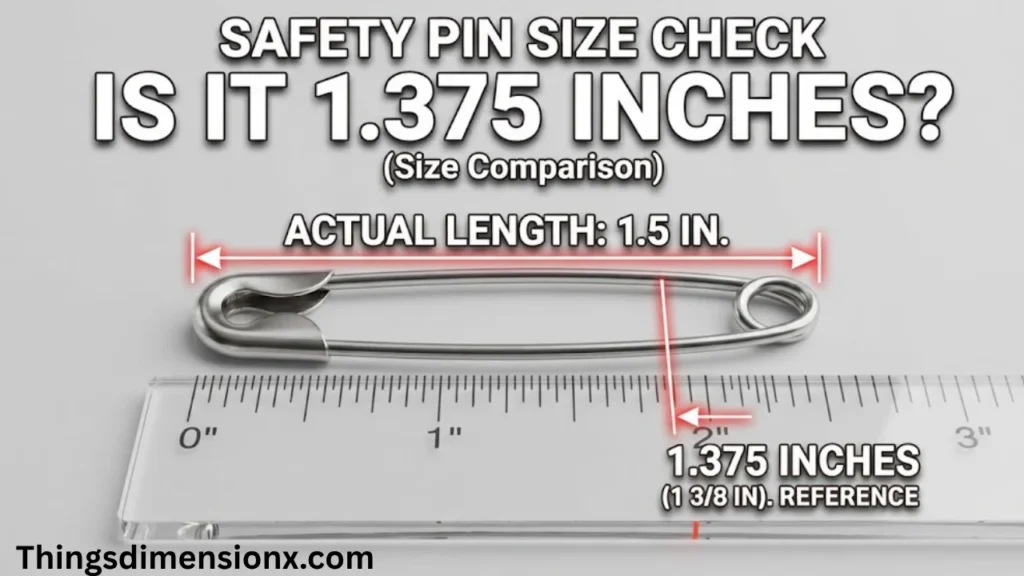
A large safety pin. Closed, a large safety pin runs about 1.5 inches, slightly longer than 1.375 inches but still a fair visual reference.
These comparisons work because they’re objects most people already have nearby. Grab a paper clip or a coin, hold it next to a ruler, and the length of 1.375 inches becomes instantly clear.
Why Knowing 1.375 Inches Matters (Practical Use Cases)
This isn’t just a math exercise. Precise measurements like 1.375 inches show up constantly in real life.
Hardware and DIY projects. Bolts, washers, pipe fittings, and drill bits are often sized in fractions of an inch. A 1 3/8-inch bolt or pipe diameter is a common size in plumbing and construction.
Crafting and jewelry making. Bead spacing, wire lengths, and clasp sizes are frequently measured down to the eighth or sixteenth of an inch. Small errors add up fast in detailed craft work.
Everyday estimation. Not everyone carries a tape measure. Knowing that 1.375 inches is close to a paper clip or a golf tee means you can estimate length accurately without any tools at all.
Understanding this single measurement builds a mental toolkit you can apply to dozens of similar lengths.
FAQs
How long is 1.375 in inches?
1.375 in inches is exactly 1.375 inches, also written as 1 3/8 inches. In metric terms, that’s 34.925 millimeters, or about 3.49 centimeters.
What does .375 inches look like?
.375 inches equals 3/8 of an inch. It looks like a small gap slightly smaller than the width of a AA battery, or roughly the thickness of three stacked nickels.
What is 1.375 on a ruler?
On a standard ruler, 1.375 lands six small marks past the 1-inch line, exactly at the 3/8-inch point between 1 and 2 inches. Each ruler inch is divided into 16 equal parts, so counting 6 of those parts from the 1-inch mark gets you there.
What is 7.9 inches on a ruler?
7.9 inches falls just short of the 8-inch mark, about 0.1 inch (roughly 1.5 small marks) before it. On a 12-inch ruler, this puts it close to two-thirds of the way down the ruler’s total length.
Conclusion
1.375 inches isn’t a tricky number once you break it down: 1 3/8 inches, 34.925 mm, and a spot on the ruler just past the halfway point of the first inch. Objects like a paper clip or a golf tee give you an instant, hands-on way to picture it. Next time this measurement comes up, you’ll know exactly what it looks like — no ruler required.