A gram is tiny. So tiny that most people never really feel it. But once you know what weighs 1 gram, you’ll start noticing it everywhere — in your wallet, your kitchen, even your junk drawer.
This guide breaks down exactly 1 gram heavy is, shows you 13 real objects that hit this mass almost perfectly, and gives you simple ways to spot a gram without ever touching a scale.
Table of Contents
How Heavy Is 1 Gram, Really?
One gram equals 1/1000th of a kilogram. That’s the official SI unit definition, and it hasn’t changed since the metric system was created in France in 1795.
To put it in terms Americans use daily: 1 gram is about 0.035 ounces, or roughly 0.002 pounds. Neither number means much on its own. Numbers rarely do. So here’s the version that sticks: 1 gram feels like almost nothing resting in your palm — light enough that your hand barely registers it’s there.
Here’s a quick conversion cheat sheet:
| Unit | Equivalent to 1 Gram |
|---|---|
| Milligrams | 1,000 mg |
| Ounces | 0.035 oz |
| Pounds | 0.0022 lb |
| Carats | 5 ct |
| Water | 1 milliliter |
That last one matters more than people realize. Water has a density of almost exactly 1 gram per milliliter, according to the National Institute of Standards and Technology. This isn’t a coincidence — the gram was originally defined using water’s mass, back before the kilogram took over as the base unit.
Grams show up constantly in pharmaceuticals, nutrition labels, and jewelry pricing, because ounces and pounds are too clumsy for small, precise measurements. A milligram is too small. A gram is just right.
13 Everyday Objects That Weigh About 1 Gram
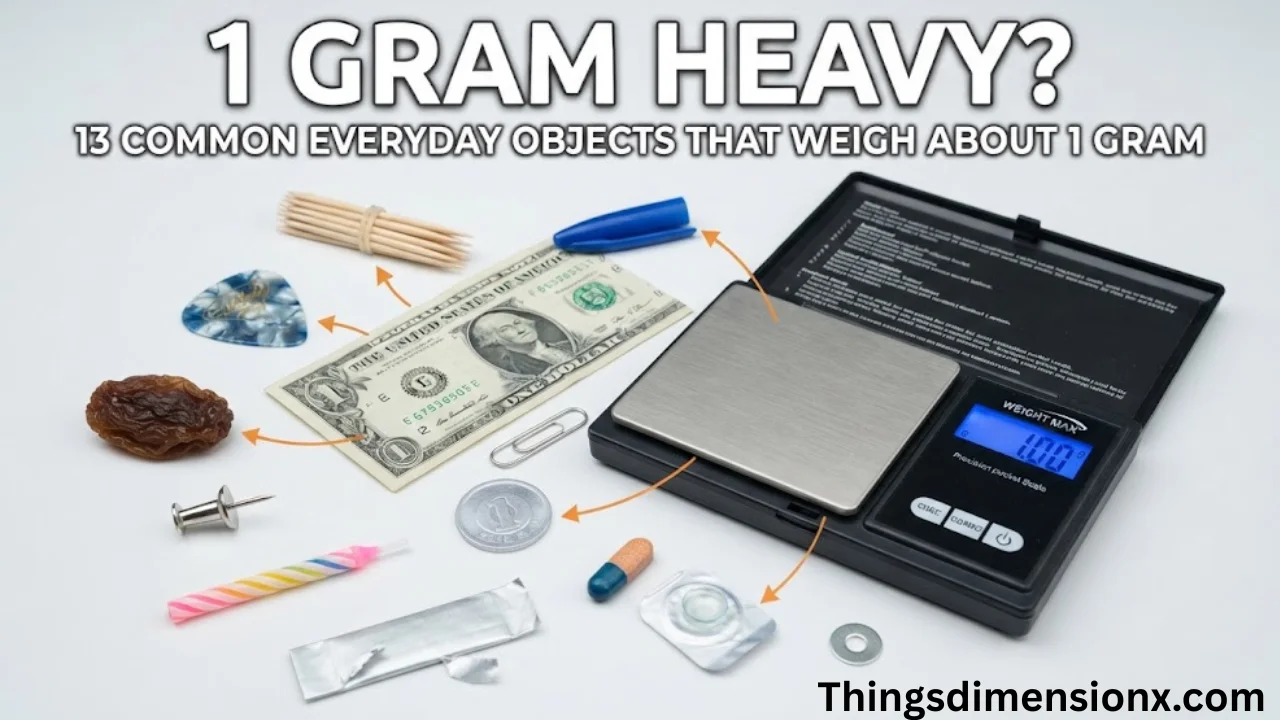
You don’t need a lab to understand a gram. You need a paperclip. Below are 13 common items — some obvious, some you’ve probably never thought about — that weigh close to 1 gram each.
A US Dollar Bill
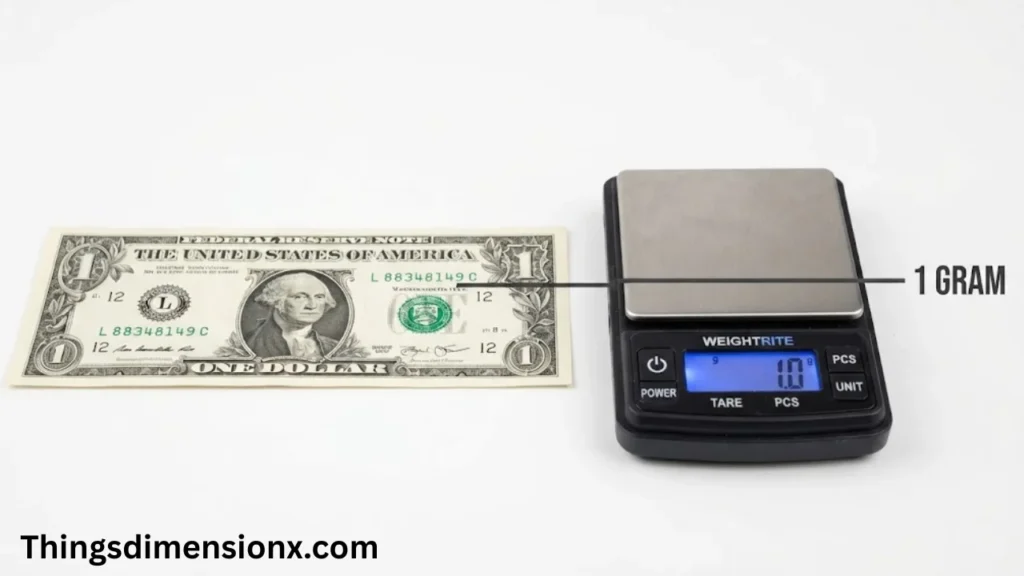
Every American dollar bill weighs exactly 1 gram, no matter the denomination. A crisp single and a $100 note weigh the same. That’s because both are made from the same cotton-linen blend — 75% cotton, 25% linen — by the Bureau of Engraving and Printing. This consistency is intentional. It helps automated counting machines and vending machines detect counterfeit bills instantly.
A Standard Paperclip
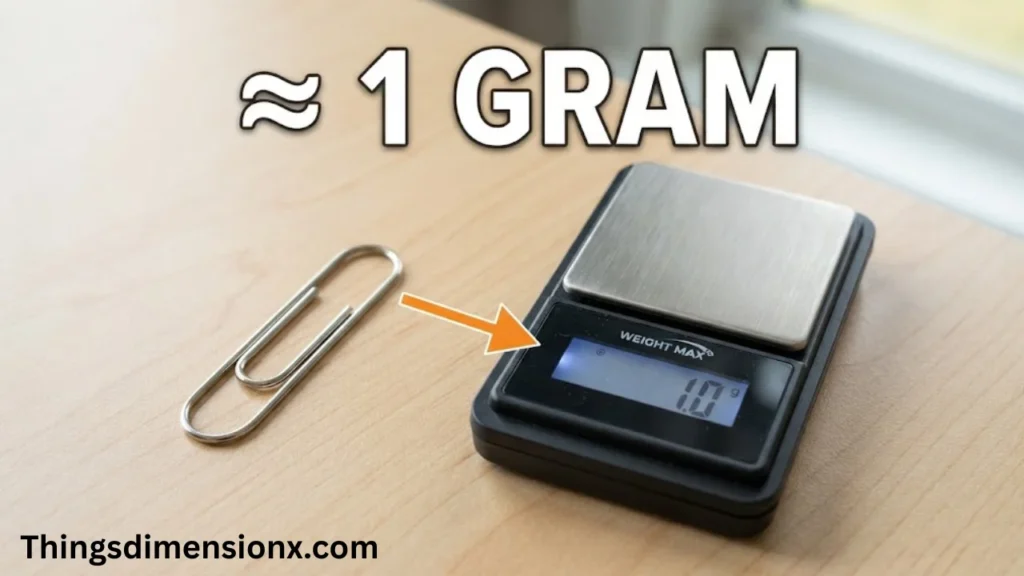
The paperclip is the unofficial mascot of the gram. A regular Gem-style clip, the kind sitting in your desk drawer right now, weighs almost precisely 1 gram. Jumbo clips run heavier, around 1.5 to 2 grams, while mini clips drop to about 0.5 grams. Stick with the standard size for an accurate reference.
A Japanese 1 Yen Coin
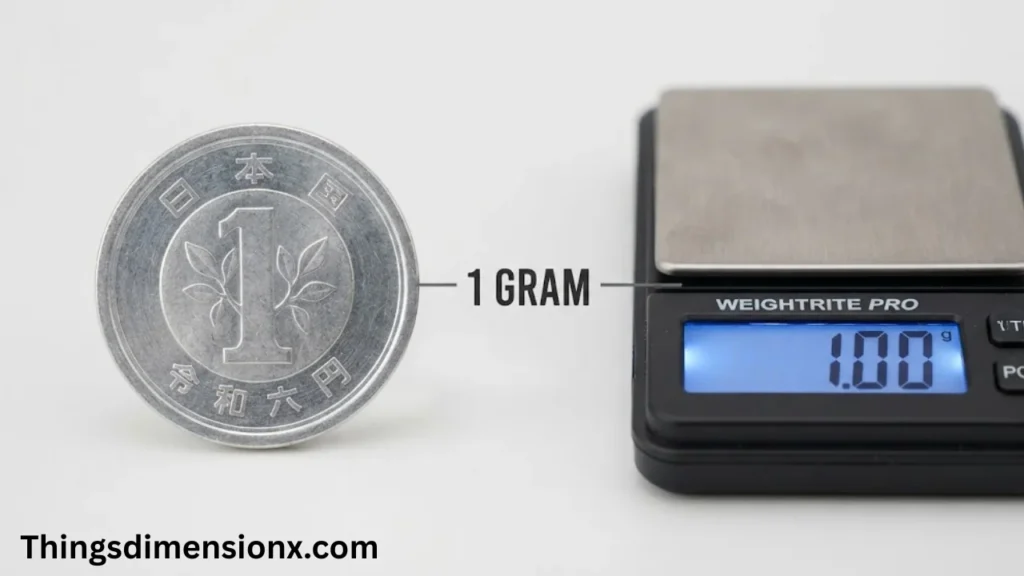
This coin is the most precise 1-gram object in circulation anywhere on Earth. It’s made from 100% aluminum and weighs exactly 1 gram by design, according to the Japan Mint. It’s so light it can actually float on water if placed carefully on the surface, thanks to surface tension.
A Single Raisin or Grape
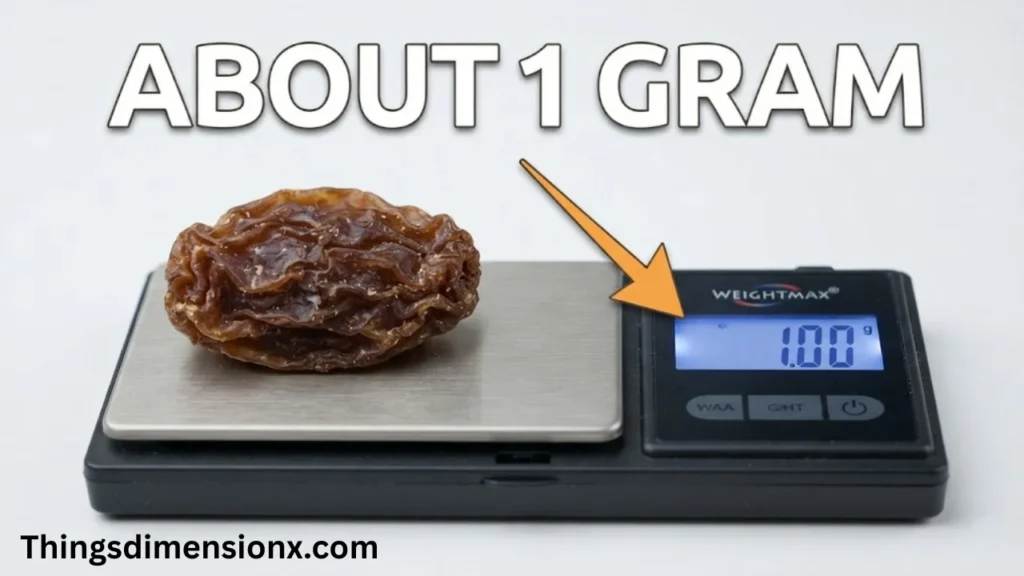
Nature isn’t usually this exact, but raisins come close. A dried raisin typically weighs right around 1 gram, give or take a hair depending on size. A fresh grape lands between 0.8 and 1.2 grams. Both make a decent stand-in when you’re picturing a gram in food terms.
A Pinch of Salt or a Quarter Sugar Packet
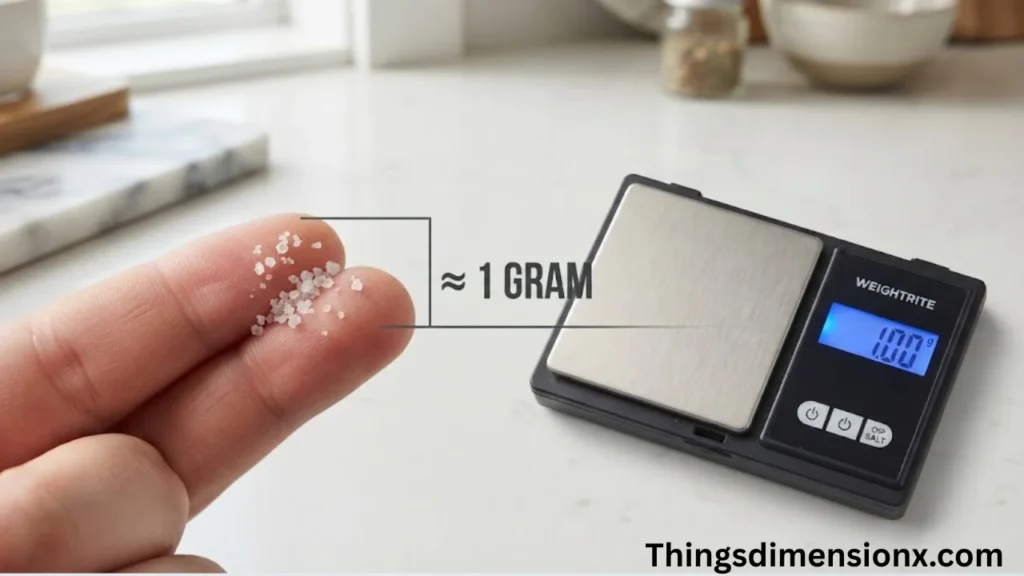
Chefs define a pinch as whatever fits between your thumb and forefinger — and that happens to land close to 1 gram. A full sugar packet from a diner table weighs about 4 grams, so one-quarter of it gets you to 1 gram almost exactly. Both are useful mental shortcuts in the kitchen.
Must visit: 4 Inches long ? 13 Everyday Objects That Are About 4 Inches Long
A Small Birthday Candle
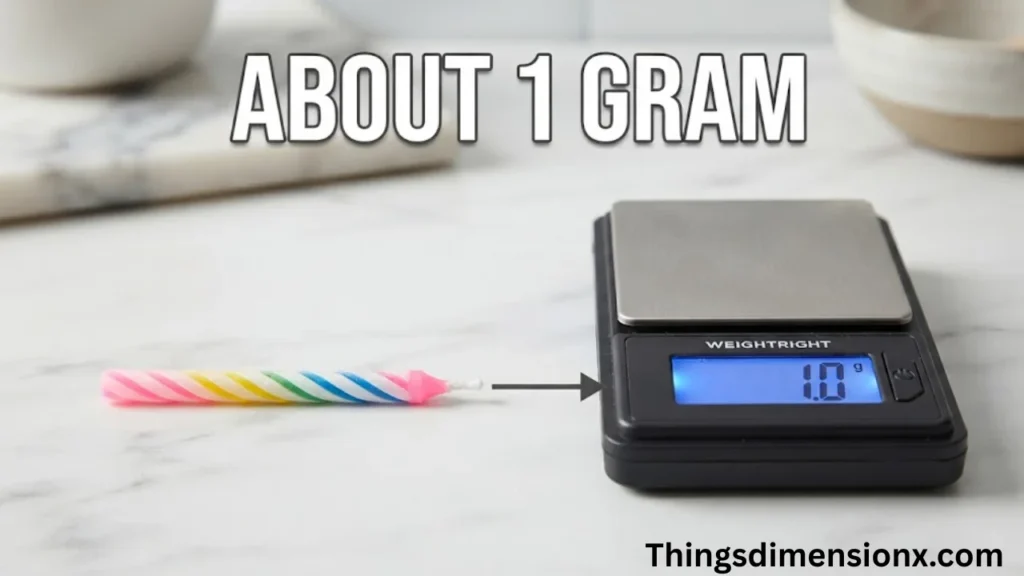
Those thin, colorful birthday candles stuck into cakes weigh about 1 gram each. They’re made from paraffin wax, roughly 2 inches tall, and burn for just a few minutes — barely long enough to make a wish, let alone add weight.
A Thumbtack
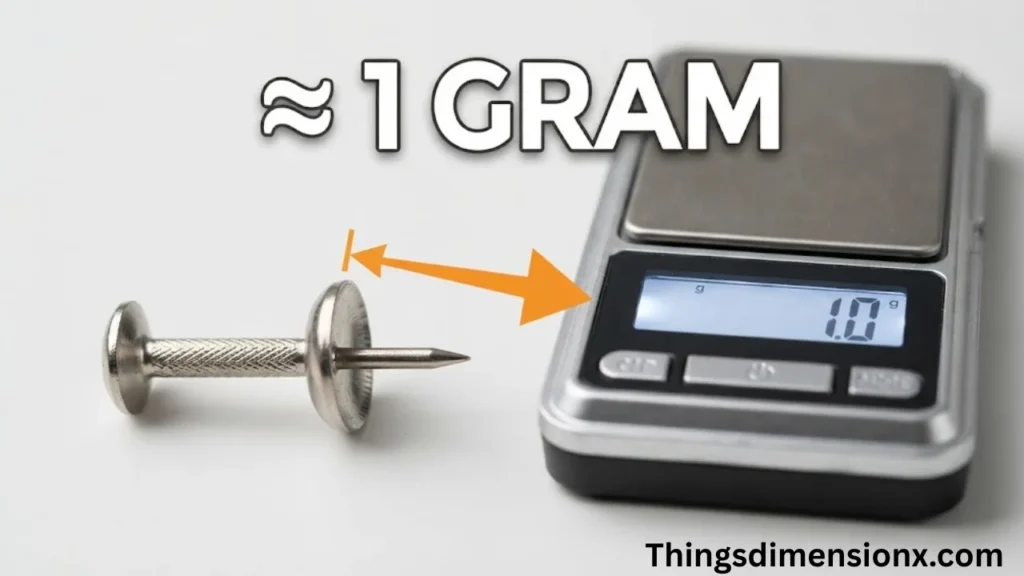
A standard thumbtack or push pin weighs approximately 1 gram. The metal point and flat head balance out to almost the exact same mass as a paperclip, which makes sense since both are cheap, mass-produced office staples.
A Stick of Chewing Gum
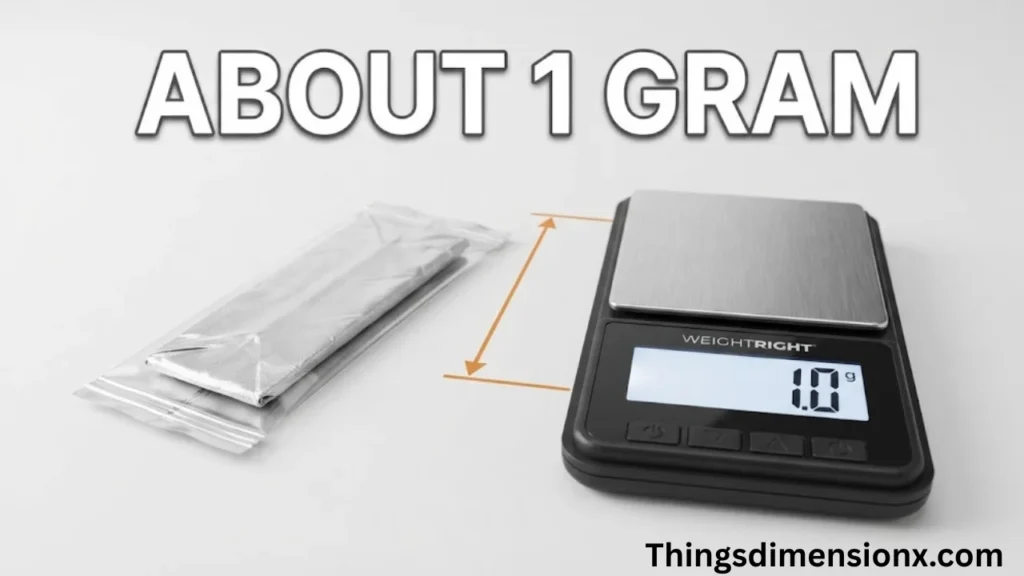
One stick of gum — the classic rectangular kind, not a whole pack — comes in at roughly 1 gram. Manufacturers keep this weight remarkably consistent across brands and flavors for quality control reasons.
A Ballpoint Pen Cap
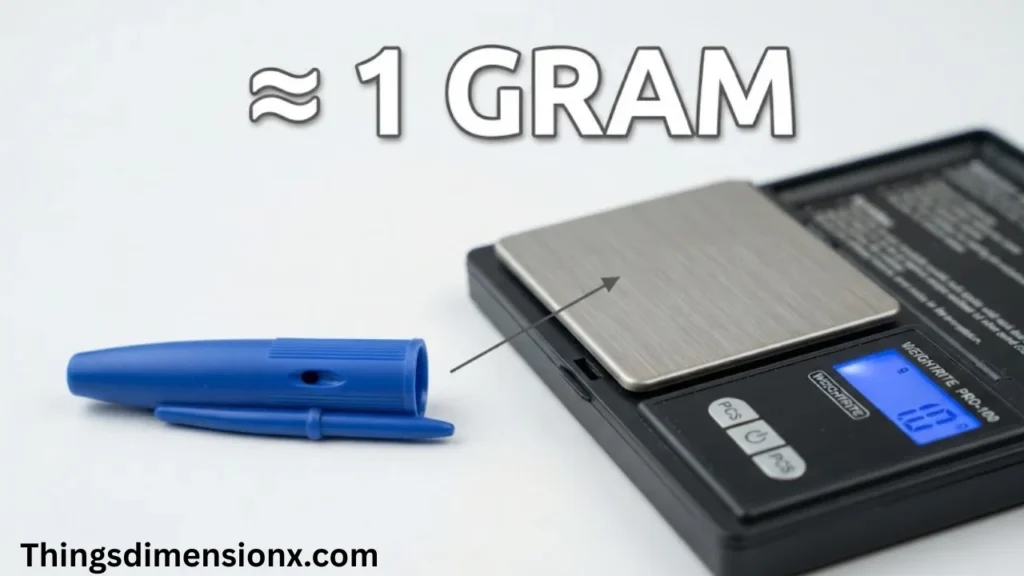
The plastic cap on a standard Bic-style pen weighs close to 1 gram. Most caps include tiny ventilation holes, a safety feature designed to prevent choking if a child swallows one. Small object, careful engineering.
A Vitamin or Aspirin Tablet
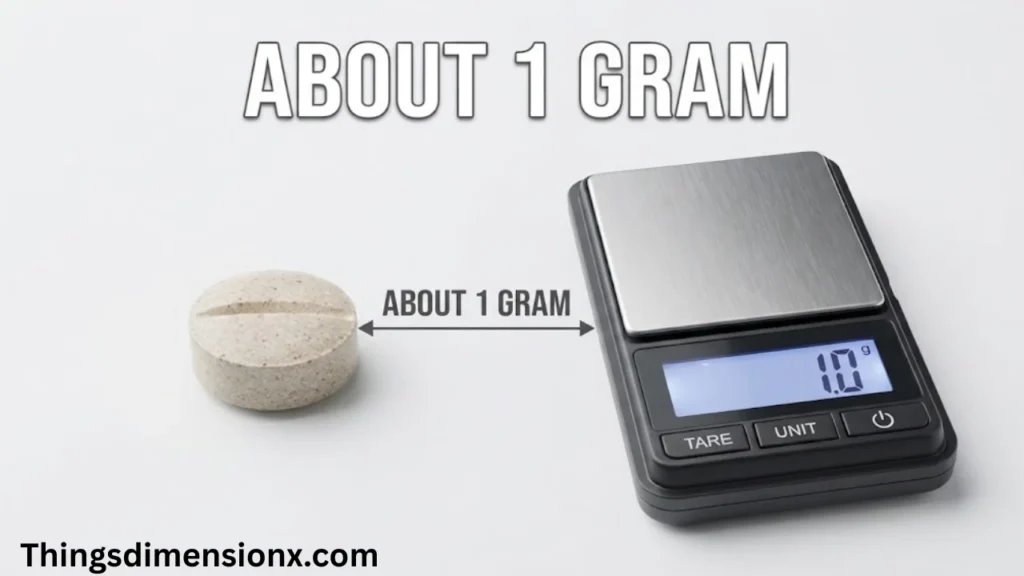
Here’s one most gram guides skip. A standard aspirin tablet weighs about 0.3 to 0.5 grams, and many multivitamin tablets land closer to 1 gram once you include the coating and binders. This is exactly why pharmaceutical dosing relies on grams and milligrams instead of ounces — the margin for error has to stay razor-thin.
A Single Contact Lens
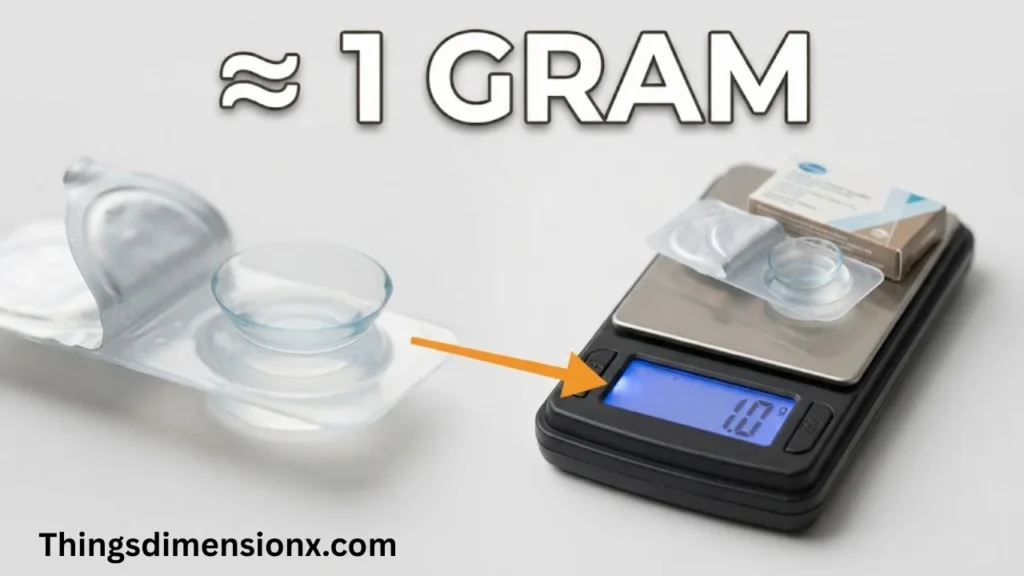
A daily soft contact lens, still in its packaging fluid removed, weighs a fraction of a gram — but combined with its blister-pack foil lid, the pair often hits close to 1 gram. It’s a strange but genuinely useful comparison if you wear contacts.
A Guitar Pick
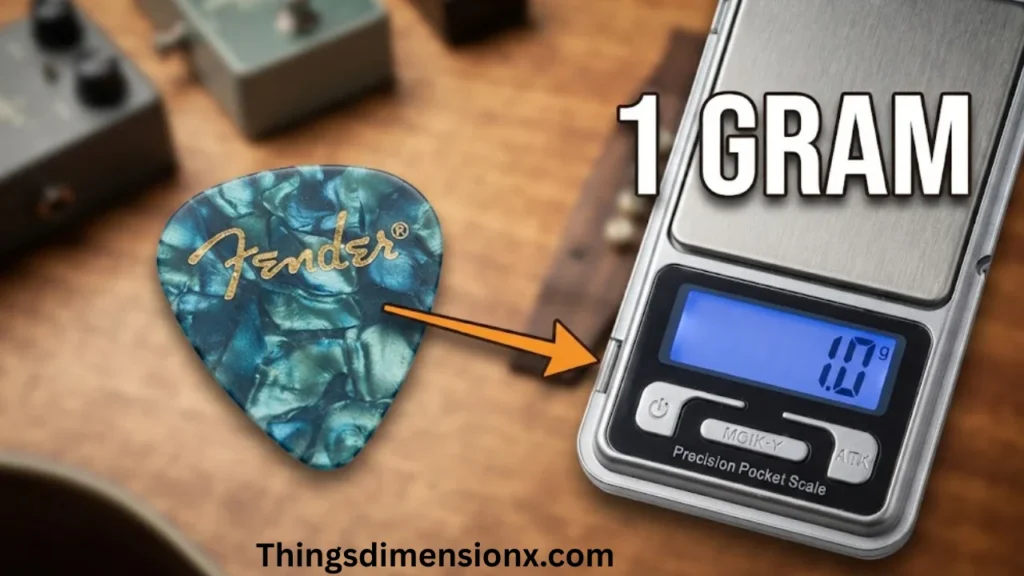
A standard medium-gauge guitar pick weighs somewhere between 1 and 2 grams depending on the material — celluloid picks run lighter, while heavier nylon or metal picks trend higher. It’s a fun, tactile reference for musicians.
A Bundle of 10 Toothpicks
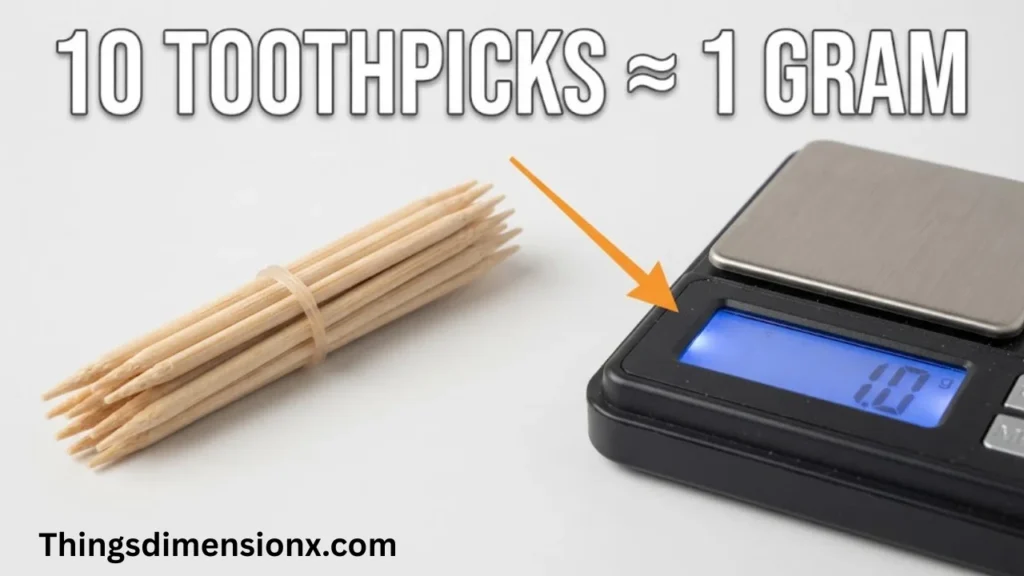
A single toothpick weighs about 0.1 grams, according to estimates from MeasurementOf. Bundle ten together, and you land almost exactly on 1 gram. It’s a good trick for building intuition about how small individual units combine into something measurable.
How Can I Weigh 1 Gram at Home Without a Scale?
You don’t need a lab setup. A few household tricks get you close enough for everyday purposes.
The paperclip method is the simplest. Hold a standard paperclip in one hand and the unknown item in the other. If they feel roughly the same, you’re in the ballpark of 1 gram.
The dollar bill method works well for flat, lightweight items. Since every US bill weighs exactly 1 gram, it doubles as a built-in reference tool you already carry.
The water method is the most scientifically accurate. Since 1 milliliter of water weighs 1 gram at room temperature, a medicine dropper or measuring spoon can get you an exact reading without any equipment beyond what’s in your kitchen.
None of these methods replace a real scale, though. If you need consistent accuracy — for cooking, dosing supplements, or crafting — a digital pocket scale is worth the investment. Most models cost between $10 and $20 and measure down to 0.01 grams, far more precise than anything your hand can judge.
How Heavy Is 1 Gram of Gold?
This is where density changes everything. Gold is one of the heaviest common metals by volume, with a density of about 19.3 grams per cubic centimeter. That means 1 gram of gold takes up far less space than 1 gram of, say, cotton or paper.
Visually, 1 gram of gold looks almost disappointingly small — a flake barely bigger than a grain of rice, or a thin sliver you could lose in a carpet. Gold is typically priced and traded by the gram or the troy ounce (31.1 grams), and the US Geological Survey tracks global gold production and pricing data that shifts daily based on market demand.
Compare that to a gram of feathers or cotton, which would fill your entire palm. Same mass, wildly different volume. That contrast is the clearest way to understand why density, not size, determines how “big” a gram looks.
FAQs About 1 Gram
How heavy is 1 gram?
One gram equals 1/1000th of a kilogram, or about 0.035 ounces. It’s roughly the weight of a single paperclip or a US dollar bill.
How can I weigh 1 gram at home?
Use a standard paperclip or dollar bill as a hand-feel reference, or measure 1 milliliter of water using a dropper or measuring spoon — water weighs almost exactly 1 gram per milliliter.
How heavy is 1 gram of gold?
It weighs the same as 1 gram of anything else — 1 gram is 1 gram regardless of material. What changes is the size. Because gold is extremely dense, 1 gram of it looks much smaller than 1 gram of a lighter material like cotton or paper.
What does 1 gram look like?
There’s no single appearance, since size depends on density. A gram of gold looks like a tiny fleck. A gram of feathers fills your hand. The most familiar visual reference is a standard paperclip or a US dollar bill — both weigh exactly 1 gram.
Conclusion
Grams aren’t abstract once you connect them to real objects. A paperclip, a dollar bill, a pinch of salt — these turn an invisible unit into something you can actually picture and feel.
Next time you’re cooking, dosing a supplement, or just curious, you’ll know exactly what 1 gram looks and feels like — no scale required.