Ever picked up a bag of dog food and wondered exactly how heavy 10 pounds really is? You’re not alone. Weight is one of those things we understand better through comparison than through numbers alone.
This guide breaks down 10 lbs into real numbers, real objects, and real feelings — so the next time someone mentions 10 pounds, you’ll know exactly what that means.
How Heavy Is 10 Pounds? (Quick Conversion Answer)
Here’s the direct answer: 10 pounds equals 4.5359237 kilograms, or about 4.54 kg. That’s the exact figure, not a rounded guess — one pound is officially defined as 0.45359237 kg under the international avoirdupois system (NIST).
Broken down into other units, 10 lbs also equals:
- 160 ounces
- 4,535.92 grams
- 0.0045 metric tons
This conversion matters more than it seems. Shipping companies use it to calculate freight costs. Nurses use it to track infant growth. Home cooks use it when a recipe calls for kilograms instead of pounds. Knowing this one figure quietly shows up across dozens of everyday situations.
Must visit: How Heavy Is 10 Pounds? 11 Everyday Items That Weigh About 10 Lbs
How to Convert 10 Pounds to Kilograms, Grams and Ounces
The Conversion Formula
Converting pounds to kilograms only takes one formula:
kilograms = pounds × 0.45359237
So for 10 pounds: 10 × 0.45359237 = 4.5359237 kg.
Want a quick mental shortcut instead? Divide pounds by 2.205. It’s not perfectly exact, but it’s close enough for everyday use.
10 Lbs Conversion Table
| Unit | Value |
|---|---|
| Kilograms | 4.5359 kg |
| Grams | 4,535.92 g |
| Ounces | 160 oz |
| Metric Tons | 0.0045 t |
| Stone | 0.714 st |
Keeping this table handy saves you from repeatedly searching “10 pounds in kg” every time it comes up.
If you want to convert gram into Ibs than must visit this page.
11 Everyday Items That Weigh About 10 Pounds
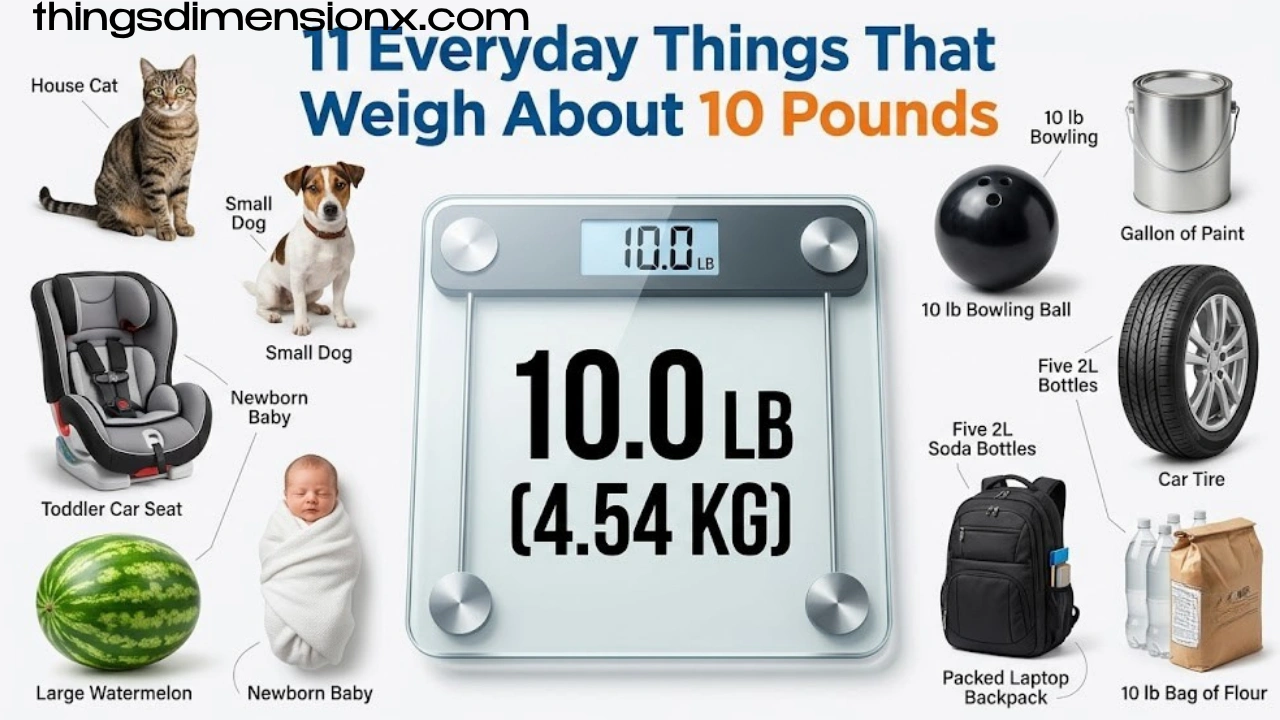
Numbers alone don’t always click. Comparing 10 lbs to familiar objects makes the weight easier to picture. Here are common 10 pound items you’ve likely already handled:
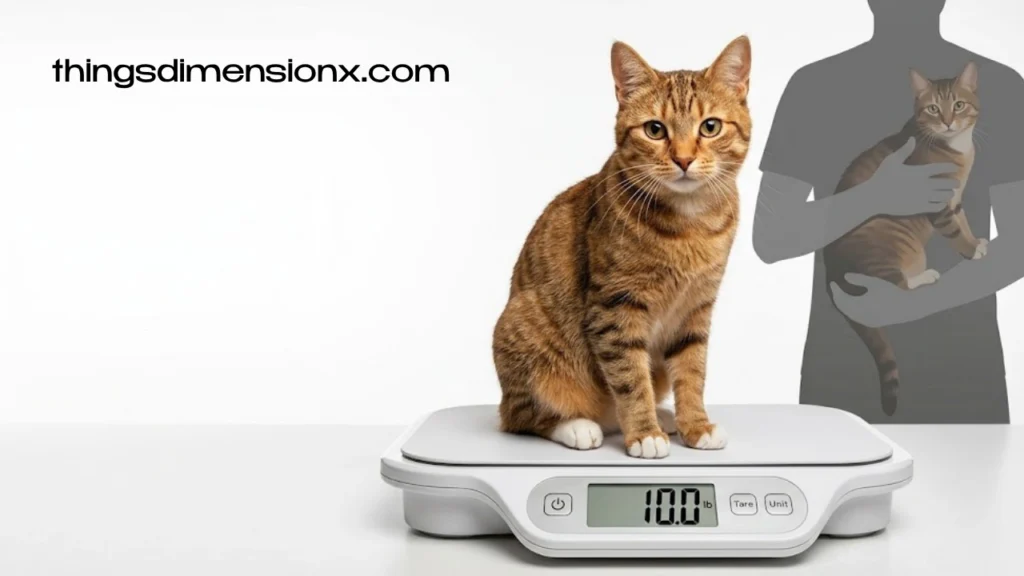
A house cat. The average adult domestic cat weighs close to 10 pounds, according to veterinary weight charts from the American Animal Hospital Association.
A small dog. Breeds like the Pomeranian or Chihuahua mix often land right around this mark.

A bowling ball. Standard bowling balls range from 6 to 16 pounds, with 10-pound balls being a common choice for lighter players.

A gallon of paint. A full gallon can, depending on the paint type, typically weighs 10 to 11 pounds.

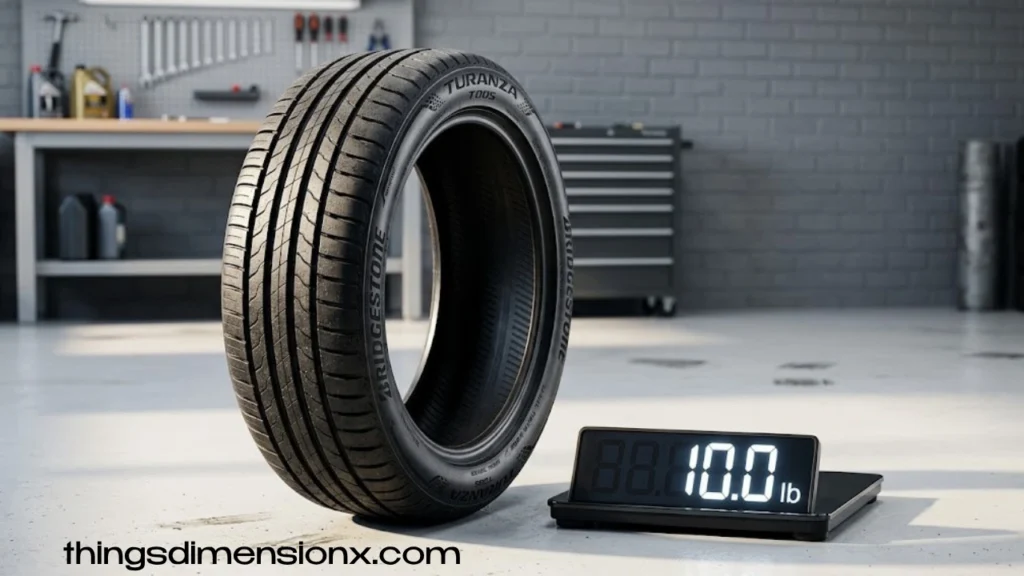
A car tire (without the rim). Passenger car tires average close to this weight before mounting.
A 5-pack of 2-liter soda bottles. Each bottle weighs roughly 2 pounds when full, adding up quickly.

A bag of sugar or flour (10 lb size). These are sold at this exact weight in most US grocery stores, making them a built-in reference.

A laptop bag, fully packed. Once you add a laptop, charger, and a few books, most bags hit this range.

A newborn baby (heavier end). Average newborns weigh 5.5 to 10 pounds, per the CDC.

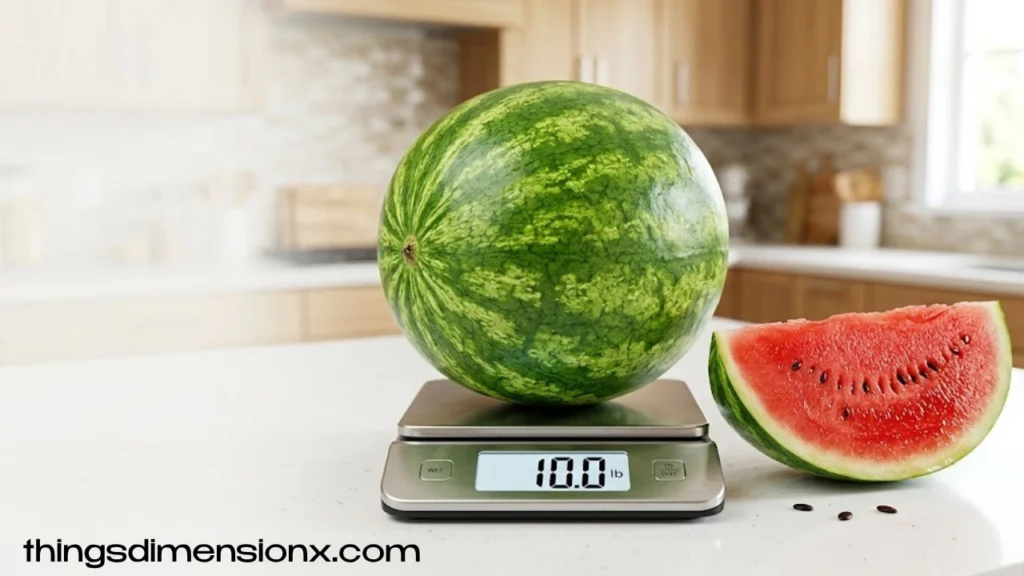
A large watermelon. Mid-to-large watermelons commonly weigh between 9 and 11 pounds.
A car seat with a toddler strapped in. The empty seat alone often weighs close to 10 pounds before a child is added.

What Does 10 Pounds Feel Like When You Lift It?
Numbers tell you the weight. Your muscles tell you the story.
Holding 10 pounds at arm’s length feels noticeably heavier than holding it close to your chest — physics rewards you for keeping weight near your center of gravity. Try holding a 10-pound dumbbell straight out to the side for even 30 seconds, and you’ll feel your shoulder complain fast.
Carrying it in a grocery bag or backpack feels much lighter than lifting it overhead. That’s because your body distributes the load differently depending on posture and grip.
Most people describe 10 pounds as “manageable but noticeable” — heavy enough to feel in your forearm after a minute, light enough that it won’t strain your back during a short carry.
Is 10 Pounds a Lot of Weight? (Health and Fitness Context)
Context changes everything here. 10 pounds isn’t heavy for a suitcase, but it’s a significant amount when it comes to body weight.
In fitness, a 10-pound dumbbell is a standard starting weight for beginner strength training, especially for upper-body exercises like shoulder presses and bicep curls.
In weight management, losing 10 pounds is often considered a meaningful milestone. According to the CDC, even modest weight loss of 5-10% of body weight can improve blood pressure and cholesterol levels.
For air travel, most US airlines allow personal items and carry-ons well over 10 pounds, so it rarely causes issues at check-in.
So is 10 pounds a lot? It depends entirely on what you’re measuring — a small amount for luggage, a meaningful marker for body weight, and a comfortable starting point for strength training.
FAQs
What is an example of a 10 pound object?
A bowling ball, a gallon of paint, or a 10-pound bag of flour are all common examples of objects that weigh close to 10 pounds.
What does 10 pounds in weight look like?
Visually, 10 pounds looks like a medium-sized watermelon, a house cat, or a fully packed laptop bag — compact but noticeably solid in size.
What does 10 pounds feel like?
It feels moderately heavy — manageable to carry for a short distance, but tiring to hold at arm’s length or lift overhead for long.
Is 10 pounds a lot of weight?
It depends on context. It’s light for luggage, moderate for a dumbbell, and a meaningful milestone when it comes to body weight change.
Conclusion
10 pounds equals 4.54 kilograms, 160 ounces, or 4,535.92 grams — but the number only tells half the story. From a bowling ball to a newborn baby, everyday comparisons make this weight far easier to picture and understand.