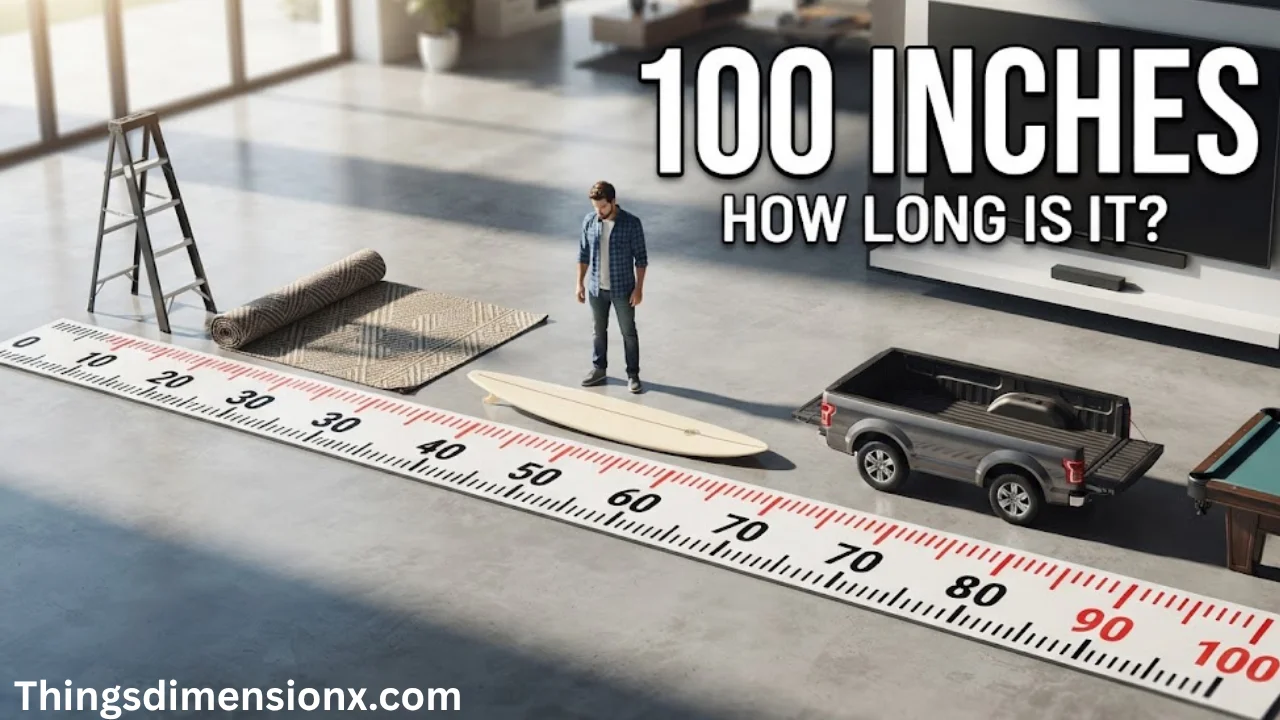
Numbers on a screen don’t always mean much. 100 inches long is 8 feet 4 inches, or 254 centimeters — but what does that actually look like in your living room?
This guide breaks it down fast: the exact conversion, ten everyday objects near this length, how it stacks up against human height, and a no-tools trick to estimate it yourself.
Table of Contents
How Big Is 100 Inches? (Quick Conversion Breakdown)
100 inches equals 8 feet 4 inches. In decimal form, that’s 8.33 feet, or 2.54 meters, or 254 centimeters.
Here’s the simple math: since there are 12 inches in a foot, you divide 100 by 12. That gives you 8, with a remainder of 4. So the answer is 8 whole feet, plus 4 leftover inches.
| Inches | Feet & Inches | Feet (decimal) | Centimeters | Meters |
|---|---|---|---|---|
| 100 in | 8 ft 4 in | 8.33 ft | 254 cm | 2.54 m |
The inch and foot both belong to the US customary system, still standard across American homes, hardware stores, and furniture listings. Most of the rest of the world measures in centimeters and meters, which is why both units matter if you’re shopping online or comparing imported products.
10 Real-World Objects That Are 100 Inches Long
Numbers are easier to picture once you attach them to something familiar. Here are ten real objects that land close to 100 inches.
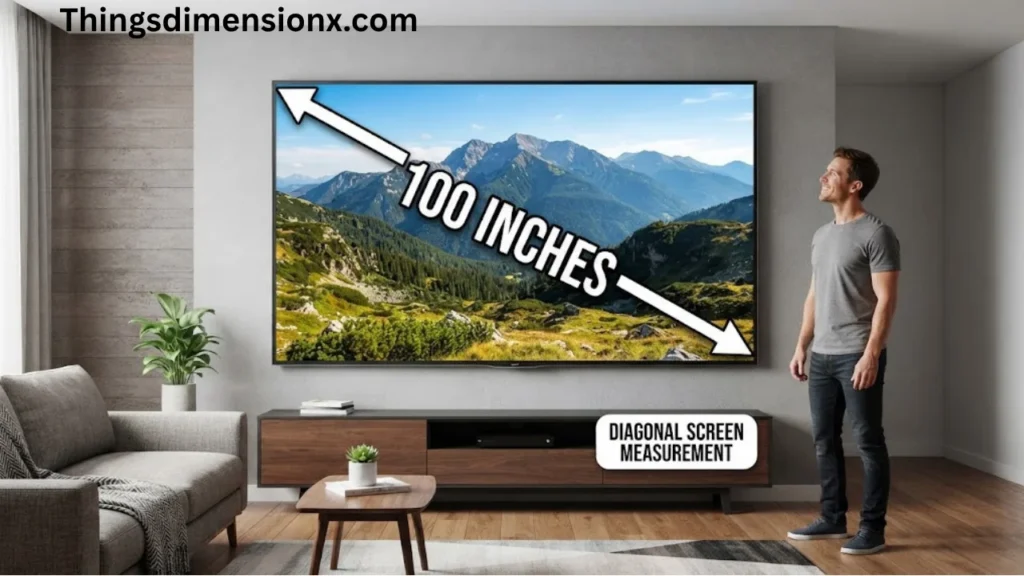
A 100-inch TV screen. This is the most direct match — the “100 inch” label refers to the diagonal measurement of the screen itself, not the total unit. Once you add the frame, or bezel, the whole TV is usually a bit larger.
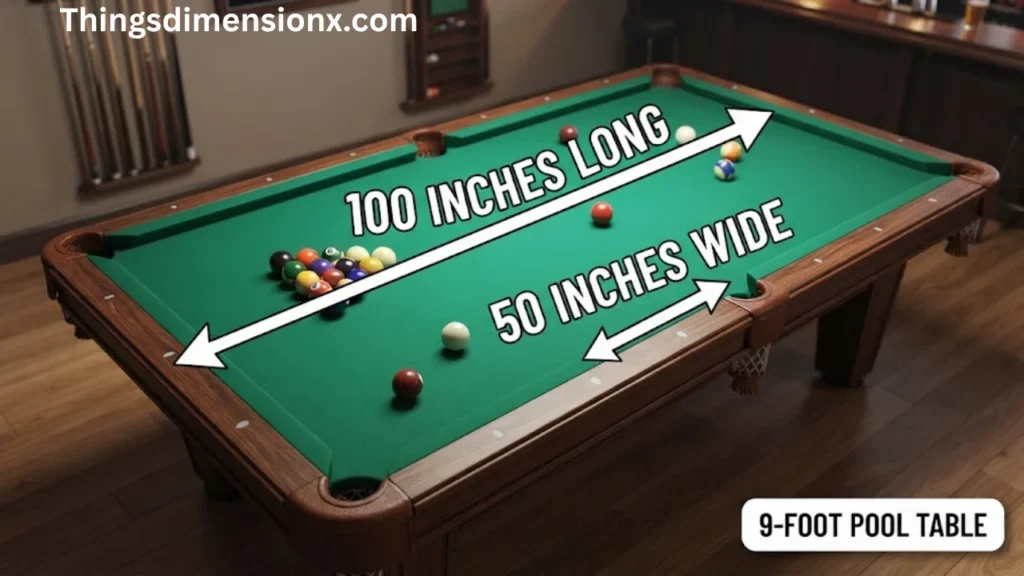
A 9-foot pool table. Regulation pool tables in this size class have a playing surface that measures exactly 100 inches long by 50 inches wide, according to World Pool-Billiard Association specifications. It’s one of the few objects where 100 inches is the literal, official spec.
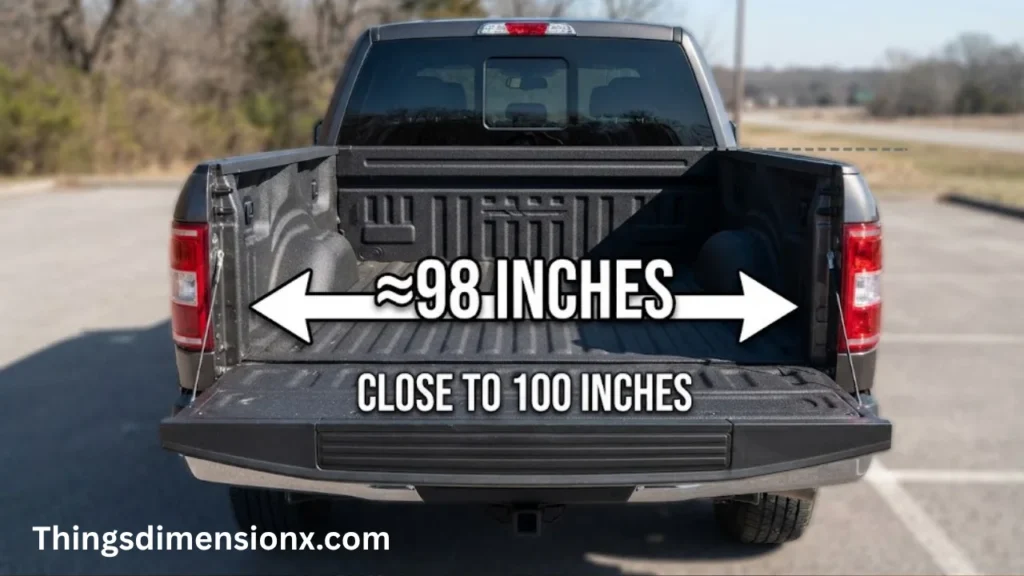
The cargo bed of a full-size pickup truck. Long-bed configurations on trucks like the Ford F-150 or Chevy Silverado run close to 98 inches from tailgate to cab — just shy of the 100-inch mark.
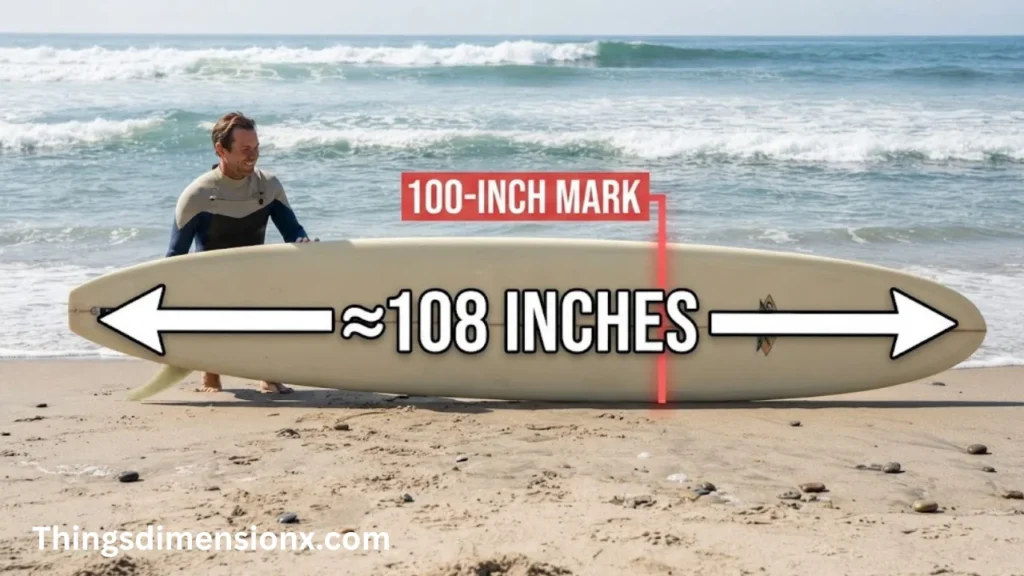
A classic longboard surfboard. Traditional 9-foot longboards measure around 108 inches, putting them just past 100 inches — useful if you’re picturing something long and narrow rather than boxy.
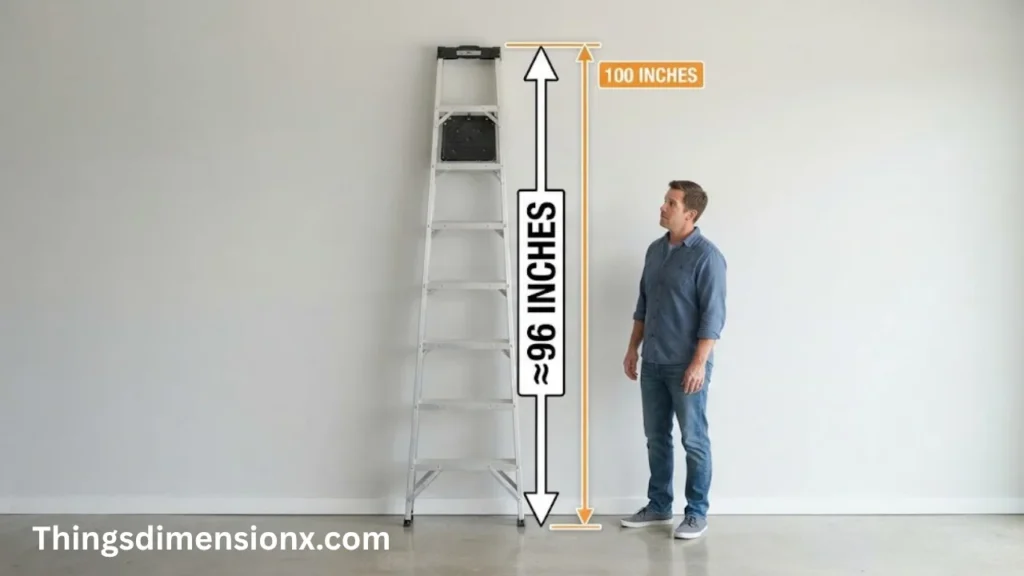
An 8-foot stepladder. Closed and stored, this common household ladder measures roughly 96 inches, a close cousin of the 100-inch mark.
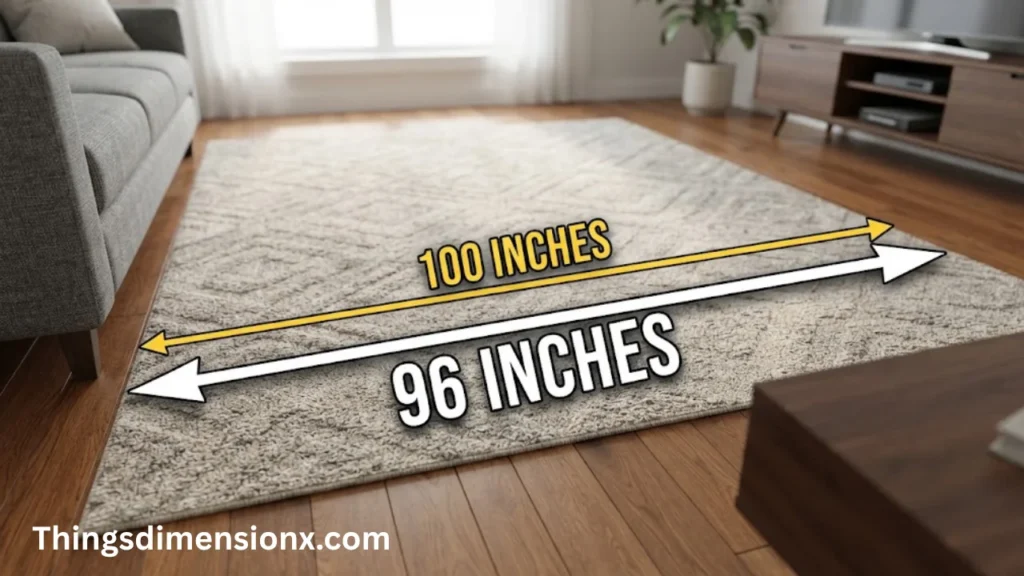
The short side of a standard 8×10 area rug. The 96-inch edge of this popular rug size sits right next to 100 inches, making it a handy mental reference if you’re furnishing a room.
Must visit: 57 Inches Long: 11 Real-World Objects to Visualize the Length
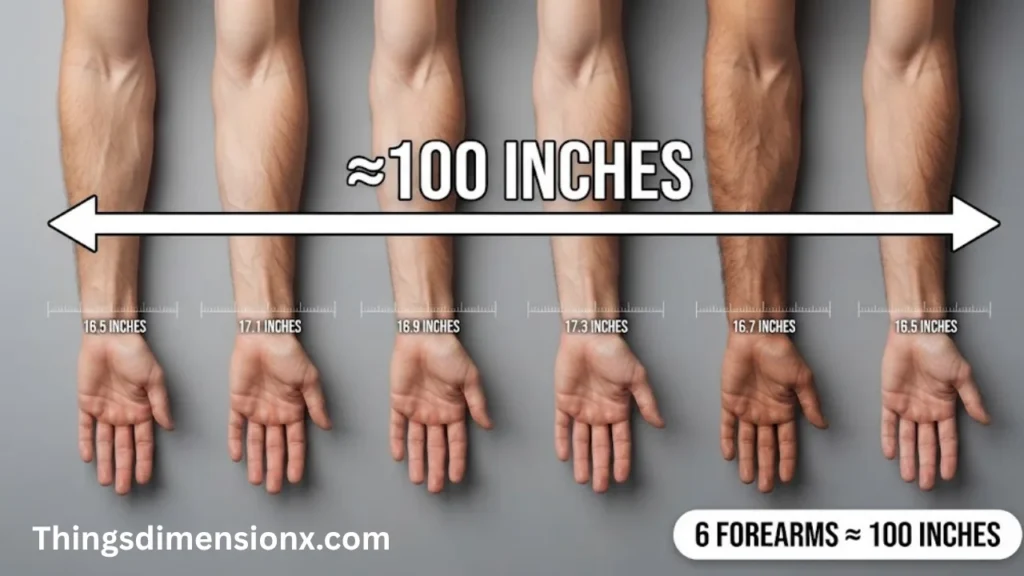
Six adult forearm lengths. The average forearm, from elbow to fingertip, runs about 16 to 18 inches. Line up six of them end to end and you’ll land close to 100 inches.
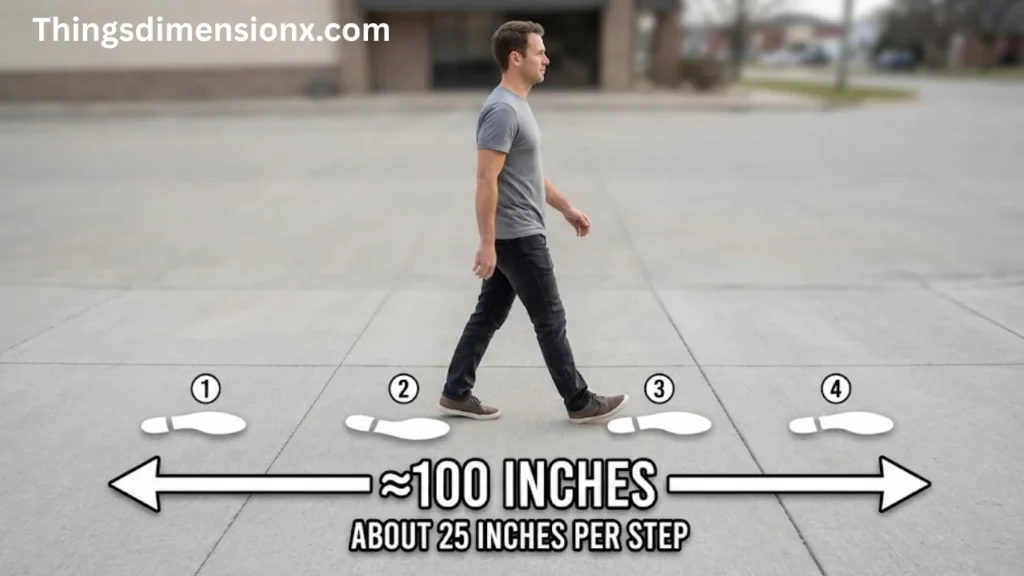
Three to four adult walking strides. A typical adult stride covers 30 to 34 inches. Take three big steps, or four normal ones, and you’ve covered roughly 100 inches of ground.
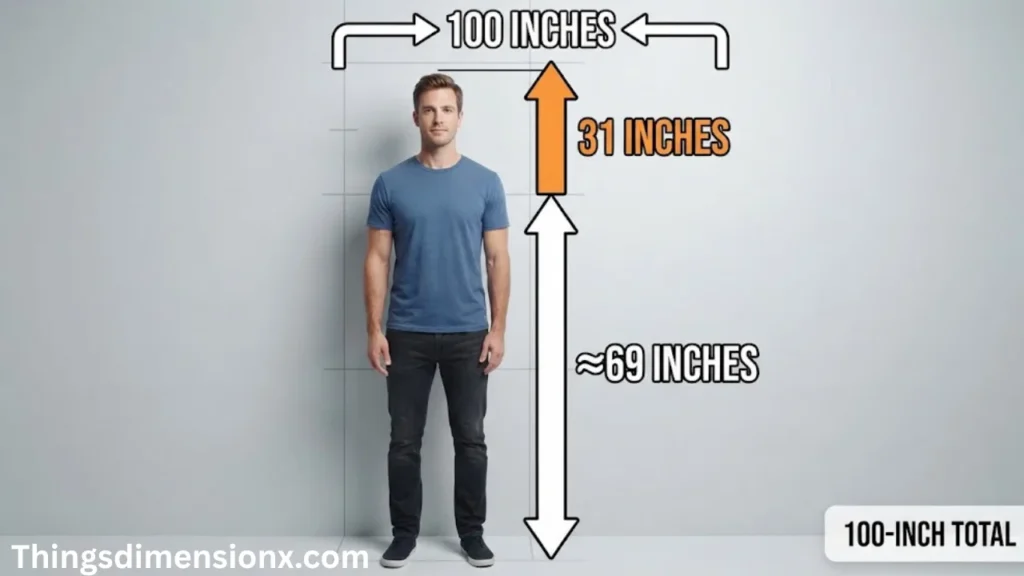
An average American man, plus almost three feet more. According to the CDC, the average height of an adult US male is about 69 inches. Add another 31 inches — a bit less than three feet — and you reach the 100-inch mark.
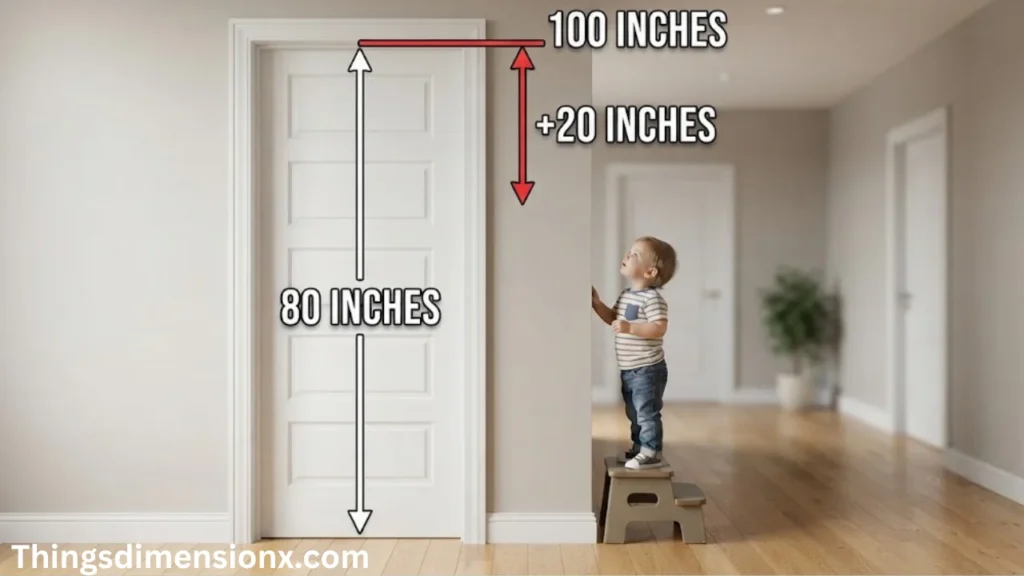
Two entry doors stacked in height, minus 60 inches. A standard interior door stands 80 inches tall. Add just 20 more inches — about the height of a toddler — and you’ve reached 100 inches.
How Does 100 Inches Compare to Human Height?
100 inches is taller than almost every human being alive. The tallest verified living man, per Guinness World Records, stands around 96 inches — still short of 100.
For everyday comparison, the CDC lists average US adult male height at roughly 69 inches, and average adult female height at about 63.5 inches. That means 100 inches towers over the average American by 30 to 37 inches — nearly an entire extra person’s worth of height, stacked from the waist up.
This comparison matters beyond curiosity. It’s useful when judging ceiling clearance, doorway height for oversized furniture, or whether a shipped item — like a 100-inch TV — will actually clear your hallway.
How to Estimate 100 Inches Without a Tape Measure
You don’t always have a tape measure handy. These quick body-based methods get you close:
- Forearm method: Measure or estimate your forearm (elbow to fingertip, usually 16-18 inches), then count out roughly six lengths.
- Step method: Take three to four normal walking strides across the floor.
- Arm-span method: Most adults’ arm span roughly equals their height. Stand with arms outstretched, then add the height comparison from above to judge the gap to 100 inches.
- Door method: Picture a standard 80-inch door, then mentally stack a toddler (about 20 inches shorter than an adult) on top.
None of these replace an actual measurement, but they’re accurate enough for quick furniture or space planning.
FAQs
How big is 100 inches long?
100 inches equals 8 feet 4 inches, or 254 centimeters. That’s roughly the length of a 9-foot pool table’s playing surface, or six adult forearm lengths placed end to end.
What does 100 inches look like?
Picture a 100-inch TV screen measured diagonally, or an average adult man standing with almost three extra feet stacked above his head. It’s also close to the short side of a standard 8×10 area rug.
How large is 100 inches in feet?
100 inches is 8.33 feet, or exactly 8 feet 4 inches when written in feet-and-inches form.
How tall is 100 inches in height?
As a height, 100 inches is taller than nearly every human on record — even the world’s tallest living man falls just short of it, based on Guinness World Records data.
Conclusion
100 inches long breaks down to 8 feet 4 inches, or 254 centimeters — and once you connect it to a pool table, a TV screen, or your own forearm, the number stops being abstract. Use these comparisons the next time you’re sizing up furniture, a screen, or any space at home.